Signs of a Cracked or Fractured Tooth Explained

One in five adults in the United States has had a cracked tooth. Yet, many don’t know they have one. They often wonder: What are the signs that I have a cracked or fractured tooth?
Sensitivity to hot or cold and sudden pain are early signs. A deeper crack can cause ongoing pain and swelling in the gums. Seeing a dentist quickly can help understand the damage and plan the next steps.
Key Takeaways
- One in five adults may have a crack without immediate symptoms.
- Minor temperature sensitivity often points to early structural problems.
- Discomfort can worsen without professional care.
- Timely exams reduce the risk of advanced dental complications.
- Asking What are the signs that I have a cracked or fractured tooth? prompts early diagnostics.
Understanding Dental Fractures
Dental fractures can vary in severity. Some are just on the surface, while others go deeper. Knowing this helps doctors and patients plan better treatments and lessen pain.
Cracked tooth syndrome can cause pain that comes and goes. Pain often happens when biting or when pressure is released. Spotting this early is key to stopping further damage.
Types of Tooth Fractures
Minor cracks, called craze lines, might not hurt. But, chips in the enamel can cause some pain and sharp edges. The worst breaks, like vertical root fractures, might need root canals or removal to keep teeth healthy.
Common Causes of Tooth Fractures
Chewing on hard things like ice or unpopped popcorn can damage teeth. Stress from grinding teeth also weakens them. These actions can wear down teeth and make symptoms worse.
Early Signs of a Cracked Tooth
Cracks in teeth can hide under the enamel. Many people feel brief pain when eating hard foods. These signs can turn into long-lasting pain if ignored.

Dentists say it’s hard to tell if pain is from a toothache or a crack. Not paying attention can lead to bigger problems.
Sensitivity to Temperature
Some feel sharp pain from cold drinks, while others get a dull ache from hot ones. This pain might mean the tooth is stressed. Noticing these changes can help find problems early.
Discomfort While Chewing
People might feel sudden pain when biting. This pain gets worse if the crack gets bigger or moves. Catching it early can prevent more damage.
| Indicator | Possible Outcome |
|---|---|
| Sudden bite pain | Minor crack spreading |
| Short-lived thermal response | Microscopic fissures in enamel |
| Recurring tenderness | Risk of bigger fracture |
Advanced Symptoms of Tooth Fractures
Deep cracks in dental tissue can reach the pulp, causing sharp pain or a dull ache. These signs are different from minor twinges. They are clear signs that you need to see a dentist right away. Is constant pain making it hard to do everyday things?
Persistent Toothache
A toothache that won’t go away means serious damage. The pain might spread to your jaw or ear, showing you need help fast. Severe pain could mean an inflamed nerve or infection, needing treatments like root canals.
Swelling in the Gums
Swollen or tender gums around a damaged tooth can mean bacteria buildup. If not treated, this could lead to abscess. Seeing a dentist early can stop bigger problems and keep your mouth healthy. For more on dealing with dental emergencies, check out this helpful guide.
- Book an urgent dental appointment.
- Follow recommended pain management strategies.
- Seek immediate treatment if symptoms continue.
The Role of Dental X-Rays
Dental imaging often reveals hidden weaknesses within a tooth. X-rays offer a detailed look at internal structures. They help clinicians spot subtle fractures. This aids in making decisions to address tooth pain from fracture.
How X-Rays Help Detect Cracks
These radiographic views highlight decay and compromised tooth layers. Dentists cross-check these findings with physical examinations. They look for thin lines that suggest structural damage. This approach helps uncover fracture paths.
Limitations of X-Rays in Diagnosis
Some cracks evade detection due to their angle or proximity to the tooth root. Clinicians sometimes use high-resolution imaging, fiber-optic lighting, or diagnostic dyes for a conclusive result. These methods follow American Dental Association guidelines.
Each diagnostic step plays a unique role in pinpointing tooth pain from fracture. The table below highlights select methods that uncover issues hidden beneath the enamel.
| Diagnostic Technique | Key Insight | Outcome |
|---|---|---|
| Standard Radiograph | Locates sizable fractures | Guides immediate action |
| Fiber-Optic Exam | Reveals fine cracks | Enables precise repair |
Pain Management Strategies
When tooth sensitivity crack pain hits, many look for quick fixes. Simple methods can help with mild pain. But, for more severe pain, a detailed plan is needed.

Over-the-Counter Pain Relievers
Pharmacists suggest ibuprofen or acetaminophen for pain and swelling. Topical gels can ease surface pain. These are for quick relief, not for long-term fixes.
- Non-steroidal anti-inflammatory drugs (NSAIDs) for immediate soothing
- Topical anesthetic gels for minor tooth sensitivity
When to Seek Professional Help
Severe or lasting pain could mean a bigger problem. Dentists can check the damage, fix the crack, and suggest further treatments. Delaying a visit can make things worse. For urgent care tips, check this guide.
Treatment Options for Cracked Teeth
When a tooth is cracked, there are several ways to fix it. Dentists look at decay, pulp health, and how big the crack is. They choose the best way to fix it to keep the tooth strong and working right.
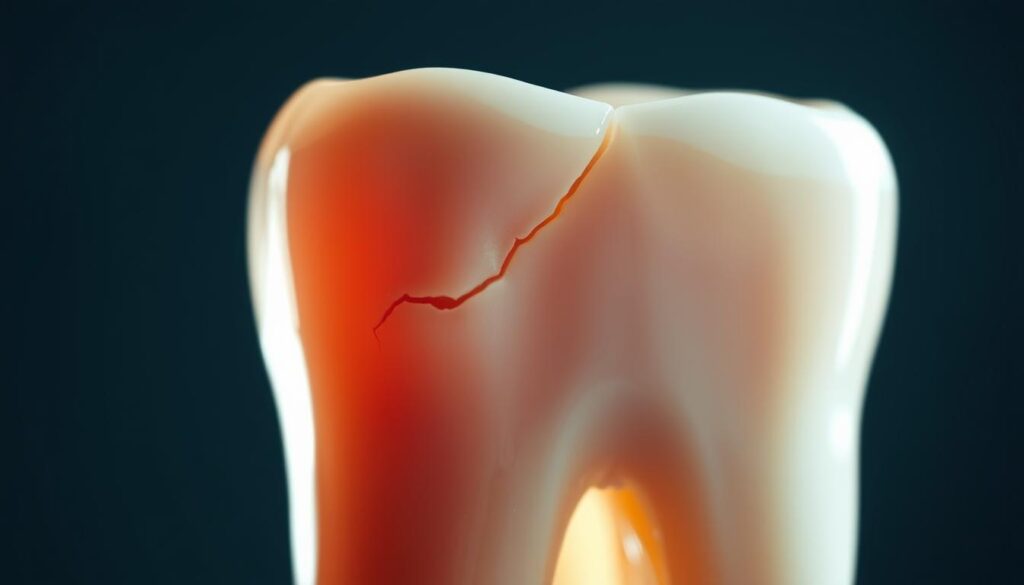
Bonding and Cosmetic Solutions
For small or moderate cracks, a strong resin is applied. This keeps the tooth looking natural and seals the crack. Most people don’t feel much pain during this treatment.
- Composite resin masks small flaws
- Maintains an appealing tooth shape
- Usually completed in one visit
Root Canal Therapy
Big cracks that reach the pulp need a deeper fix. Endodontic treatment cleans out the bad tissue and seals the canal. Then, a crown is put on to protect it.
- Removal of infected matter
- Thorough cleansing and sealing
- Crown placement for durability
These treatments work well if done early. They help keep the tooth healthy for a long time. Each case is different, so the dentist chooses the best option for you.
Preventive Measures for Healthy Teeth
Being proactive can prevent expensive fixes and cracked tooth diagnosis. Regular dental checks give you peace of mind and help keep your teeth healthy for years.
“The American Dental Association encourages frequent evaluations to catch fractures before they worsen.”
Regular Dental Check-Ups
Regular visits to the dentist can spot early signs of tooth weakness. Hygienists often find areas at risk of damage. Dentists clean, polish, and give tips to help your teeth last longer.
Avoiding Hard Foods
Hard foods like ice, dense candy, and unpopped popcorn kernels can harm your teeth. Eating softer foods can help avoid accidents. Many people find it easy to accidentally break a tooth when eating tough snacks.
Keeping your teeth safe is simple. Just make a few changes, like eating softer foods and going to the dentist regularly. This approach lowers the risk of sudden tooth damage and keeps your smile bright.
How Stress Affects Dental Health
High stress can harm your teeth and mouth. It can cause tiny cracks that let bacteria in. Spotting these cracks early is key to avoiding big problems.
Many people ignore the early signs of stress until it’s too late. Keeping an eye on your teeth can help catch issues before they get worse.
Teeth Grinding (Bruxism)
Bruxism happens when you grind your teeth during stress or sleep. This can wear down the enamel, making your teeth weak. Finding and fixing cracks early is very important.
- Headaches or jaw pain upon waking
- Flattened or chipped tooth edges
Stress-Related Dental Issues
Stress can make you clench your jaw, which can hurt your teeth. If this keeps happening, it can create spaces for bacteria. Finding ways to manage stress can help keep your teeth healthy.
| Stress Factor | Potential Outcome |
|---|---|
| Frequent Anxiety | Prolonged Bruxism Episodes |
| Jaw Tension | Soreness and Enamel Damage |
When to Visit a Dentist
Some people notice dull aches or jagged tooth edges that hint at hidden damage. Tiny cracks can grow without being noticed, raising the risk of infection. If you feel ongoing pain, it’s time to see a dentist to avoid bigger problems.

Signs That Require Immediate Attention
Constant throbbing or sharp pain when biting could mean a serious crack. If a tooth breaks off, it might be a sign of deeper damage. Watch for any unusual pain and don’t wait for it to get worse.
Importance of Professional Evaluation
A skilled dentist can find cracks and plan the right treatment. They use special tools to check for hidden damage. Getting help early can stop infections and keep your smile healthy.
Understanding the Healing Process
After getting a dental restoration, patients might feel a bit sensitive. They might notice soreness or a gentle throb. But, these feelings usually go away in a few days if they follow simple aftercare steps.
Restorations help keep the tooth strong. They prevent bigger problems that can happen with deeper cracks.
“A balanced blend of treatment and home care encourages healthy recovery,” states the American Dental Association.
What to Expect After Treatment
It’s normal to feel some tenderness or ache. But, things usually get better over time. Dentists might tell you to eat soft foods and rinse with a saline solution.
They might also suggest wearing a guard at night. This helps protect the tooth from extra pressure. For tips on what to do if you chip a tooth, check out this resource.
Follow-Up Care Recommendations
Going back to the dentist for check-ups is important. They can make sure the restoration is working right. They might want to see you again soon to check on healing or any new pain.
Simple steps can help a lot. These include:
- Using an antibacterial rinse
- Choosing softer meal options
- Avoiding extreme temperatures in drinks and foods
These actions help keep your tooth strong. They also make sure your dental work lasts longer.
The Importance of Oral Hygiene
Keeping up with dental care strengthens tooth enamel and protects against damage. Every day, plaque builds up, which can slowly weaken teeth. A good routine helps prevent cracks and keeps teeth strong for longer.
Wondering if a broken tooth can heal shows how important early care is for dental health.
Daily Care Tips for Healthy Teeth
Bacteria feed on leftover food, so removing them is key. Important steps include:
- Brushing teeth twice a day with fluoride toothpaste
- Flossing to clean between teeth
- Rinsing to remove debris and freshen breath
Products to Use for Prevention
Today, we have tools to help keep teeth healthy. A fluoride rinse adds extra protection, and mouth guards prevent grinding at night. Sealants also help prevent fractures in teeth prone to them.
| Tool | Purpose |
|---|---|
| Soft-Bristle Toothbrush | Gentle cleaning to avoid gum irritation |
| Fluoride Rinse | Strengthens enamel and reduces bacteria |
| Mouth Guard | Minimizes grinding pressure during sleep |
Myths About Tooth Fractures
Some people think small cracks in teeth will fix themselves over time. But, tooth enamel can’t grow back. This means any damage can lead to pain or infection.
Thinking small fractures are harmless can cause bigger problems later.
Common Misconceptions
Many believe chipped teeth are just a part of getting older. But, regular dental check-ups and treatments can keep your smile healthy at any age. Some think surface chips are just for show. Yet, they can actually weaken the tooth’s structure.
The Truth Behind Dental Myths
Dentists use special tools and know-how to find hidden cracks. Getting a check-up early can stop infections and keep your mouth healthy. The American Dental Association says to act fast on tooth fractures.
This way, you can keep your natural teeth and avoid more serious issues.
Financial Considerations for Treatments
When deciding on a fractured or cracked tooth, cost is a big factor. Bonding and fillings are usually less expensive. But, crowns and root canals are pricier, making many look at their budgets or insurance.
Insurance Coverage for Dental Care
Carriers like Delta Dental, Cigna, and Aetna might cover some costs. But, each plan has its own rules, like deductibles and maximums. It’s smart to check with your insurance or look at your membership documents. Knowing what’s covered can help lower your costs and make choosing a treatment easier.
Cost of Different Treatment Options
Several things can change the total cost, like where the tooth is, how bad the crack is, and what materials are used. Getting help early can prevent more expensive fixes later. Some clinics even offer payment plans to help spread out the cost. Quick action can save money and keep your teeth working well for longer.
| Procedure | Approximate Cost Range (USD) | Potential Coverage |
|---|---|---|
| Bonding | $200 – $600 | Up to 80% |
| Root Canal | $700 – $1,200 | 50% – 80% |
| Crown | $800 – $1,500 | 50% – 80% |
Resources for Further Information
Keeping up with dental care research is key. It helps prevent and manage cracked teeth. This knowledge boosts confidence in oral health.
Professional Dental Associations
The American Dental Association provides guidelines and education. Cleveland Clinic offers tutorials on tooth problems like fractures. Peer-reviewed journals share new data on dental materials.
Tooth Care Guides and Literature
Many websites and libraries have guides on tooth care. They cover home care and prevention. These guides explain how to pick the right toothpaste and make diet changes.
Looking for more information leads to new discoveries. This approach helps protect smiles and improve dental health. Exploring regularly keeps you proactive and healthy at every stage of life.