Dentist Exam Numbers Explained: What Are Those Measurements?

Ever wondered what your dentist means when they say a bunch of numbers? It’s not a secret code. It’s about how deep your gums are and if you might have a disease.
Doctors take these numbers to see how things change over time. They use them to find problems early and plan how to stop them. Knowing what these numbers mean helps us take better care of our teeth.
Key Takeaways
- Pocket depth readings reveal gum health status.
- Regular measurement tracking helps catch issues early.
- Deeper readings may signal inflammation or disease.
- Consistent exams guide preventive and corrective treatments.
- Knowing these figures empowers informed oral care decisions.
Understanding Dental Health Assessments
Checking your teeth is more than just looking. Doctors measure gum health and look for signs of inflammation. They do this to keep your mouth healthy. Regular visits help spot problems early, before you even feel them.
The Importance of Regular Dental Exams
Going to the dentist often helps catch issues like gingivitis early. This can stop bigger problems from happening. You also learn how to take care of your teeth better, like how to keep your enamel strong and how to floss right.
How Dentists Evaluate Oral Health
Dentists use special tools and look closely at each tooth. They check for plaque, signs of infection, and changes in gum color. This helps them decide the best treatment for you. Accurate dental exam measurements are key to making good plans.
| Tool | Purpose |
|---|---|
| Periodontal Probe | Identifies pocket depth for gum evaluation |
| Dental Mirror | Improves visibility in hard-to-see areas |
| Explorer Instrument | Discovers cavities and uneven tooth surfaces |
Common Measurements Called Out During Dental Exams
During dental checkups, professionals use exact numbers to check gum health. These measurements show if there are gum problems and help prevent them. Understanding these numbers is key to keeping your mouth healthy for a long time.

Pocket Depth Measurements
Doctors measure how deep a probe goes under the gum. Shallow readings mean the gums are healthy. But, deeper readings show areas that need extra care. Regular checks help track any changes.
Bleeding on Probing
If gums bleed when probed, it’s a sign of inflammation. Finding this early helps doctors suggest treatments. This helps keep your gums strong and healthy.
Furcation Involvement
This measurement looks at spaces between tooth roots, like in molars. If not treated, these spaces make therapy harder. Dentists use special cleaning or surgery to fix these issues. For more info, check out this dental exam and cleaning guide.
- Surface evaluation identifies early gum irregularities
- Treatment paths evolve from numerical tracking
What Pocket Depth Measurements Indicate
Experts look at dental hygiene measurements to check gum health and spot future problems. Pocket depth shows how well gums and bone are doing. It helps in planning treatments to stop more harm.
This data helps catch early signs of trouble for your mouth’s health. Even small changes in measurements can warn of bigger issues.
Healthy Pocket Depth Ranges
Healthy gums are between 1–3 mm deep. They are pink, firm, and clean. People who brush well and see their dentist regularly usually have these healthy gums.
Signs of Gum Disease
Deeper pockets, over 4 mm, mean inflammation and plaque. You might see red gums, bad breath, or teeth that feel loose. Paying close attention can help keep your mouth healthy and strong.
The Role of Bleeding on Probing
Gum tissue bleeding during an exam shows important changes in the mouth. This sign, along with other dental checkup measurements, gives a clear view of gum health. It helps doctors see if gums are inflamed and decide on the right treatment.
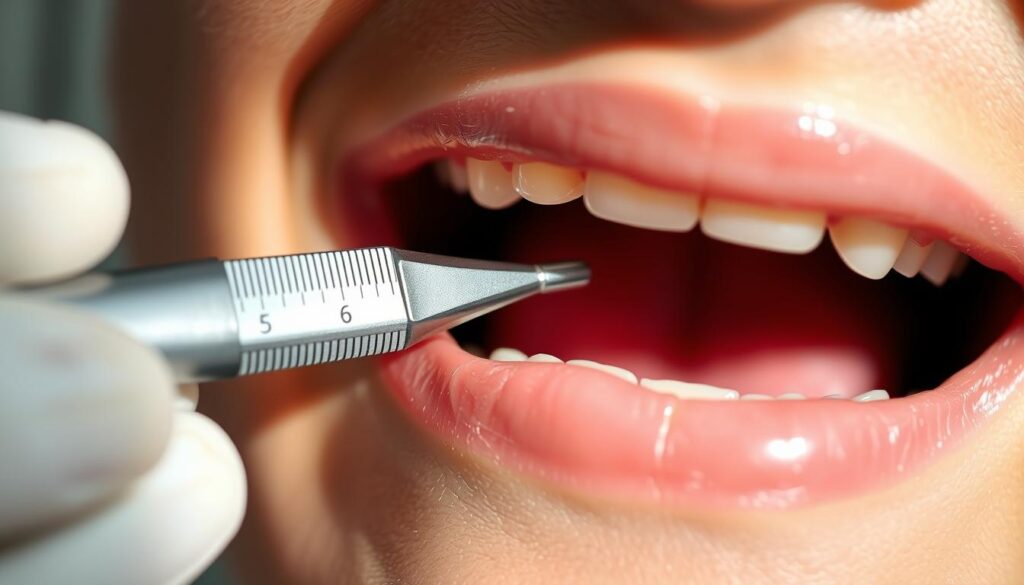
Some bleeding might come from brushing too hard. But, if gums bleed often, it means there’s bacteria and irritation. Watching this closely helps catch problems early and prevent them from getting worse.
Causes of Bleeding
- Excess plaque and tartar near the gum line
- Imbalanced or insufficient home care routines
- Systemic factors that affect overall gum response
Implications for Oral Health
Ignoring these signs can lead to more serious gum disease. Regular flossing and soft brushing help fight plaque. The American Dental Association (ADA) suggests professional cleanings to keep gums healthy and prevent bleeding.
| Key Observations | Actions to Maintain Gum Health |
|---|---|
| Frequent Bleeding on Probing | Schedule deeper cleanings and review technique |
| Persistent Irritation | Use antimicrobial rinses and consult a specialist |
Introduction to Furcation Involvement
Furcation spaces are areas where the roots of multi-rooted teeth split. They become exposed when gum tissue recedes or bone support weakens. This is why understanding “dental exam terminology” is key. Spotting furcation issues early helps keep teeth strong and prevents problems from bacteria.

What is Furcation Involvement?
Furcation involvement means the gap between tooth roots is visible or reachable. It happens when plaque gets close to weak gum tissue. Dentists use specific measurements to identify these changes. A mild case might need just a cleaning, but deeper issues could lead to infection.
How it Affects Treatment Plans
Decisions on treatment depend on how much root is exposed and the gum’s condition. Non-invasive steps might include better oral hygiene and antibacterial mouthwashes. In some cases, surgery or regenerative treatments are needed. Dentists aim to save the tooth and prevent further damage.
- Professional cleanings at recommended intervals
- Consistent follow-up visits
- Customized strategies for infection control
| Grade | Description | Potential Treatments |
|---|---|---|
| I | Early involvement with minimal root exposure | Scaling, root planing |
| II | Moderate space between roots | Local antibiotic therapy, flap surgery |
| III | Through-and-through passage under the crown | Bone grafting, regenerative techniques |
Additional Measurements Dentists Use
Dentists look at many things during dental checks. They check how stable teeth are and the health of gums, too.
Mobility of Teeth
When a tooth moves unexpectedly, it might mean the bone or gums are not strong. Dentists use this info to plan how to fix loose teeth. They think about:
- How far gum disease has spread
- If there’s a way to fix it
- How to keep an eye on it after treatment
Keratinized Tissue Width
Checking the width of keratinized tissue helps understand gum strength. A thicker layer helps protect the bone from recession and infection. Sometimes, surgery is needed to make this tissue thicker. This can help implants work better and keep the mouth healthy.

These checks help dentists understand each patient’s mouth better. They guide treatment for better long-term health.
Understanding the Periodontal Chart
Periodontal charts are key to understanding gum and tooth health. Each number, symbol, and color tells a story of a patient’s health. They show where inflammation might be happening, helping track disease and treatment needs.
Dentists use these charts to plan care. They watch pocket depths and tissue changes for signs of trouble. When patients understand their charts, they can take a bigger part in their care.
Components of a Periodontal Chart
Charts include tooth numbers, measurement lines, and colors. Each part shows gum health, plaque, or bleeding. Symbols mark teeth that are loose or have furcation issues. Keeping records helps dentists see how things have changed over time.
How to Read Your Chart

Charts may show numbers for pocket depth and what to do next. Red marks point out areas at higher risk. Looking at these details leads to good talks with the dental team and helps make better choices for gum health.
| Chart Element | Details |
|---|---|
| Pocket Depth | Indicates gum condition and tissue inflammation risk |
| Bleeding Points | Shows where gums may be prone to infection |
| Mobility | Highlights if a tooth’s support is compromised |
| Furcation | Reveals possible bone loss or decay near roots |
Age and Its Effect on Measurements
Dental measurements change as we age. This is because our gum tissue and bone structure adapt. Periodontal probes might show deeper readings if gums recede. Also, mobility scores can increase if bone density falls.
Age-Related Changes in Dental Health
Over time, gingival margins move, exposing areas once covered by healthy tissue. This can make tooth roots more sensitive. Dentists must adjust probing depths to account for these changes.
Adjusting Treatments Based on Age
Treatment plans change with age. Young adults get preventive cleanings, while older people need more frequent gum care. This is because pocket depths shift with age. For more on this, see this overview.
- Monitor gum heights for signs of recession
- Focus on bone density checks for older adults
- Refine hygiene techniques to match changing tissue resilience
The Importance of Communication with Your Dentist
Talking openly with your dentist builds trust. It helps you understand your dental health better. Asking about pocket depths, gum health, and treatment plans leads to better decisions.
“The American Dental Association encourages conversations that clarify care and reinforce patient confidence.”
Asking Questions During Your Exam
Asking questions can give you deeper insights. You might learn about tooth mobility or gum sensitivity. This helps your dentist tailor care to your needs.
Talking about flossing can show you how to fight inflammation or plaque. It’s a small step that can make a big difference.
Understanding Your Dental Report
Looking at your dental report with your dentist makes things clearer. It shows your progress and what needs work. This helps you know when to schedule your next cleaning and exam.
Open communication can lead to changes. You might start flossing better or get restorative work. It’s all about taking care of your teeth.
What to Expect During a Comprehensive Examination
A thorough dental check-up is more than just a quick look at your teeth. It starts with a detailed look at your enamel and gums for early signs of problems. Dentists also measure the depth of your gum pockets to check your gum health.
They will ask you questions about how you take care of your teeth and if you feel any pain. This helps them understand your oral health better.
Steps in a Typical Dental Visit
During a dental visit, several important steps are taken:
- Evaluation of teeth, gums, and soft tissues
- Professional cleaning with specialized tools
- X-rays using high-resolution imaging
- Review of risk factors for future concerns
- Tailored guidance on preventive maintenance
Tools Used by Dentists
Dentists use special tools to diagnose and plan treatments. Brands like DEXIS provide digital sensors for clear images. Philips’ ultrasonic scalers help remove tough tartar.
These tools aim to make your visit more comfortable and effective.
| Phase | Focus | Tool |
|---|---|---|
| Visual Check | Detect surface issues | Dental mirror |
| Periodontal Probing | Gauge gum pocket depth | Probe with calibrated marks |
| X-ray Imaging | Identify underlying damage | DEXIS sensor |
Innovations in Dental Measurements
New methods in dental metrics offer more accurate checks for doctors and patients. Direct digital feedback is changing how teams spot and record gum changes.
Experts from the American Dental Association talk about the importance of easy data tracking. Digital tools now link dental checks with patient info, making prevention easier.
Technology Advancements in Periodontal Diagnostics
New tools give doctors clearer views of gum health. Studies show real-time probes can show gum depths without hurting patients. Laser tech finds sick tissue quickly and gently.
- Immediate feedback helps catch small changes
- Less time in treatment thanks to focused care
Future Trends in Dental Assessments
AI scanning could soon change gum health checks. Software that predicts disease could warn teams early. For more on dental care, check out a detailed guide on dental exams and cleanings. New systems help understand oral health better over time.
Maintaining Your Dental Health Between Visits
Keeping your gums healthy is all about daily habits. Simple actions at home can help keep your gums in good shape. These habits help fight plaque and prevent gum inflammation.
Some people wonder if a balanced routine really protects their gums. The truth is, consistent care can lead to healthier gums and lower the risk of gum disease.
Best Practices For Oral Hygiene
For the best results, brush your teeth twice a day with a soft-bristled brush and fluoride toothpaste. Don’t forget to floss or use a water flosser. An antimicrobial rinse can also help. Drinking plenty of water and eating foods rich in nutrients can strengthen your teeth and gums.
- Brush thoroughly around the gumline
- Dislodge trapped particles with floss or interdental brushes
- Limit sugary snacks to prevent plaque buildup
When to Schedule Your Next Exam
Dentists usually suggest visits every six months. But, if you’re getting treatment for gum disease, you might need to go more often. Regular check-ups help catch problems early and guide preventive care. Quitting smoking also helps protect your gums from damage.
| Oral Care Step | Frequency |
|---|---|
| Brushing | Twice a day |
| Flossing | Once a day |
| Mouth Rinse | Daily |
Common Misconceptions About Dental Measurements
Some people think bleeding gums are no big deal or that deep pockets can’t be fixed. They don’t understand dental measurements well. But, accurate data from probing and X-rays help dentists plan the best treatment for each case.
Myths vs. Facts
Some believe stained gums always mean serious disease, but it’s often just plaque. Others think deep pockets mean teeth need to be pulled. But, some treatments and good oral care can help heal them. Early bleeding doesn’t always mean permanent damage, as long as you follow your dentist’s advice.
The Importance of Trusting Professional Advice
Dentists look at all the facts before suggesting treatment. They use their experience to find the best solution. Working with your dentist helps you understand issues like gum recession and pocket depth. This teamwork can prevent more problems and improve your dental health over time.
Conclusion: Taking Charge of Your Dental Health
Empowered patients make informed choices. They understand the importance of dental measurements. This knowledge helps them develop habits that protect their teeth and gums.
Being proactive means eating well, taking care of your teeth at home, and visiting the dentist on time. The American Dental Association (ADA) highlights the role of these steps in preventing problems. For more on dental cleaning, check out this guide. It shows how to lower the risk of gum disease.
Empowering Yourself with Knowledge
Keeping track of your dental health over time is key. Asking the right questions helps you understand why certain treatments are needed. This leads to better dental care habits.
Building a Relationship with Your Dental Care Team
Good communication builds trust. Dentists who share their knowledge and advice empower patients. Together, they create a plan for a healthy smile at every stage of life.