Home Tartar Removal: Can It Be Done Without a Dentist?
Does no dentist tartar removal really work, or does a thorough professional cleaning remain the sole way to safeguard a healthy smile? Many individuals try at-home methods, yet questions linger about their true effectiveness.
Tartar, also known as dental calculus, arises when plaque hardens and clings stubbornly to teeth. Some people hope no dentist tartar removal strategies can fully eliminate these deposits, but clinical evaluations often reveal lingering risks.
Upcoming sections examine how tartar forms, the hazards of do-it-yourself cleaning, and the best practices to keep gums and enamel in optimal shape.
Key Takeaways
- Tartar forms when plaque mineralizes and becomes resistant to regular brushing.
- Daily oral care reduces minor buildup and promotes healthier gums.
- Dentist-approved methods often provide safer, deeper cleaning.
- At-home tactics may slow tartar accumulation but need caution.
- Professional checks help prevent gum disease and related complications.
- Long-term oral health relies on balanced self-care and expert guidance.
Understanding Tartar Buildup
Many people wonder: Can tartar be removed at home without a dentist? Tartar, or calculus, is a tough problem that needs understanding. It can seem overwhelming, but knowing its causes helps prevent it.
What is Tartar?
Tartar forms when plaque, a sticky mix of bacteria and food, stays on teeth. It hardens into a rough layer, making brushing harder. Regular cleanings and checkups help prevent it.
How Tartar Forms on Teeth
Saliva minerals mix with plaque over time. This turns a simple film into a hard substance that sticks to enamel. If ignored, it becomes a tough layer that needs professional tools to remove.
Differences Between Tartar and Plaque
Both involve bacteria, but they’re different:
- Plaque: Soft, pale film that brushing and flossing can easily remove.
- Tartar: Hard layer that sticks to teeth, needing special tools for removal.
This shows why good oral hygiene is key to avoiding tartar.
The Risks of DIY Tartar Removal
Many people try to remove tartar at home with tools they find. This can damage the protective enamel and harm the gums. Once enamel is scratched, it can’t grow back, leading to pain or sensitivity.
Trying to remove tartar without a dentist’s help can cause small cuts. These cuts let bacteria stick and grow. Even small scrapes can cause long-lasting pain or bleeding around the gums.
Potential Damage to Teeth and Gums
Enamel protects teeth from damage and decay. Using metal scrapers or hard tools can scratch or chip it. These tools can also slip and hurt sensitive areas. The main risks are:
- Scratching or chipping enamel
- Irritation or recession of gum tissue
Infections and Other Oral Health Issues
Bacteria can grow in the cracks and grooves made by bad scraping. This can lead to gingivitis and periodontitis. These infections can spread and harm your health. Dentists use clean tools and methods to safely remove tartar.
Home Remedies for Tartar Control
Looking for natural ways to remove tartar? There are home remedies that use mild abrasives or gentle acids. They help manage surface deposits and keep teeth healthy. But, dental experts say they have limits and should be used carefully.
For more information, check out the dental cleaning blog by experts. Simple steps and regular dental visits can help prevent plaque. But, be careful not to use acidic or harsh substances too much, as they can harm your teeth. Combining these methods with good hygiene is key.
Baking Soda and Hydrogen Peroxide
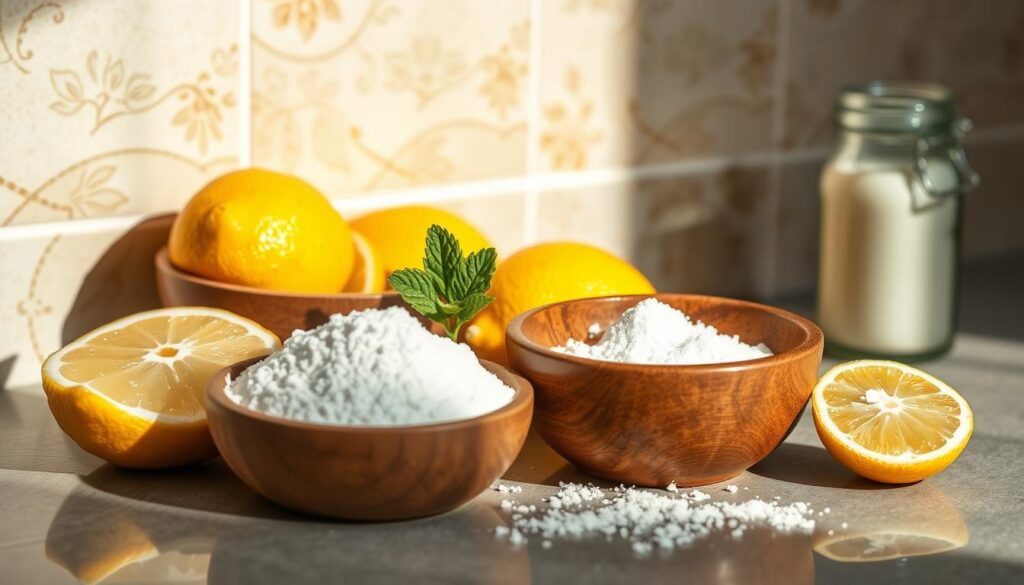
Baking soda is known for its gentle nature and ability to balance mouth pH. Mixing it with hydrogen peroxide can fight certain bacteria. Swish or brush it gently on your teeth to help prevent tartar buildup. But, remember, deep cleaning usually needs a dentist.
Apple Cider Vinegar Solutions
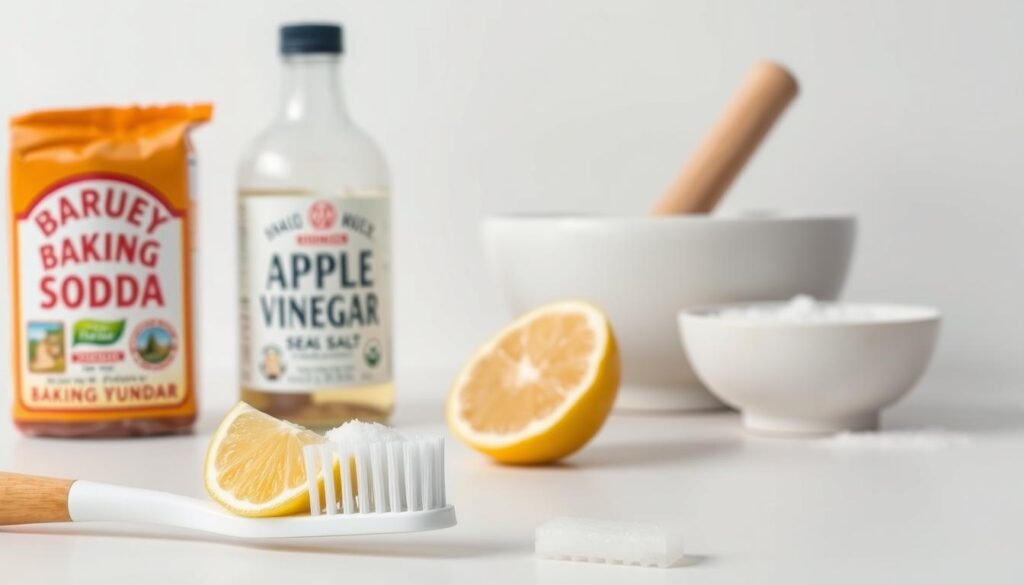
Apple cider vinegar can help loosen tartar with its mild acidity. But, always dilute it before rinsing to avoid damaging your teeth. It’s important to use it carefully to keep your teeth and gums safe.
Best Practices for Oral Hygiene
Improving your daily dental routine can protect your teeth and prevent tartar buildup. By focusing on the right techniques, you can keep your mouth healthy for a long time. This is easier than dealing with plaque problems later.
Home remedies for tartar removal often focus on quick fixes. But, paying more attention to the basics can offer better protection.
Daily Brushing and Flossing
Brushing your teeth twice a day helps remove small particles before they turn into hard plaque. Dentists suggest brushing at an angle and using circular motions to remove plaque. Flossing gets into areas your toothbrush can’t, helping to keep bacteria away. Doing these simple steps every day can help fight tartar.
- Brush for at least two minutes
- Use gentle pressure around sensitive gum regions
- Floss thoroughly between every tooth
Choosing the Right Toothbrush and Toothpaste
Using a soft-bristled toothbrush helps protect your enamel from damage. Electric toothbrushes from brands like Oral-B or Philips can also help improve your brushing technique. Toothpaste with fluoride strengthens your enamel, making it harder for cavities to form. Choosing the right tools is key to getting the most out of home remedies for tartar removal.
Professional Vs. DIY Tartar Removal
Some people try to remove Tartar plaque at home. But, dental clinics offer better precision and safety. They use special methods to clean areas under the gum line, avoiding damage to teeth and gums.
Dentists use ultrasonic scalers to remove tough buildup in tight spaces. This method helps avoid early gum recession or tiny cavities.
Benefits of Professional Cleaning
Dentists and hygienists are trained to remove tough deposits. They use tools that reach places regular brushing can’t. The main benefits are:
- Early detection of hidden decay
- Gentle care for sensitive gum tissue
- Guidance on personalized oral hygiene routines
When to Seek a Dentist’s Help
If you have bleeding or swelling, see a dentist. Tartar buildup can cause infections that harm your health. Regular dental visits are key to keep home cleaning as a supplement.
| Factor | Professional Approach | DIY Attempt |
|---|---|---|
| Equipment | Advanced ultrasonic tools | Basic picks or brushes |
| Technique | Licensed expertise | Limited skill |
| Outcome | Thorough removal below gum line | Higher risk of missed spots |
Tools for Home Tartar Management
Home tools can help with plaque control and regular care. People looking to remove tartar at home can use special devices. These tools target tartar buildup before it gets hard.
Dental Scalers and Their Uses
Metal scalers are a direct way to remove tartar. But, using them without a dentist can hurt gums and teeth. Dentists learn how to use these tools safely.
When using them at home, be careful. Gently move the scaler near the gum line. This can help remove tartar without damaging teeth or gums.

Alternatives to Traditional Dental Tools
Water flossers use pressurized jets to clean tight spaces. They help remove plaque without scraping, which is good for gums. Antimicrobial rinses also help by stopping bacteria growth.
Using these methods with regular brushing is a good way to keep teeth clean. It avoids the need for manual scaling tools too much.
The Role of Diet in Tartar Prevention
Eating right can help keep your mouth healthy. It keeps the pH levels balanced and slows down mineral buildup on teeth. A balanced diet fights plaque before it turns hard, helping your gums stay healthy and your teeth clean.
Many people try homemade tartar removal methods at home. But, what you eat is often the best defense. Foods high in fiber, like fruits and veggies, clean your teeth as you chew. They also help make more saliva, which fights off bacteria.
Foods That Help Prevent Tartar Buildup
Dentists recommend certain foods for better protection:
- Crunchy fruits and vegetables: Apples, celery, and carrots
- Calcium-rich dairy products: Cheese and yogurt
These foods help strengthen your enamel and fight off hardened plaque.
Avoiding Sugar and Acidic Foods
Snacking on sweet or sour foods can harm your teeth. It makes your mouth more acidic and speeds up tartar buildup. Too much sugar can also weaken your enamel, making it easier for plaque to stick.
Choosing the right foods can help prevent these problems. It’s a key part of keeping your teeth and gums healthy. This way, you can keep your smile shining bright.
Natural Mouthwashes for Tartar Control
Many people look into plant-based rinses or saltwater solutions to fight tartar. These options clean gently and can ease sore gums. They are often used to help keep up with dental care advice.
Ingredients to Look For
Some ingredients can cut down on bacteria and make your breath fresh. Look for:
- Aloe vera for soothing gum tissue
- Baking soda for temporary neutralization of acidic residue
- Salt for basic rinsing and gentle antiseptic action
How to Make Your Own Mouthwash
Making your own mouthwash is easy. Mix water with salt. You can also add a bit of baking soda or essential oil. Here are some tips to keep it safe:
- Use small amounts to avoid harming your teeth
- Swish it around for 30 seconds
- Throw away any leftover to avoid germs
These natural options are great as extra help. But, don’t forget to see your dentist regularly for thorough tartar removal.
Signs That You May Have Tartar
Spotting early signs on your teeth can stop bigger problems later. Hardened deposits often hide near the gum line. They might feel rough or gritty when you touch them. Checking yourself can help catch small issues before they get worse.
Tartar forms when plaque isn’t fully removed from tight spots. This lets bacteria grow, making gums tender. Staying alert to these small changes helps keep your mouth clean.
Common Symptoms to Identify Tartar Buildup
Gums that are inflamed or bleed when you brush gently might mean you have tartar. Bad breath that won’t go away is another warning sign. Seeing a dentist early can help keep your gums healthy.
Visual Indicators to Check For
Look for discolored patches where teeth meet gums. A closer look might show:
- Slight yellowish or brownish stains
- Unusual surface changes at the base of teeth
Regular checks can spot these signs early. This helps you take steps to keep your teeth and gums strong.
How Often Should You Clean Your Teeth?
Keeping up with a regular brushing routine is key to avoiding plaque. A consistent schedule is essential for strong teeth and healthy gums. Brushing in the morning and evening helps remove food particles before they turn into tartar.
Some people might need to brush more often, like those with dry mouth or wearing orthodontic appliances. They might also use special tools for cleaning between teeth.
Recommendations from Dentists
Dentists recommend brushing at least twice a day with a soft-bristled brush. They also suggest flossing or using interdental cleaners to get rid of food stuck between teeth. Using fluoride toothpaste can help strengthen your teeth and prevent acid damage.
There’s no better way to keep your teeth healthy than with a thorough cleaning routine.
Importance of Regular Dental Visits
Regular dental checkups are important for removing tartar that brushing can’t get. These visits also let dentists check your gums and look for any signs of tooth decay. Catching problems early helps keep your teeth and gums healthy for a long time.
Myths About Tartar Removal
Myths can confuse how we take care of our teeth. Some think rubbing hard with harsh stuff can get rid of tough tartar fast. But, they forget the need for right dental methods and expert advice.
Common Misconceptions
Some say fruit acids can melt away hard tartar. But, using strong chemicals can hurt gums and weaken teeth. Relying on wrong info can harm our teeth in the long run.
Fact vs. Fiction in Dental Care
Experts say the best way is to brush well, floss carefully, and get regular dental cleanings. Myths that say DIY tools are as good as dental ones are wrong. They ignore how dentists protect our teeth and gums. It’s important to follow advice from trusted health sources to avoid harm.
Long-Term Consequences of Untreated Tartar
Not removing tartar regularly might seem like no big deal. But, ignoring it can lead to serious problems. It can damage dental enamel and encourage bacteria to grow in hidden areas.
Impact on Overall Health
Tartar buildup starts with the gums but can harm more. It can cause pain and increase the risk of serious gum disease. This can make teeth unstable, leading to tooth movement and pain while chewing.
These issues can make everyday tasks hard. They can disrupt your ability to eat and speak comfortably.
Links Between Tartar and Serious Conditions
Ignoring tartar can lead to bigger health problems. Studies show links between gum disease and heart issues. It can also affect blood sugar levels in people with diabetes.
Regular cleaning and early treatment are key. They help prevent these serious health risks.
“Neglecting tartar can set off a chain reaction that extends beyond the mouth, affecting essential systems throughout the body.”
Conclusion: Should You Go to the Dentist?
Many people try to handle tartar at home. But, going to the dentist is key. Even with good brushing habits, some tartar stays hidden and can cause big problems.
Summarizing the Importance of Professional Care
Dentists have special tools that reach places your toothbrush can’t. These tools get rid of tartar that’s hard to remove. Regular check-ups also give you advice on how to take care of your teeth better.
This helps keep your teeth and mouth healthy for a long time. It’s all about taking care of your overall health.
Making Informed Decisions About Your Oral Health
Home remedies are good for prevention. But, they can’t replace a deep cleaning by a dentist. A dentist or hygienist can find and fix problems before they get worse.
This mix of education, prevention, and treatment keeps your smile safe. Combining home care with professional cleanings keeps your teeth healthy for years.