Chipped Tooth? Here’s What to Do Right Away.

Tooth enamel is the hardest part of our body. Yet, it can still break from sudden impacts or hard bites. Every year, many in the U.S. face tooth damage that needs quick care.
So, what should you do if you chip or break a tooth? Acting fast can prevent nerve damage and infection. Start by rinsing well, chew on the other side, and see a dentist right away. For more help, check out our broken tooth repair guide.
Key Takeaways
- Quick response protects against deeper damage.
- Gently rinsing helps remove dirt or debris.
- Limiting pressure on the injured tooth lowers discomfort.
- Dentists can treat fractures before complications appear.
- Timely home care and professional guidance ensure safer healing.
Understanding Dental Emergencies
Severe mouth injuries need quick action. Issues like damaged enamel, exposed nerves, or trauma can get worse if not treated fast. Early action often leads to better results and less pain.
What qualifies as a dental emergency?
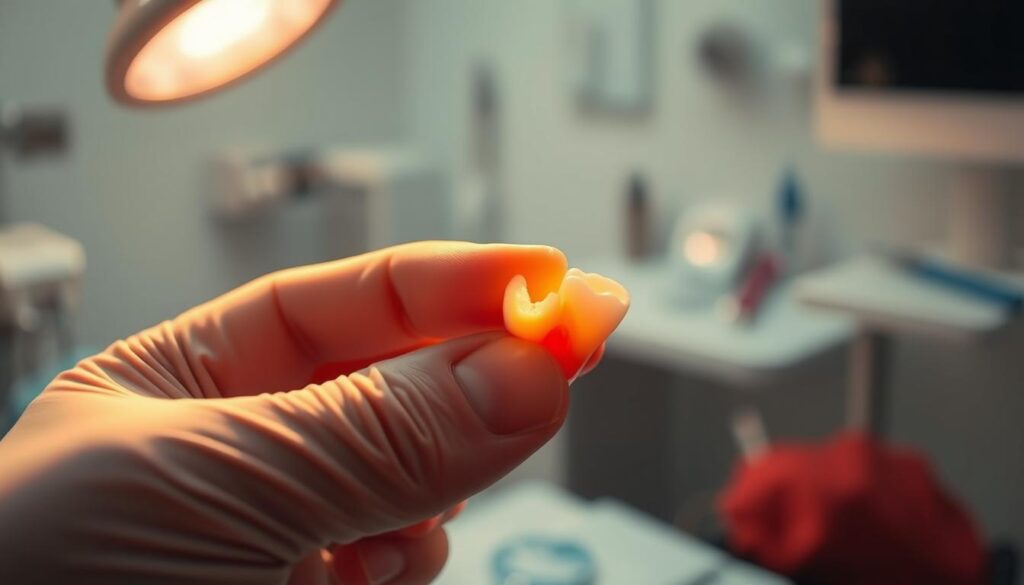
Dental emergencies often cause sudden pain or bleeding. This can include loose fillings, knocked-out teeth, or a broken tooth. If you feel pain from exposed nerves, you should see a dentist right away.
Doctors check how bad the damage is by looking at tissue response and inflammation levels.
The importance of seeking immediate care
Waiting too long can lead to infections and longer recovery times. Quick treatment helps avoid these problems. It also helps keep your teeth healthy.
Getting help fast is key to healing and keeping your mouth comfortable. We aim to help you get the best care possible.
Assessing the Damage
It’s crucial to know which injuries need quick attention for the best results. Dentists suggest carefully examining any exposed tooth surfaces. Also, pay attention to any ongoing pain or unusual feelings.
How to identify the severity of the chip or break
Small fractures might look like tiny ridges or shallow rough spots. A bite test and a visual inspection can uncover hidden cracks or chipped areas. Even if you don’t feel pain, it’s important to stay alert for proper care.
Deeper damage can be spotted by looking for lines that go towards the gumline and feeling more pain when biting. Sensitivity to hot or cold could also mean more serious damage.
Signs you need immediate professional help
Pain that spreads beyond the tooth or swelling around the gums is a sign of a possible emergency. Bleeding or intense throbbing might mean the nerve is exposed or infected. Seeing a dentist quickly can prevent bigger problems and keep your mouth healthy.
| Severity | Visible Symptoms | Recommended Action |
|---|---|---|
| Minor Chip | Rough edge | Arrange a routine visit |
| Moderate Break | Noticeable crack | Prompt dentist evaluation |
| Severe Damage | Deep fracture, severe pain | Immediate emergency care |
First Steps at Home
Acting quickly can help you feel better faster and heal smoother. Early care is key to any dental emergency treatment success. It reduces pain and prevents more problems. Simple steps can keep your mouth healthy until you see a dentist.
Rinse your mouth with warm saltwater
A gentle rinse can calm sore gums and reduce swelling. Mix salt with warm water and gently swish it around. This clears out debris and helps your gums heal.
How to control bleeding if necessary
Use sterile gauze to apply steady pressure on the bleeding area. If it keeps bleeding, swap out the gauze. Don’t press too hard. If bleeding won’t stop, you need to see a dentist right away.
Tips for managing pain at home
Use a cold compress on your cheek to lessen swelling. You can also try over-the-counter pain meds like ibuprofen. These steps help you stay comfortable until a dentist can treat you fully.
Do’s and Don’ts After a Tooth Injury
Many dental experts say quick action is key when a tooth gets hurt. Ignoring pain can make healing harder and delay fixing a cracked tooth. Taking early steps helps your mouth heal faster and keeps you comfortable.
What to Do Immediately After the Injury
Start by rinsing with warm saltwater to clean out debris and bacteria. Use a soft cold pack on your cheek to reduce swelling. It’s also important to see a dentist right away to check the damage and get the right treatment.
- Chew on the opposite side of the affected area
- Keep any loose fragments in a clean container
- Track any changes in sensitivity around the injured tooth
Common Mistakes to Avoid
Some people try to fix the tooth themselves with adhesives or keep poking at it. These actions can make things worse and increase the risk of infection. A dentist can help protect your teeth and prevent more damage.
| Recommended Action | Action to Avoid |
|---|---|
| Seek professional evaluation quickly | Ignoring persistent swelling or pain |
| Use mild antiseptic rinses | Applying superglue or temporary home repairs |
When to Call Your Dentist
Knocked-out teeth, deep pain, or swelling mean you need to see a dentist fast. A quick fix for a tooth fracture can help avoid infection and protect the area around it.
Urgency Based on Symptoms
Severe pain or tenderness might mean the tooth is badly damaged. If bleeding doesn’t stop after a few minutes, it’s a serious issue. Seeing a dentist quickly can prevent nerve problems and stop long-term pain.
How to Describe the Situation to Your Dentist
Telling your dentist what happened clearly is key. Mention when and how the injury occurred, like during a fall or sports. Describe any cracks, sharp edges, or pain in your gums. This helps your dentist plan the best treatment before you arrive.
Possible Treatments for a Chipped Tooth
Many chipped teeth can be fixed with careful dental work. Dentists who specialize in emergency care look at the chip’s size and depth. They help patients choose the best way to keep their teeth looking natural and avoid more problems.

Bonding and fillings for minor chips
Small chips usually get fixed with tooth-colored fillings. The filling is shaped and polished to blend with the tooth. Some people prefer bonding, where a composite is molded onto the chip. Both methods strengthen the tooth without needing a lot of work.
Crowns and veneers for larger breaks
Big chips might need stronger fixes. Crowns cover the whole tooth, keeping it strong and looking good. Veneers, however, just cover the front with a custom shell. Sometimes, a root canal is needed before a crown. Each choice has its own benefits for lasting power, cost, and comfort. Patients can find the best option with the help of emergency dental services.
Preventing Future Tooth Injuries
Simple habits can protect your teeth from chips or cracks. By making a few changes, you can lower the risk of accidents. Keeping your teeth clean and making smart choices helps keep them strong.
The American Dental Association says small actions can make a big difference. Brushing with fluoride toothpaste and flossing regularly helps keep teeth strong. Also, avoid biting hard objects or using your teeth to open packages.
Habits to adopt for better dental safety
Healthy habits can prevent tooth damage. Here are some tips:
- Use mouthwash after meals.
- Choose sugarless gum for snacks.
- Make sure to get regular dental exams to catch problems early.
Protective gear for sports and activities
Mouthguards are key for sports that involve contact. They help absorb shocks and protect your teeth. Wearing helmets and face shields adds extra protection during intense activities.
| Preventive Strategy | Benefit |
|---|---|
| Wearing a mouthguard | Guards against direct collisions |
| Fluoride treatments | Strengthens enamel against sudden impact |
| Regular checkups | Identifies early issues before they escalate |
Diet Considerations Post-Injury
Choosing healthy meals can help with recovery. Foods that are soft and full of nutrients are best. They put less pressure on sensitive teeth and help them heal.
Soft Foods to Eat After a Tooth Injury
Soft foods are easier on teeth that are not feeling well. Here are some good choices:
- Scrambled eggs or mashed potatoes
- Pureed soups or blended vegetables
- Yogurt, cottage cheese, or well-cooked pasta
Foods and Drinks to Avoid Until Treated
Hard or sticky foods can make things worse. Avoid foods with sharp edges or very hot or cold drinks. Eating hard candy or chewing on ice can damage teeth more. Drinks with lots of sugar can also harm teeth.
| Food | Reason |
|---|---|
| Mashed vegetables | Gentle on compromised teeth |
| Porridge | Easy to chew and swallow |
| Popcorn kernels | Risk of fracturing chipped surfaces |
| Sugary drinks | Potential for further decay |
Dental Insurance and Treatment Costs
Dental coverage can vary by provider, leaving many unsure about out-of-pocket obligations. Policies often address essential procedures but may impose different deductibles or co-pays. A plan that handles urgent dental care can offer stability during unexpected incidents.
Understanding your coverage for dental emergencies
Insurers typically categorize procedures under basic or major services. Chipped enamel might be labeled as basic, while a larger break needing extensive repair could require comprehensive benefits. Patients should examine plan limits and ask questions about annual caps, waiting periods, and pre-approvals.
What to expect in terms of expenses
Treatment costs hinge on the severity of the damage. Minor fillings may stay within moderate price bounds, yet root canals or multiple veneers often demand higher fees. Discussing estimates with the dental office allows better financial preparation for urgent dental care procedures.
| Coverage Type | Potential Benefits | Key Considerations |
|---|---|---|
| Employer-Sponsored | Partial payment | Check deductibles or co-insurance |
| Private Plan | Varies by tier | Review annual maximums |
| Discount Program | Reduced rates | Ideal for out-of-pocket savings |
Following Up After Treatment
A repaired tooth needs ongoing care. Regular dental check-ups can spot early signs of problems. This helps keep the tooth strong and your mouth healthy.
Why Regular Appointments Matter
Regular visits include x-rays and bite checks. These help make sure the repair is working right. If you notice any pain or gum issues, it could mean something’s not quite right.
Watching for Sensitivity or Pain
Feeling pain or sensitivity could mean a bigger issue is brewing. Getting it checked out quickly can prevent bigger problems. Keeping up with cleanings and brushing helps avoid future issues.