What Are Composite Fillings Used For?

Nowadays, about 92% of adults between 20 to 64 have had tooth decay in their permanent teeth. This shows how composite fillings have changed dental restoration big time. These tooth-colored fillings match your natural teeth, making your smile look great. They’re not just good-looking, though. Composite fillings are great at fixing teeth that are damaged from grinding or injuries. They mix plastic resin and glass powder to stick well to tooth enamel. This is why both dentists and patients often choose them.
Key Takeaways
- Composite fillings provide a hidden yet powerful dental restoration solution for millions of affected patients.
- These versatile fillings repair damage beyond cavities, including wear from teeth grinding and visible cracks.
- Sustainability meets aesthetics as these tooth-colored fillings bond with enamel and mimic the tooth’s natural appearance.
- Composite fillings have become a preferred choice for both their functional and visual benefits in tooth repair.
- A cutting-edge mix of plastic and glass offers durability that rivals traditional filling materials.
- As an educational cornerstone, the understanding of composite fillings is vital for dental professionals and informed patients.
Understanding Composite Fillings
Composite fillings are key in today’s dental care, bringing both aesthetics and strength. They are made from a substance that not only fills cavities but also fixes damaged teeth. This makes them useful in enhancing one’s smile.
Definition of Composite Fillings
Composite fillings mix plastic resin with fine glass. This combination is tough and looks good, matching your tooth color. They’re perfect for teeth that show when you smile. Besides filling cavities, they attach to teeth, making them nearly as strong as before.
How They Differ from Other Filling Types
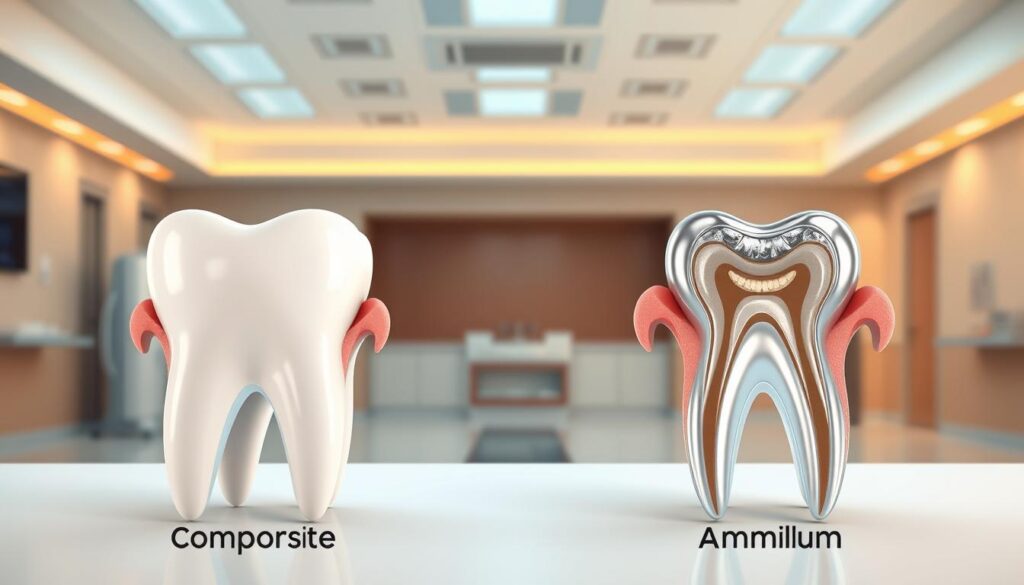
Composite fillings differ from metal-based ones, focusing on how they look. They match your teeth, blending in well. This is great for keeping your smile looking natural. They also need less of your tooth to be removed, which helps keep your teeth healthy.
| Feature | Composite Fillings | Amalgam Fillings |
|---|---|---|
| Material composition | Plastic resin and glass particles | Metal alloys |
| Aesthetic match | High (matches natural tooth color) | Low (metallic appearance) |
| Preparation required | Minimal (less invasive) | Extensive (more tooth removal) |
| Restorative strength | High (up to 95% of original strength) | Moderate |
Primary Use: Filling Cavities
Cavities are a big problem for teeth, mainly due to tooth decay. They start and grow because of bacteria, too much sugar, and not cleaning your teeth well. This makes a very acidic area that damages the tooth’s hard outer layer. If we don’t fix it quick, it can cause big tooth problems. This shows why it’s so important to deal with them fast and right.
For fixing cavities, composite fillings are very important. They stop tooth decay from getting worse. These fillings look good, which is why they’re often used for front teeth. Dental fillings help fix the tooth’s shape and stop more decay.
Composite fillings are liked because they last a long time and stick well to the tooth. This sticking helps fix the tooth but also makes it stronger. The filler can also be shaped to look like your real teeth, improving looks and fixing the cavity.
These fillings also help lower tooth sensitivity to hot and cold. This is great for those with cavities who feel discomfort with temperature changes. By having qualities that make the tooth stronger and less sensitive, composite fillings tackle both the feel and function issues caused by cavities.
Knowing how composite fillings help is key for anyone wanting to fix tooth decay. They play a big role in keeping your mouth healthy.
Aesthetic Benefits of Composite Fillings
The use of tooth-colored fillings has really improved cosmetic dentistry. These dental fillings not just fix teeth but also make smiles prettier.
Composite fillings, also known as white fillings, are key in cosmetic dental care. They match your teeth’s natural color. Old-style gold or amalgam fillings are more visible than composite ones, which look like part of the tooth.
Matching the color of fillings to your teeth boosts confidence. With them, people can smile without worry about showing metal fillings. For more details on how composite fillings improve looks, check out cosmetic dentistry enhancements.
Improving your smile can also make you feel better about yourself. Feeling confident about your teeth enhances self-esteem and how you interact with others. This is especially true for visible front teeth. With composite fillings, smiles look better, making great first impressions.
Composite Fillings for Chipped Teeth
For fixing dental repair, composite filings are a top pick. They make chipped teeth look good and work well again. These fillings are great for fixing broken premolars and molars too.
Chipped teeth can mess up how you eat and look, no matter where they are. Composite fillings fix these problems well. They make your teeth strong and look natural again.
| Teeth | Benefits of Composite Fillings |
|---|---|
| Premolars and Molars | Restores chewing functionality and protects against further decay or structural damage |
| Front Teeth | Improves aesthetic appearance by matching the natural color and transparency of adjacent teeth |
Composite fillings help damaged teeth a lot. They ensure your teeth last longer and avoid more problems. They’re key in dental repair today.
They fix chips in premolars and molars and make front teeth look natural. Composite fillings are great for dental health and self-esteem. They match your teeth perfectly and are a top dental care choice.
Longevity of Composite Fillings
When talking about fixing teeth, how long composite fillings last is very important. These fillings look good and have greatly improved over time. Knowing their lifespan and what affects their durability is key for patients and dentists.
Generally, composite fillings last between 7 to 10 years. But, this depends on where the filling is and how well the person takes care of their teeth. Composite fillings are great for those who want fillings that look like their real teeth.
- Average Lifespan Compared to Other Materials: Usually, composite fillings can last about 7 years. But, thanks to better dental technology, they’re lasting longer.
- Factors Affecting Durability: How long these fillings last really depends on good dental care. That includes visits to the dentist and taking good care of your teeth at home.
To keep composite fillings in good shape, it’s important to go to the dentist regularly. You should also follow their advice on taking care of your teeth. Avoiding hard candy, eating less sugar, and not using your teeth as tools will help too.
In the end, composite fillings are a great choice for good-looking and long-lasting tooth repairs. Taking good care of these fillings is key to keeping your teeth healthy and working right.
Composite Fillings vs. Amalgam Fillings
When looking into dental filling options, patients compare composite and amalgam fillings. Each type offers unique benefits and drawbacks. These include the patient’s specific dental needs, looks, and budget.
Knowing the differences between these fillings is key to choosing wisely. Here, we’ll explore the good and bad points of each. Plus, we’ll look at costs to help you decide on the best dental care.
Composite fillings, liked for blending in with your teeth, need less drilling. This means more of your tooth is saved. In contrast, amalgam fillings are tough and less expensive. These are key for keeping teeth healthy over time.
| Feature | Composite Fillings | Amalgam Fillings |
|---|---|---|
| Aesthetics | Color matched to teeth; visually appealing | Metallic look; stands out more |
| Durability | Lasts 5–7 years; longer with good care | Lasts 10–15 years; very strong |
| Initial Cost | More expensive; depends on tooth and complexity | More affordable; good for many fillings |
| Procedure | Less drilling; often done in one visit | Requires removing more tooth |
The choice between composite and amalgam fillings isn’t just about price. It also involves thinking about how they look long-term, how much tooth has to be worked on, and patient comfort. While amalgam fillings might be cheaper at first, the less invasive procedure and nicer look of composite fillings could be better overall.
Situations Where Composite Fillings Are Ideal
Composite fillings are key in today’s dentistry, especially for treating cavities. They’re great for both looking good and fixing teeth. These fillings work well for many dental problems. They keep your mouth healthy and make your smile look better.
They’re really good for fixing small to medium-sized cavities. Composite fillings are perfect for the front of your teeth. They won’t mess up your smile like metal fillings can. They last a long time and match your teeth’s natural color.
Composite fillings also fix chips, cracks, or wear on teeth. This damage can come from an injury or just everyday use. Not only do they make your teeth work right again, but they also make them look better.
For making smiles prettier, these fillings are used in dental bonding. They can reshape teeth, fix color issues, and fill gaps easily. This doesn’t need big dental work.
So, composite fillings are popular for fixing and beautifying teeth. They’re a top pick for all sorts of dental fixes.
The Procedure for Getting Composite Fillings
Getting a composite filling starts with a dental consultation. This is where the health of your teeth is checked. Your medical history and how you take care of your mouth are also talked about. A composite filling is suggested if needed, often after checking your teeth with X-ray images to see any decay or damage.
The next step is applying the composite filling. This is a crucial part of fixing your tooth. The process includes several steps:
- Removal of Decay: The dentist removes any decay or old filling from the tooth. This leaves only the healthy part of the tooth.
- Tooth Preparation: The area is then made ready with a mild acidic solution. This makes the tooth’s surface ready to bond with the composite.
- Application of Composite: The composite resin is put on in layers. Each layer is made hard with a special light quickly.
- Shaping and Polishing: The filling is then made to match your tooth’s shape. It’s also polished to look and feel like your real tooth.
Doing a composite filling is done with care. It aims to make your tooth work well and look good again. We use advanced techniques and check the filling’s fit carefully. This helps the new filling work well with your teeth, making them look and work better.
The table below shows what happens during a composite filling appointment. It gives a clear picture of each step.
| Stage | Description | Duration |
|---|---|---|
| 1. Consultation & X-Ray | Determination of filling necessity through visual and digital diagnostics. | 30 minutes |
| 2. Decay Removal | Isolation and elimination of decayed sections of the tooth. | 20 minutes |
| 3. Tooth Preparation | Acidic etching and surface preparation for bonding. | 10 minutes |
| 4. Filling Application | Sequential layered application and curing of the composite material. | 40 minutes |
| 5. Shaping & Polishing | Finishing touches to ensure a smooth, natural look and feel. | 20 minutes |
Every step of applying the composite filling is done with great care. This results in a strong and lasting repair. By breaking the process down into steps, it becomes less confusing for patients. This stresses how important it is to get professional dental care to keep a healthy smile.
Caring for Composite Fillings
Taking good care of composite fillings is key for lasting dental health. It’s not just about looks; correct care keeps your mouth healthy. Here are some important tips and foods to consider.
Daily Oral Hygiene Tips
- Brush twice a day with a fluoride toothpaste to prevent decay around the fillings.
- Floss daily to remove plaque from areas that the brush doesn’t reach, particularly around the filling edges.
- Use an antiseptic mouthwash to kill bacteria and reduce plaque.
- Schedule regular dental check-ups for professional cleaning and to monitor the condition of the fillings and overall oral health.
Foods to Avoid
To make your composite fillings last, watch what you eat:
- Avoid hard foods like ice and hard candies that can crack or chip the filling.
- Limit sticky sweets such as caramel, which can pull at the filling and may lead to dislodgement.
- Reduce the intake of sugary foods and beverages that can lead to decay and staining.
- Stay away from highly pigmented foods and drinks like coffee, tea, and red wine to prevent discoloration of the composite material.
Good care and oral hygiene practices are vital for your dental health. Seeing your dentist regularly helps spot problems early. This way, your composite fillings will work well and look good for a long time.
Signs You Might Need Composite Fillings
Knowing when to get dental help is key to keeping a healthy mouth. Signs that you might need composite fillings include being sensitive to touch and seeing holes or chips. These issues show there might be bigger dental problems. Fixing them quickly can stop more serious issues.
If hot or cold foods make your teeth hurt, it could mean you have tooth decay or your enamel is wearing away. This means it’s time to see a dentist to see if you need composite fillings. These fillings can make your tooth strong again and stop the pain from tooth sensitivity.
Also, if you see any holes or chips in your teeth, it’s not just a problem with how your teeth look. It could be a sign of dental symptoms like decay or damage. By using composite fillings, a dentist can fix these flaws. This makes your teeth work right and look good again.
| Symptom | Potential Cause | Suggested Dental Treatment |
|---|---|---|
| Increased sensitivity to temperature changes | Decay or enamel erosion | Composite fillings |
| Visible holes or chips | Physical trauma or decay | Composite fillings |
Spotting these signs early and talking to a dentist is really important. Using composite fillings right away can keep your mouth healthy. It stops decay from getting worse. This keeps your smile both looking great and working well.
Post-Procedure Considerations
After getting composite fillings, patients may feel more sensitivity. This part gives tips for care after the procedure. It highlights how important follow-up visits are. They make sure the treatment works well over time.
Temporary Sensitivity often happens after composite fillings are done. Patients might find their teeth are more sensitive to hot and cold things, or when biting down. This usually goes away after a few weeks. Using a soft toothbrush and special toothpaste for sensitive teeth helps. It makes the discomfort less and sensitivity goes down faster.
Practicing diligent aftercare is paramount in minimizing dental procedure sensitivity and enhancing comfort following dental procedures.
Follow-Up Appointments are vital for keeping your teeth healthy after fillings. going for regular dental checks keeps an eye on the fillings. It makes sure they’re okay, your bite is right, and no new decay starts under the filling.
| Appointment Type | Purpose | Recommended Frequency |
|---|---|---|
| Initial Check-Up | To ensure proper placement and comfort post-procedure | 1-2 weeks after procedure |
| Routine Examination | Monitor the integrity of the filling, adjacent teeth, and overall oral health | Every 6 months |
| Comprehensive Evaluation | Full assessment of oral health, including screening for new dental issues | Annually |
Sticking to your follow-up visits is key to making your composite fillings last. These check-ups help in taking care of your teeth early. This can avoid bigger dental problems and keeps your mouth healthy.
Cost of Composite Fillings
It’s important to know about the cost of dental care, like composite fillings. Prices change depending on where you are and the dentist’s skills. Let’s look at what composite fillings cost in the US.
Average Prices in the United States
| Region | Average Cost |
|---|---|
| Northeast | $200 – $400 |
| Midwest | $150 – $350 |
| South | $140 – $300 |
| West | $180 – $450 |
Dental work, like getting composite fillings, can be expensive. It’s key to check all your options to budget wisely.
Insurance Coverage and Financing Options
Most dental insurance helps pay for composite fillings, making it easier on your wallet. Dentists offer different payment plans too. This means you can get treated now and pay later, avoiding delays because of money worries.
Planning your dental expenses means looking at both the initial costs and future gains of treatments. With the help of insurance and payment plans, affording dental care is easier. This way, you can get the care you need without financial stress.
Common Misconceptions About Composite Fillings
Composite fillings are becoming more popular but there’s still a lot of myths about them. This section tackles the most common myths, especially those about how long they last and worries about dental allergies.
Durability Misconceptions
There’s a widespread belief that composite fillings aren’t as tough as metal ones. Yet, dental materials and tech have gotten better, making these fillings much stronger. These days, with the right care, composite fillings can be effective for up to 15 years, showing they’re durable and reliable for fixing teeth.
Beliefs About Allergies
Some people worry about allergies to the resin in composite fillings. But, allergic reactions are very rare. The materials in these fillings are mainly safe and don’t cause bad reactions in most patients. This highlights the safety of using composite fillings for dental work.
| Aspect | Reality |
|---|---|
| Longevity of composite fillings | Can last up to 15 years with proper care |
| Risk of allergies | Allergic reactions to composite materials are rare |
By busting these myths, patients can choose composite fillings wisely, based on true info. This ensures they understand both the benefits and the safety of this dental choice.
Conclusion: The Versatility of Composite Fillings
In summary, composite fillings play a big part in modern dentistry. They offer both great function and looks. These fillings are great because they can fix cavities and breaks while looking natural. They match your tooth color perfectly.
Their design can be shaped to fit any need, making them perfect for many dental fixes. This creates long-lasting results that look just like your real teeth.
Dentists use composite fillings to help keep smiles looking great. This shows how important it is to talk to a dentist about dental work. They make sure you get the care that fits just right for your teeth.
If you’re thinking about improving your dental health, see a dentist first. They will check your teeth and make a plan with you. The aim is to make your dental health the best it can be. This helps keep your smile looking great and boosts your confidence.