Are Dental X-rays Safe and Necessary?
Every year, the U.S. sees over 75 million dental X-rays. This shows how much we rely on this technology to keep our mouths healthy. Yet, people often wonder if dental X-ray safety and their need can go hand in hand. Dental X-rays are truly critical for today’s dentistry, as they offer views beneath our gums that regular check-ups can’t. They help spot tooth decay, bone loss, gum disease, infections, jaw fractures, and growth issues, proving dental imaging importance for overall dental care.
The question of ‘are dental X-rays safe and necessary?‘ comes up a lot in medical discussions. Even though there’s some worry about radiation, the risk from dental X-rays is pretty low. This is especially true when compared to radiation from common items at home or the environment. By following strict safety steps, we reduce these risks even more. This ensures the right balance between keeping patients safe and getting clear diagnoses. Yet, it’s important to use dental X-rays carefully. They should only be done when they clearly help with understanding and improving oral health.
Key Takeaways
- Dental X-rays show vital details that can’t be seen in regular check-ups, which shows the dental imaging importance.
- Are dental X-rays safe and necessary? Yes, especially when we follow safety steps to lower risks.
- The radiation from all dental X-rays is similar to what we get from everyday things.
- Using dental X-rays wisely and sparingly can help spot and treat issues sooner, improving oral health.
- Healthcare professionals should decide how often to take dental X-rays based on what each patient needs.
Understanding Dental X-rays
Dental X-rays are crucial in modern dentistry. They give us insights we can’t see during a normal oral check-up. Learning about their types, benefits, and how they work shows their importance in dental health.
What Are Dental X-rays?
Dental X-rays use a kind of electromagnetic radiation. They take detailed pictures of your mouth’s inside, like teeth, gums, and jawbone. These pictures are key for finding issues like cavities and gum disease. They also help in planning treatments and keeping an eye on oral health.
Types of Dental X-rays
There are two main kinds of dental X-rays, each for different needs. Intraoral X-rays are taken with the film inside the mouth. They include bitewing, periapical, and occlusal X-rays. These are important for spotting cavities and checking the health of tooth roots and bones. Extraoral X-rays, like panoramic, cephalometric, and cone beam CT scans, are done with the film outside the mouth. They give a wider view of the teeth, jaw, and skull. This type is crucial for looking at jaw growth and spotting problems in nearby areas.
How Dental X-rays Work
Taking a dental X-ray involves steps to guarantee clear images and patient safety. Dental technicians use protective gear, such as lead aprons and thyroid collars. These protect against unnecessary radiation. The patient might sit or stand while the technician places the X-ray film or digital sensor in their mouth.
The placement is key for clear images of specific areas. After positioning, they turn on the X-ray machine. A small burst of radiation goes through the mouth and takes essential pictures on the film or sensor.
Good dental radiography practices are linked to the success of dental imaging. They ensure high-quality images and safety. Knowing how dental X-rays work helps us understand their benefits. These benefits are crucial for accurate diagnosis and treatment plans.
The value of dental imaging is huge because it helps spot hidden oral problems early. Better imaging methods are always being developed. They make diagnostics more precise and reduce exposure risks. This shows progress in dental radiography and increases the benefits of dental X-rays.
The Purpose of Dental X-rays
Dental X-rays are key in today’s dentistry. They help in diagnosing, monitoring, and planning treatments. These images are vital because they can find dental caries and other issues not seen in a normal exam.

Diagnosing Dental Issues
Reasons for dental X-rays include finding different oral health problems. This ranges from dental caries and bone loss to jaw fractures and occlusal abnormalities. X-rays give a full picture of the teeth, bones, and surrounding soft tissues. This helps dentists spot issues early on.
Monitoring Oral Health
Getting dental X-rays regularly is crucial for monitoring oral health. They spot changes in dental structure and track the progress of existing conditions. Early detection through X-rays can stop the need for bigger, more invasive treatments later.
Treatment Planning
Dental X-rays are also key in treatment planning. They are essential for complex procedures like dental implants, treating gum disease, and orthodontic work. X-rays give crucial information that helps dentists make effective treatment plans for patients.
Knowing the dental X-ray importance is vital for doctors and patients alike. They are a main part of modern dental care. They improve the ability to diagnose, monitor, and plan treatments for various dental issues.
Safety Measures in Dental X-ray Procedures
Keeping patients safe during dental X-ray procedures is crucial. This dedication to safety comes from strict X-ray rules and better dental X-ray tech. We’ll look at what keeps modern dental X-rays safe.
Equipment Safety Features
Modern dental X-ray machines have safety features to protect patients. One key feature is the collimation of X-ray beams. This reduces unnecessary radiation by focusing the X-ray beam only on the needed area.
Protective gear, like lead aprons and thyroid collars, is also vital. They guard against stray radiation. This ensures the diagnostic beams target only the necessary areas safely.
Operator Training and Protocols
Dental pros get a lot of training on using dental X-ray tech right. They learn about handling the machines, how to position patients, and the timing of X-rays. They also learn key safety steps to protect everyone.
They follow the ALARA principle too. It stands for “As Low As Reasonably Achievable”. It means they work hard to keep radiation exposure as low as possible for safety.
This focus on dental X-ray safety is about more than just rules. It’s about earning trust by putting patient health and safety first. It also helps in getting better diagnoses with advanced technology.
Radiation Exposure from Dental X-rays
Learning about radiation exposure in dentistry is essential for doctors and patients alike. Dental X-rays do involve some radiation. We compare radiation from X-rays to common sources to show they’re safe and important for dental care.
Understanding Radiation Levels
Dental X-rays use low-level radiation for clear images of teeth and gums. The radiation amount is measured in microsieverts (μSv), showing minor exposure. For instance, a typical dental bitewing X-ray exposes patients to about 5 μSv. This is much lower than many other medical scans.
Risks of Radiation Exposure
Though the levels are low, dental X-ray risks are real. There’s a small risk of cancer from any radiation, even low doses from dental X-rays. Doctors always think hard before suggesting X-rays, especially for kids and pregnant women, to avoid unnecessary risk.
Comparing Radiation to Other Sources
Understanding dental X-ray radiation is easier when compared to other types. Everyday things like watching TV or flying expose you to similar or more radiation. For example, an international flight exposes you to around 100 μSv of cosmic radiation. That’s much more than a dental X-ray.
This context shows that dental X-rays are relatively safe compared to common radiation sources. They play a crucial role in keeping our mouths healthy.
The Necessity of Dental X-rays
Knowing when dental X-rays are needed is key to better patient care. It helps experts find issues that our eyes can’t see. This highlights how crucial X-rays are. But, it’s also important to know when they’re not needed. This makes sure each patient gets care that matches their oral health needs.
So, when do doctors suggest dental X-rays? There’s no simple answer. It really depends on each person’s unique situation:
- Full check-ups for new patients without past dental records.
- Finding cavities hidden between teeth or under fillings.
- Checking for bone loss in patients with gum disease.
- Looking at the condition of dental roots, like before root canals or tooth removal.
- Identifying breaks or damage inside a tooth after an injury.
X-rays might not be needed right away in some cases:
- If a patient already has recent X-rays and no new issues.
- Dental checks that show no signs of tooth decay or gum disease getting worse.
- People who should avoid radiation, unless it’s really needed.
Understanding the right balance of dental X-ray frequency and dental X-ray importance helps everyone. Patients and doctors make better choices for care. They use X-rays wisely to keep treatments safe and effective.
Potential Risks and Benefits
Dental X-rays are key for diagnosing teeth problems, but we must balance the good and bad. Knowing how they can help or harm you in the short and long term is important. This helps make smart health choices.
Dental X-ray risks come from the radiation you’re exposed to. Even though it’s a small amount, it adds up if you have many X-rays. Immediate harm from this radiation is unlikely. But over a long time, the risk for some diseases goes up, especially in kids. It’s important to think about this when getting lots of X-rays.
The dental X-ray benefits are huge, especially for spotting problems early. Catching things like decay, infections, and issues with bones early can make treatments work better. Using X-rays to find dental issues early stops them from getting worse. This means you might avoid tougher and more expensive treatments later.
Early detection of oral health issues through dental X-rays significantly outweighs the minimal risks associated with radiation exposure, fostering better overall dental care and patient outcomes.
We in dentistry always try to balance these aspects to keep patients safe and ensure their teeth are well cared for.
Finally, dental X-rays are becoming safer thanks to updates in X-ray tech and better safety practices. This means their role in keeping your teeth healthy and spotting issues early is more important than ever.
Dental X-rays in Children
When it comes to pediatric dental radiography, safety and effectiveness are key. Children are more sensitive to radiation. So, special steps are needed to keep them safe during dental X-rays.
Special Considerations for Pediatric Patients
To cut down on radiation, specific precautions are important. Thyroid collars shield a child’s vulnerable gland, lowering radiation risks. Also, using protective shields and setting the machine for children reduces radiation even more. These steps make sure pediatric dental radiography is as safe as it can be.
Frequency of X-rays for Kids
How often kids need dental X-rays depends on their unique needs, not a set schedule. Things like age, dental health, and risk for cavities influence this decision. Tailoring the approach like this avoids needless radiation.
The aims are to protect children’s health and to help their teeth develop right. By thinking over these factors, dental pros can make great use of X-rays in children’s dental care. It’s about finding the right balance for each child’s health and dental needs.
The Role of Technology in Dentistry
In dental care, technology is key for better diagnosis and treatment. Dental X-ray technology and digital imaging in dentistry are big advances. These enhanced diagnostic tools change how dentists work with oral health.

Digital X-rays are a big step up from the old ways. They lower radiation for patients and give clearer pictures for dentists. This helps them find problems early and plan treatment better.
Digital imaging in dentistry has made treatment safer. It reduces radiation and makes image sharing quick and easy. This is great for working together on patient care.
Learn how digital imaging is used in everyday dental visits at dental check-ups and cleanings. These tech improvements help with all kinds of dental work. They lead to better results for patients.
Adding dental X-ray technology to daily dental practice is a big change. It’s making care better and safer for patients. This matches today’s digital age and raises the bar in dental care.
Patient Perspectives on Dental X-rays
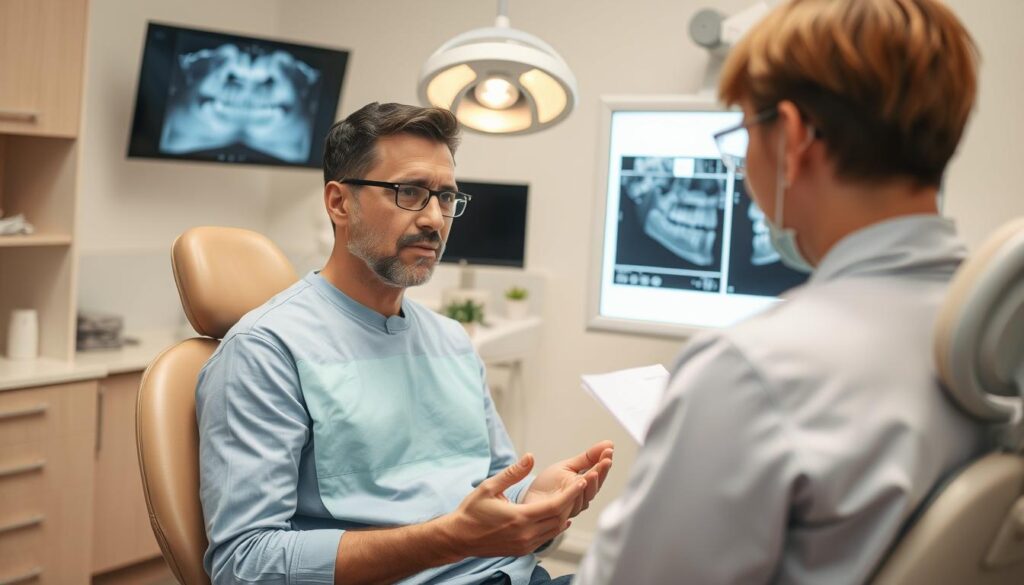
Finding out how patients feel about dental X-rays is key for patient education in dentistry. Many times, people have fears because they don’t understand the procedure well. It’s important to talk about these worries, so we can help patients feel more at ease and work with them better.
Common Concerns and Misconceptions
A lot of people are scared about the safety of dental X-rays. They are mostly worried about radiation. When patients learn more about dental X-rays, they see how these are important for looking after their teeth. Talking openly with a dentist can clear up wrong ideas and make patients feel more trusted.
How Patients Can Prepare
- Review medical history and discuss any potential pregnancy with the dentist to ensure appropriate precautions are taken.
- Bring previous dental X-rays to avoid unnecessary additional radiation exposure.
- Follow the specific instructions provided by dental professionals during the X-ray procedure to ensure everything goes smoothly.
Better patient education in dentistry clears up the mystery around dental X-rays and gives patients control. This is a big help in addressing dental concerns the right way. It makes sure patients get top-notch care while staying calm and informed.
Insurance and Cost Considerations
When we think about dental care, two big things stand out: how dental health insurance helps and the out-of-pocket costs we need to handle. These are key in planning for dental care costs.
Often, dental health insurance may help pay for X-rays to prevent dental problems. But the coverage details, like how much they pay and what X-rays are covered, can change a lot between different insurance plans. It’s very important to check these details to prevent any surprise bills.
Different X-rays come with different out-of-pocket costs. More advanced imaging might be better for your dental health but could cost more. Thinking about this carefully is important.
| Type of X-ray | Coverage by Insurance | Estimated Out-of-Pocket Cost |
|---|---|---|
| Standard Bitewing | Usually covered | $10 – $50 |
| Panoramic | Often covered | $100 – $200 |
| 3D Imaging | Seldom covered | $250 – $600 |
In short, insurance coverage for dental X-rays can vary, based on your policy details. And managing out-of-pocket costs needs smart planning. Checking with your insurance and knowing what type of X-rays you need is a crucial step.
Regulations and Guidelines
Following dental radiography guidelines is key for keeping high professional dental standards and regulatory compliance. We’ll look at how professional groups and regulators make these rules.
Professional Recommendations: Groups like the American Dental Association give detailed rules for dental radiography. They aim to ensure dental X-rays are used rightly and safely for each patient. This helps lower unnecessary radiation but keeps the quality of diagnosis high.
Regulatory Body Standards: Organizations like the National Council on Radiation Protection and Measurements set and refresh dental radiography safety standards. Their advice, based on deep research, helps dental offices follow top-notch radiographic methods. Learn more at state-of-the-art radiographic techniques.
For dentists, understanding dental radiography guidelines deeply and sticking to professional dental standards is a must. This ensures patients are safe and dental health checks and treatments work well. It keeps dental work in line with strict regulatory compliance.
Alternatives to Traditional X-rays
As dental technology gets better, we have more dental imaging alternatives. These include Cone Beam CT (CBCT) and other non-radiographic technologies. They offer detailed, three-dimensional images. This improves how we diagnose and plan treatment.
Knowing when to use these options is important. It depends on what the dental work involves and the patient’s health. In some situations, like complex root canals or implant planning, CBCT’s detailed images are not just helpful, they’re needed.
| Technology | Uses | Advantages |
|---|---|---|
| Cone Beam CT (CBCT) | Implant planning, Diagnostic assessments | High-resolution 3D images, Precise measurement capability |
| Ultrasound | Soft tissue examinations | No radiation exposure, Real-time imaging |
| Magnetic Resonance Imaging (MRI) | TMJ disorders, Soft tissue pathologies | Exceptional soft tissue contrast, No ionizing radiation |
In conclusion, while traditional dental X-rays are still useful, the rise of dental imaging alternatives like Cone Beam CT (CBCT) lets us diagnose and plan treatments better. They meet the specific needs and health concerns of patients more effectively and safely.
Expert Opinions on Dental X-rays
Dental health heavily depends on professional perspectives on X-rays. These guide best practices and ensure patient safety. We’ve gathered wisdom from dental experts. They discuss the key points and careful considerations of using dental X-rays, integrating dental expert insights and important radiological assessments.
What Dentists Say: Dentists highlight how crucial X-rays are for seeing hidden dental issues, like infections, that can’t be seen in a regular exam. They are committed to safety, using lead aprons and thyroid collars to protect patients from too much radiation. This helps them diagnose effectively while keeping radiation exposure low.
Insights from Radiologists: Radiologists add to dental care by improving our understanding of X-rays. They explain how newer digital X-rays lower the amount of radiation and give clearer pictures. Their knowledge helps create rules for when to use X-rays, thinking about the patient’s health history and needs.
| Expert Group | Core Insights | Recommended Practices |
|---|---|---|
| Dentists | Advocate for responsible use of X-rays; vital for comprehensive oral health assessments. | Use of safety gear, adherence to minimized exposure levels. |
| Radiologists | Provide depth in radiological assessments; endorse new technologies for safety and efficacy. | Guided application based on individual medical history and technological advancements. |
Conclusion: Weighing Safety and Necessity
In the world of teeth care, using dental X-rays shows our ongoing effort to balance good diagnosis with keeping patients safe. Making sure patients are safe is most important. In dentistry, getting patients’ agreement is key to this aim. By sharing knowledge wisely, dentists show how to use X-rays carefully while looking after health.
When thinking about dental X-rays, we see how crucial they are. They give dentists important information that they can’t get any other way. With strict safety measures, using dental X-rays makes sense because they help take the best care of patients. Dental technology has improved a lot, making X-rays safer and a must-have for checking oral health well.
About making choices, talking openly with patients helps them make good decisions. When patients know the benefits and risks of dental X-rays, they feel more in control. This kind of talk builds trust and makes the agreement process better. Looking ahead, the mix of better medical science and focusing on patients will keep improving how we match safety with what’s needed in dentistry.