Are X-rays Needed at Every Dental Check-Up?

More than 80% of American adults have experienced at least one cavity by the time they’re 34. Yet, how often you need dental X-rays can really differ. When you wonder: Will I get X-rays at every dental check-up? there’s no easy yes or no. The need for dental check-up X-ray is different for everyone. It depends on your own teeth’s health, your past dental issues, and your dentist’s plan to keep your teeth healthy. It’s key to know that you won’t necessarily need X-rays at every visit.
Dental X-rays play a big part in finding tooth problems and planning how to fix them. However, not everyone needs them at each visit. If you’re healthy and don’t have major tooth problems, X-rays once a year might be enough. But, if you’re dealing with tooth disease or need more careful watching, you might need X-rays more often. Knowing when you really need X-rays can help match what you expect with the care that’s just right for you.
Key Takeaways
- The need for dental X-rays at each check-up changes based on your specific tooth health needs.
- Yearly dental X-rays might be all you need if you don’t have serious dental issues.
- If you’re fighting ongoing tooth problems, you might need X-rays more often.
- Dentists tailor X-ray use to best watch over and figure out problems like cavities and gum disease.
- Knowing when X-rays help can make you more involved and informed about your tooth care choices.
Understanding Dental X-rays
Dental radiography is key in finding and planning treatments for oral health problems. It uses X-ray technology to see areas hidden from our eyes. This improves both preventive and corrective dental treatment.
Dental X-rays are at the core of dental radiography. They are vital for a complete check-up of the mouth’s structures. They help find issues early, sometimes before symptoms show up.
What Are Dental X-rays?
Dental X-rays use a small amount of radiation to get detailed pictures of what’s inside the mouth. These images show important info about teeth, bones, and soft tissues. They’re key for checking oral health. Dental exams and cleanings use these images.
How Do Dental X-rays Work?
Dental X-ray technology makes images by using the different ways X-rays are absorbed. When radiation goes through the mouth, various structures absorb it differently. This creates a contrast used to spot cavities, infections, and other issues. So, dental X-rays are crucial for dental health.
Different Types of Dental X-rays
There are several dental X-rays, each serving a different purpose:
- Bitewing X-rays catch details of the upper and lower teeth in one area, helping find decay between teeth.
- Panoramic X-rays show a wide view of the mouth, all teeth, jaws, and even sinus and nasal areas. They are good for looking at tooth alignment and growth.
- Periapical X-rays focus on one tooth, from top to root to bone, to spot specific tooth problems.
- Occlusal X-rays look at the development and placement of full teeth arches in the upper or lower jaw, mainly in kids’ dentistry.
Following dental X-ray rules, these different types mean doctors can tailor their approach. This way, they can get the best results for the patient, while keeping X-ray use low.
The Purpose of Dental X-rays
Dental X-rays play a key role in today’s dentistry. They help find hidden dental problems and plan treatments. Dentists rely on them for a detailed look at oral health, beyond what the eye can see.
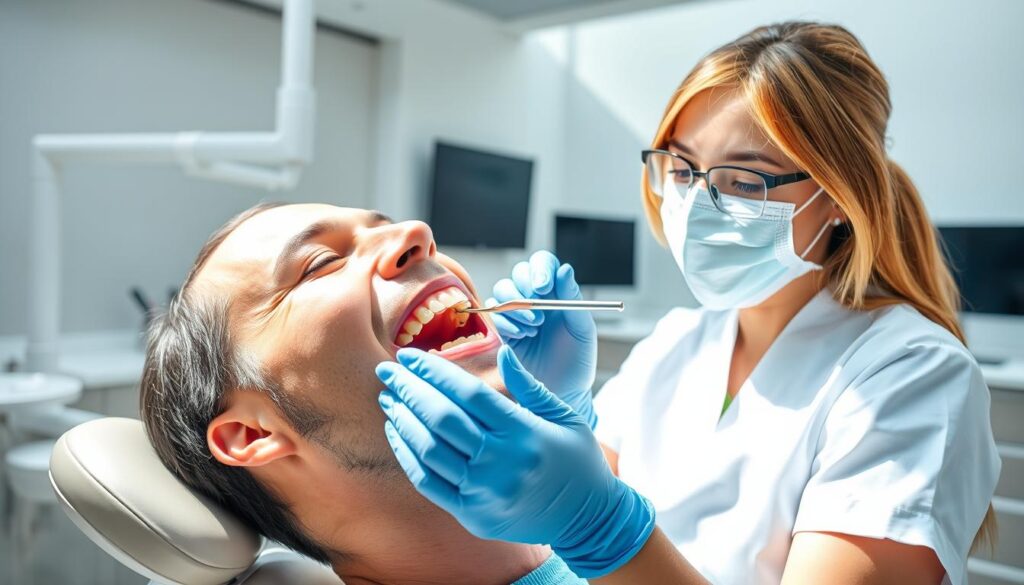
These X-rays are great at detecting cavities between teeth or under fillings. They show decay that you can’t see, helping to stop bigger issues before they start.
They also check the roots of teeth and the bone around them. This is crucial for finding gum disease and bone loss early on.
X-rays are a roadmap for many dental treatments, like braces, implants, and root canals. They help dentists avoid problems and ensure treatments work well.
Dental X-ray recommendations depend on each person’s situation. Factors like age, oral health, and past dental problems matter. X-rays are vital for accurate diagnoses and successful treatments, keeping teeth healthy.
How Often Are X-rays Recommended?
Choosing how often to get X-rays at the dentist depends on many things. These factors help give personal care based on dental health needs. Dentists use their knowledge to make X-ray schedules based on a patient’s age and health history. This way, they can avoid unnecessary X-rays.
Factors Influencing Frequency
The state of your dental health decides how often you need X-rays. This includes any current dental problems and the risk of future ones. If you have dental issues, you might need more X-rays to check on treatments or watch for diseases.
Age and X-ray Considerations
Age affects how often you need dental X-rays. Kids need them more to watch their teeth and jaw grow. Adults with good oral health need fewer X-rays. But, they may need more if they have issues like gum disease or frequent cavities.
Your Dental History
Your dental history is important for setting up your X-ray schedule. Dentists review your records to see if you often get cavities or gum disease. This helps decide how often you need X-rays.
The main goal of X-ray schedules is to care for patients while reducing risks. Every patient is different, needing a tailor-made X-ray plan. Dental experts guide this process, focusing on individual needs.
Common Myths About Dental X-rays
Talking about dental X-ray safety means addressing common misconceptions about dental X-rays. Some think they’re harmful, always needed, and just for finding cavities. These dental radiography myths confuse patients and affect their health care decisions.
Myth: X-rays Are Harmful
Many people think dental X-rays are bad because they use radiation. But modern dental X-rays give off very little radiation, thanks to digital tech. Safety steps like lead aprons also cut down any risk. This makes regular dental X-rays safe. They’re key for spotting and fixing dental problems.
Myth: X-rays Are Always Required
Some think you need X-rays at every dental visit. But dentists only use X-rays when they really need to, based on what each patient needs. Not every appointment will include an X-ray. This makes sure safety and need come first.
Myth: X-rays Are Only for Cavities
Many people believe dental X-rays only find cavities. But they do much more. They check bone health, look at growing teeth, and help plan braces, too. Knowing all their uses shows how vital they are for full dental care.
Teaching people and clearing up dental radiography myths is key. It helps patients trust in and value dental X-ray safety steps.
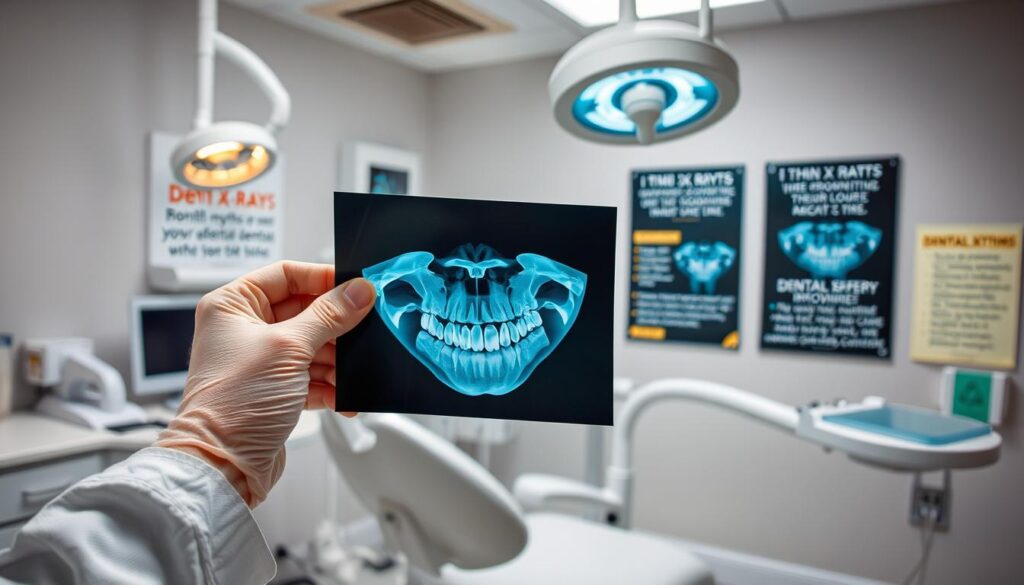
Safety Measures for X-ray Procedures
In dentistry, keeping patients safe during X-ray procedures is very important. It’s crucial to follow dental X-ray best practices for radiation safety in dentistry. This part talks about the important steps dental pros take to protect patients from too much radiation.
Protection from Radiation
Dental offices use protective gear to keep patients safe from radiation. Things like lead aprons and thyroid collars help a lot. Modern X-ray machines also help by focusing the X-ray beam only where it’s needed.
Best Practices in Dental Offices
Training dental staff well is a key part of dental X-ray best practices. This makes sure X-rays are only taken when really needed. Keeping X-ray machines in good shape is also important. It helps keep everything safe and effective, following radiation safety in dentistry rules.
| Best Practices | Benefits |
|---|---|
| Use of lead aprons and thyroid collars | Direct reduction in radiation exposure |
| Beam collimation | Focuses the radiation to the necessary area, minimizing unnecessary exposure |
| Regular equipment maintenance | Ensures consistent and safe operation of X-ray machines |
| Training and protocols | Guarantees that radiation use is justified and minimized |
Understanding the Risks vs. Benefits
When we talk about dental X-rays, it’s crucial to weigh their risks against their benefits. This helps decide how often they should be used and ensures they meet safety standards. By balancing these factors, doctors can use X-rays effectively while reducing any harm.
Radiation exposure levels in dental offices are carefully controlled to meet safety guidelines. Thanks to advanced technology, modern X-rays use very low levels of radiation. This makes them safe for checking your dental health. Still, it’s important to know how much radiation is used and why it’s needed for your care.
Dental health is incredibly important, and X-rays are a key part of keeping your mouth healthy. They let dentists spot problems that can’t be seen just by looking, like early gum disease, cavities hidden between teeth, and wisdom teeth that haven’t come in yet. This helps keep your teeth in top shape.
- Ensuring rigorous adherence to updated radiation safety norms.
- Regular training for dental professionals on safe X-ray practices.
- Personalizing the frequency of dental X-rays to individual health needs and history.

Choosing to use dental X-rays takes a careful look at each patient’s needs and safety standards. Through this detailed process, dental X-rays become a powerful tool. They help maintain dental health safely and effectively.
Alternative Imaging Techniques
The field of dentistry is always changing, and so are the tools we use for diagnosis and treatment. Innovative dental imaging methods, like 3D dental imaging and digital dental radiography, are changing the way both doctors and patients think about dental care.
3D dental imaging has changed dental diagnostics big time. It gives a three-dimensional look at the mouth’s inside. This is super helpful for planning treatments like implants with more accuracy. To learn more about how dentistry is changing, check out this article on aligner technologies.
Now, let’s talk about digital dental radiography. It’s known for being quick and safe. It lowers the risk from radiation, which is important for everyone’s health. Plus, it gives results fast, which is crucial during emergencies.
| Feature | 3D Dental Imaging | Digital Dental Radiography |
|---|---|---|
| Imaging Dimension | Three-dimensional | Two-dimensional |
| Primary Use | Implants, Surgery Planning | General Diagnostics, Quick Checks |
| Radiation Exposure | Variable | Lower than traditional X-rays |
Even with their benefits, these innovative dental imaging methods aren’t everywhere yet. The cost and training needed can hold back some clinics. But as they become easier to get, they’ll likely be used all over the world.
Whether it’s digital dental radiography or 3D dental imaging, dentists have new ways to give the best care. They use these tools well, knowing what they can do and their limits.
Communicating with Your Dentist
Talking openly with your dentist is key, especially about dental X-ray protocol. This dialogue makes things clearer and helps ease any worries, creating a smoother visit to the dentist.
Having an open talk about dental X-rays is crucial for your care. It helps you grasp the need for certain exams and how they help keep your mouth healthy. By asking questions, you become more involved in taking care of your dental health.
- What is the purpose of the X-rays suggested for my condition?
- Can you walk me through how these X-rays will influence my treatment plan?
- Are there any alternative imaging techniques that could be suitable for my case?
- What safety measures are in place to protect me from radiation exposure during X-rays?
- How often do I need to have X-rays taken, and why?
Asking these questions helps make dental X-ray protocol discussions more useful. It also gives you the power to understand and question your dental care plans.

Good patient-dentist communication is all about being clear and understanding each other. Patients need to feel they’re being listened to. And dentists should give clear, simple answers to concerns. This builds trust and leads to better dental health.
Special Cases for X-ray Needs
Special care is crucial when dealing with dental X-rays for children and expectant mothers’ dental radiography. We always weigh the need for X-rays against any potential risks. This ensures everyone’s safety and health is front and center.

For kids, keeping an eye on how their teeth grow and align is key. Sometimes, this means they’ll need X-rays. These help monitor the progression of their teeth’s emergence and positioning, vital for their oral health down the line.
Expectant mothers require extra caution during dental exams. If X-rays are a must, protective steps, like wearing a lead apron, are taken. This is to protect both the mom and the baby on the way.
Need more info? For a complete rundown on what to anticipate during these exams, check this detailed guide.
| Group | Precautions | Type of X-ray |
|---|---|---|
| Children | Minimum exposure, use of lead apron | Bitewing, Occlusal |
| Expectant Mothers | Shielding with lead apron, limiting use | Panoramic (if necessary) |
We pledge to maintain the highest precautions, especially when dental X-rays for children and expectant mothers’ dental radiography are involved. Making sure health outcomes are the best they can be without risking safety is our top priority. It’s key that both dental professionals and patients understand the careful use of X-rays.
When Are X-rays Not Necessary?
Understanding when dental check-up X-rays are not needed is important. We must look at the patient’s health history. There’s strong proof that we can cut down on unnecessary dental radiography without hurting care quality. This is especially true for patients without symptoms who have had good dental health before.
To decide if dental X-rays are not needed, there are some key rules. Dentists use their knowledge, the latest studies, and the patient’s history to guide them:
- Patients who go to the dentist often without showing signs of worsening dental problems.
- Those who haven’t had dental injuries lately, or signs like pain, swelling, or clear decay.
- People with a low risk of dental problems, as the dentist sees in check-ups.
Sometimes, just looking and feeling can be enough. This is true if the patient’s past dental records show a low risk. This way, we keep patients safe from unneeded X-rays. It also follows the best steps for care that puts the patient first.
| Criteria | Need for X-rays? |
|---|---|
| Consistent good oral health | No |
| History of frequent cavities | Yes |
| Recent dental procedures | Case-by-case basis |
| No symptoms or complaints | No |
Being careful with dental X-rays means we give care that is just right for each person. We lessen unnecessary dental radiography but still keep a close eye on dental health. This protects everyone’s well-being.
Importance of Regular Check-Ups
Regular dental check-ups are key for maintaining oral health and keeping your natural teeth for life. Engaging in routine dental care helps prevent big dental problems, protecting your overall health. At these check-ups, dentists perform tasks like checking for tooth decay, examining gum health, and routine cleanings. They aim to catch issues early on.
Preventive dental visits let experts find dental problems early, which is crucial to stop bigger oral health issues later. Catching problems early means treatments can be simpler and cheaper, easier on both the body and the wallet.
During these visits, dentists assess how well you’re keeping your mouth clean. They check for plaque or early signs of gum disease right away. The aim is to treat issues fast and suggest ways to keep your mouth healthy.
Knowing when you need X-rays is also part of these check-ups. Talk to your dentist about your needs to make sure your care fits your medical and dental history.
To sum up, regular dental check-ups are vital for your health over your lifetime. This routine dental care isn’t just about a pretty smile. It’s about keeping your mouth healthy with proactive steps.
Keeping Records of Your Dental X-rays
Keeping up-to-date and thorough dental X-ray records is key for monitoring changes in a patient’s oral health. These records are vital for seamless continuity of dental care. They’re super valuable when you’re moving to a new dentist.
Patient dental history documentation is not just about keeping tabs. It’s critical for accurate diagnosis and creating a treatment plan. It helps your new dentist get up to speed on your past dental issues and treatments. This ensures you get care that’s just right for you.
- Assessing past treatments for efficacy
- Identifying patterns or recurring issues
- Documenting progression of dental health conditions
Keeping detailed and accurate records of dental X-rays and health histories is crucial for delivering top-notch individual patient care.
So, regularly updating and properly keeping dental X-ray records goes beyond mere paperwork. It’s a critical part of caring for patients that ensures continuity of dental care with different healthcare providers.
Conclusion: Your Role in X-ray Decisions
As we wrap up our talk on dental X-rays, let’s underline your key role. Making informed decisions is core to top-notch oral health, allowing you to be part of your care. You should know when and why you need dental X-rays and talk openly with your dentist.
Making Informed Choices
Knowing about dental X-rays lets you be part of the care planning. With the right info, you can make choices with confidence. Being up-to-date on your oral health and its tech helps tailor your care to fit you.
Partnering with Your Dentist for Optimal Care
Having a strong team-up with your dentist is key for the best care. This partnership builds on trust, open talk, and valuing each other’s knowledge. Working closely with your dentist shapes a care plan that meets your health goals. Together, you’ll make decisions that make your dental care better and more fitting for you.