Ideal Dental Check-Up Frequency: How Often Should I Visit?
Every year, 100 million Americans skip their dental check-up. This leads to preventable dental emergencies that are both painful and expensive. Routine dental visits are essential. They keep your mouth clean and can catch early signs of serious health issues. Dentists say you should get a check-up every six months.
This schedule helps control plaque buildup and addresses problems early. It also reduces the risk of severe oral health issues. Some people, especially those with certain health conditions, might need to go more often.
The CDC recommends going to the dentist at least once a year for most people. But going more often can help prevent serious mouth problems. Regular check-ups save money in the long run by avoiding big dental treatments. They’re also key for finding mouth, head, and neck cancers early. So, the best frequency for dental check-ups varies for everyone, based on their health and lifestyle.
Key Takeaways
- Dental health professionals recommend biannual check-ups to prevent plaque accumulation and oral health issues.
- Annual visits are the minimum suggested by the CDC, but some may need more frequent dental appointment frequency.
- Regular dental visits can lead to cost savings by avoiding complex treatments.
- Each individual’s health needs and risks can influence the dentist check-up frequency.
- Early detection of dental issues is crucial in managing oral health effectively.
Understanding the Importance of Dental Check-Ups
Recommended dental check-ups play a key role in our overall health. They keep our mouths healthy and can prevent bigger health issues. They show us the value of keeping our teeth and gums in good shape through regular visits.
Health Benefits of Regular Dental Visits
Going to the dentist regularly helps stop dental diseases in their tracks. Dentists use their skills to find and fix problems early. This keeps our teeth and gums strong and lowers the chance of getting severe diseases later.
Early Detection of Oral Issues
Spotting problems early is a major dental check-up benefit. It includes catching tooth decay, gum diseases, and oral cancer signs early. Health professionals can see issues before we even notice, preventing bigger problems and saving money in the long run.
Professional Cleaning vs. At-Home Care
While it’s important to brush and floss every day, it’s not enough. The cleaning done during recommended dental check-ups is far better. Dentists remove plaque and tartar that our everyday routine misses. This not only keeps our mouths healthy but also contributes to our overall well-being.
- Structured oral inspections by professionals.
- Identification and treatment of asymptomatic oral diseases.
- Removal of plaque and tartar build-up to combat gingivitis and periodontitis.
Recommended Frequency for Dental Check-Ups
Creating a good dental check-up plan is key for keeping your mouth healthy. This guide outlines the usual advice and the factors that decide how often you should see a dentist.
General Guidelines for Adults
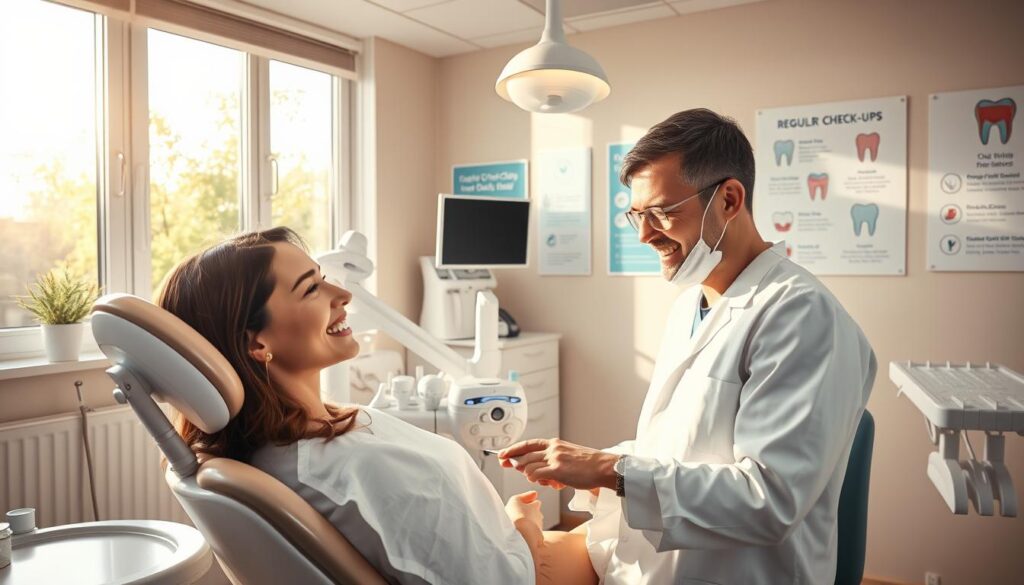
Adults should usually see a dentist every six months. But, if you have great oral health and a low chance of dental problems, once a year might be enough. These check-ups are important for catching early signs of cavities, gum disease, and other mouth issues.
Special Considerations for Children
How often children visit the dentist should change as they grow. The first visit should happen when their first tooth shows up or by their first birthday. After that, visiting every six months is normal, but some kids might only need to go once a year. This depends on their mouth health and other risks.
Factors That Affect Check-Up Frequency
- Personal Oral Hygiene: People who take good care of their teeth might not need to go as often.
- Genetic Susceptibility: If your family has a history of dental problems, you may need more check-ups.
- Health Conditions: Illnesses like diabetes or autoimmune diseases can impact your mouth health, making more visits necessary.
- Lifestyle Choices: Smoking and what you eat are big factors in dental health, which might mean you need to see the dentist more.
By knowing and using these tips for your dentist appointment frequency, you can keep your teeth healthier and feel better overall.
Signs You Might Need to See a Dentist Sooner
Knowing early signs of dental issues helps stop worse problems and pain. If you notice these signs, an urgent dental care visit is needed.
Persistent Tooth Pain means your mouth’s health isn’t right. If your toothache stays, it might be cavities or infections. These issues call for an emergency dentist’s help right away.
Swollen or Bleeding Gums can point to gum disease or other dental problems. Seeing these symptoms means you should get help to stop the damage and inflammation.
Changes in Oral Health, like loose teeth, weird sores, or constant bad breath, are warning signs. These could be serious and mean you need to see an emergency dentist fast.
How Dental Check-Ups Vary by Age
As we grow, our dental needs change. It’s key to understand pediatric dental check-ups, adult dental health, and geriatric oral care. This knowledge helps keep teeth healthy through every life stage.
Children and Teen Dental Visits
Kids should see a dentist when their first tooth shows. This starts the journey of pediatric dental check-ups. They get treatments to prevent cavities and learn the basics of tooth care for life.
Adult Check-Up Recommendations
Adults need to visit the dentist at least once a year. These check-ups help remove tartar and look for tooth or gum problems. They’re also a time to learn about cleaning teeth at home.
Senior Citizens and Oral Health Needs
Older adults face different challenges like dry mouth and root decay. That’s why geriatric oral care is vital. Dentists make plans to meet these specific issues.
Custom dental care is essential at every age. It ensures everyone gets the right treatment. Keeping our mouths healthy is important for our body’s overall health, no matter our age.
The Role of Dental Insurance in Check-Ups
Dental insurance for check-ups is super important for keeping your mouth healthy. It makes it easier and cheaper to get preventive care. Knowing how it works with things like co-pays and deductibles helps patients use their benefits to the fullest.
- Most dental plans cover all the costs for two check-ups a year.
- They also usually cover x-rays and basic cleanings, which are key parts of a check-up.
Understanding Co-Pays and Deductibles
- Co-pays are what you pay for certain services before your deductible. They are a set amount.
- Before insurance pays its share, you must meet your deductible. Knowing this helps manage your costs at each dentist visit.
Maximizing Your Dental Insurance Benefits
- Choose dentists in the insurance network to pay less in co-pays and total costs.
- Know when your benefits reset each year. Plan your treatments to make the most of your annual limits.
- Some plans offer special perks like no deductibles on preventive care, showing they value your health.
Dental insurance helps with managing the costs of dental care and encourages regular visits. Being smart about how you use your dental check-up insurance can help you get the most out of your dental insurance benefits. This approach is key for preventing dental issues before they start.
What to Expect During a Dental Check-Up
Going to the dentist might make you nervous, but knowing what happens can help. A normal visit checks your medical history, looks at your teeth closely, and cleans them. This keeps your mouth healthy.
Medical History Review
First, your dentist will look at your health history. This is important to make sure your dental care fits your needs. They consider any medicines, illnesses, or surgeries that could impact your treatment.
Examination Procedures
Next is the main part of your visit – the dental exam. Your dentist will look for cavities, gum problems, and other oral issues. They might use special tools or X-rays to see your teeth better.
Cleaning and Preventive Care
Then, they clean your teeth to remove plaque and tartar. This step fights off problems like cavities or gum disease. They might also talk about extra ways to keep your teeth safe, like fluoride treatments or sealants.
Understanding what happens during a visit shows its value beyond just making your smile look good. Regular visits are key to preventing dental problems and keeping your mouth healthy.
The Connection Between Check-Ups and Overall Health
Getting regular dental check-ups is vital. It’s not just about your teeth, but it also affects your overall health. The oral systemic health link shows how important dental care is. It helps in spotting and dealing with issues that could impact your whole body.

If oral health problems are ignored, they can worsen or lead to other illnesses. Studies show a strong link between gum disease and other long-term health problems. This is why serious dental care chronic conditions are needed. Taking good care of your mouth is key to controlling these diseases and staying healthy.
The effect of oral hygiene health impact on diseases like diabetes and heart disease is significant. If you have these conditions, you must keep a strict oral care routine. This should be a part of your plan for taking care of your overall health.
- Regular dental visits can catch signs of other health issues early.
- Dentists give personalized advice on oral hygiene health impact. This helps in better managing your health overall.
- For those with chronic issues, preventive dental work is even more important.
Knowing and acting on these links can help you live a healthier life. It also cuts down on healthcare costs and problems in the long run. So, making dental health a priority is crucial for maintaining your general health and well-being.
Choosing the Right Dentist for Your Needs
Finding the right dentist involves looking at key factors. These include the office environment and how the staff treats you. It also means checking what services they offer.
When looking for a local dentist, think about how easy it is to get there. Check their hours and what they specialize in. A dentist close to home or work with times that fit your schedule can make visits easier.
- Patient reviews give a peek at what others think of their care. They tell you a lot about the dentist’s quality and the office atmosphere.
- The overall office environment and staff behavior matter a lot. A friendly and clean place makes you feel more comfortable during visits.
- Also, make sure the office takes your insurance or has payment plans that work for you. This is important for managing costs.
Finding a trustworthy dentist is key to keeping your teeth and body healthy.
Try to visit several dental offices. This will let you see the place and meet the team yourself. You’ll get a better idea of where you feel most at ease.

Choosing a dentist is about finding someone you can stick with. Look at their use of tech, team’s training, and if they’re clear about costs. These things are crucial in making the right decision.
Tips for Preparing for Your Check-Up
Getting ready for a dental check-up is key for a good visit. It means doing practical things like making sure you’re ready for the appointment and dealing with nerves about going to the dentist.
Dental appointment preparation is super important. It involves collecting all your important papers like insurance cards and a list of your meds. This makes sure your dentist knows exactly what you need for the best care.
- Documents to Bring: Always carry your insurance info, any important health records, and a list of any meds you’re on.
- Questions to Ask Your Dentist: Have a list of questions ready about your dental care or general teeth health. Talking well with your dentist makes your visit better and improves the care you get.
- Mental Preparation Techniques: If you’re nervous about the dentist, talk about your worries with them. Try to relax with deep breaths or meditation before going. Sometimes, talking about using sedation might be an option.
Using these tips can help with dental nerves and make sure you and your dentist talk well together. Getting ready in advance lowers stress and helps your dentist take the best care of you.
The Cost of Dental Check-Ups
Knowing about dental check-up costs helps people manage their health spending well. Prices for these important visits can be very different across the country. This is because of several reasons.
The average cost for a dental check-up gives a basic idea of what to expect in terms of dental services pricing. Factors like location, the detail of the work needed, and whether it’s in a busy city or a quiet town affect the price.
Average Prices for Check-Ups Nationwide
In the US, a basic dental check-up usually includes looking at your teeth, x-rays, and cleaning. The price can go up depending on how thorough the check-up is and if extra tests are needed.
Factors That Influence the Cost
- How detailed the dental exam is
- If there are extra tests needed
- What cleaning processes are used
- Where the dentist’s office is located
Ways to Save on Dental Visits
There are ways to spend less on dental care.
- Using dental discount programs for lower prices on different services.
- Getting care at dental schools for a fraction of the cost, done by students under supervision.
- Going to community health centers that offer cheaper dental care for those with less money or no insurance.
By learning about dental check-up costs, people can keep up with their dental health without spending too much. This helps keep both teeth and finances healthy.
How to Maintain Oral Health Between Check-Ups
Keeping your teeth healthy isn’t just for the dentist’s office. It’s about what you do every day. Good habits help keep your teeth and body healthy for a long time.
Daily Oral Hygiene Practices
To keep your mouth healthy, brush and floss daily. Use fluoride toothpaste when you brush your teeth twice a day. Flossing gets rid of plaque that can cause problems.
This routine is key to fight off oral diseases.
Importance of a Balanced Diet
Eating the right foods is very important for your teeth. Foods with calcium, phosphorus, and vitamins make your teeth strong. They also keep your gums healthy.
Try to eat less sugar and acidic foods. They can damage your teeth.
Avoiding Habits That Harm Oral Health
Avoiding bad oral habits is very important. Smoking, chewing tobacco, and drinking too much can harm your teeth and gums.
Taking care of your dental health is an everyday job. Focus on cleaning, eating right, and living healthy. This will keep your smile bright and prevent visits to the dentist.
The Role of Technology in Dental Care
New dental technology has greatly changed dental care. These changes make treatments faster and better for patients. They also make patients more comfortable and improve their outcomes.
Digital Radiography: Digital radiography is a big step forward in dental tech. It uses less radiation, which is safer. It also gives clearer and better images. These are important for finding problems and planning treatments.
Teledentistry: Teledentistry is changing how dental care is given. It allows patients to meet dentists over the internet. This makes it easier for people to get care, especially in remote places.
New tools are always being created to make dental care better. Things like advanced imaging software and laser treatments make care less painful. They also make it so that patients can heal faster.
| Technology | Features | Benefits |
|---|---|---|
| Digital Radiography | Immediate image processing, less radiation | Enhanced diagnostic precision |
| Teledentistry | Virtual consultations, increased accessibility | Convenience, extended reach |
| Laser Dentistry | Less invasive, precise treatments | Reduced healing time, improved comfort |
- Reduction in the need for physical visits for initial assessments.
- Immediate sharing and analysis of radiographs among professionals.
- Real-time patient monitoring and adjustment of treatment plans.
Dental pros who use new tech make their work better and make patients happier. The future of dental care is bright with even more advances coming. These will set new high standards for dental health care.
Understanding the Consequences of Skipping Visits
It’s crucial to keep up with dental appointments. They play a big role in keeping your mouth healthy and stopping serious problems before they start. Knowing the downsides of missing these appointments highlights why they are so important.
Short-Term Risks of Infrequent Check-Ups
At first, it might not seem like a big deal to skip a dentist visit. But, small issues can quickly turn into bigger ones. For example, not treating plaque can cause gum disease and cavities. These problems can lead to pain and more complex treatments later.
Long-Term Health Implications
Not going to the dentist regularly can have a big impact over time. Serious gum disease and decay can lead to other health problems, like diabetes and heart disease. Also, losing teeth can change what you can eat and harm your overall health. This shows how vital regular dental visits are for your whole body, not just your mouth.
The Financial Cost of Neglecting Dental Care
Skipping dental appointments can really cost you. Prevention is usually cheaper and often covered by insurance, which saves you money. But, if you wait until there’s a big problem, treatment will cost a lot more. Insurance might not cover it all, leaving you to pay the rest.
| Condition | Cost with Regular Check-Ups | Cost without Regular Check-Ups |
|---|---|---|
| Gum Disease Treatment | $50 – $300 | $500 – $10,000 |
| Tooth Replacement (Implants) | Covered partly by insurance if caught early | $1,000 – $3,000 per tooth |
| Root Canal | $300 – $1,500 | $1,000 – $5,000 |
Conclusion: Making Dental Check-Ups a Priority
Taking care of our teeth is crucial for our overall health. It’s not just a good idea; it’s necessary for staying healthy. Going to the dentist regularly is a key part of this. It helps us prevent problems and keep our mouths healthy for a long time.
When the whole family goes to the dentist together, it changes how we think about oral health. It teaches everyone, young and old, to value their teeth. This teamwork helps avoid many dental issues and ensures everyone takes care of their teeth.
Going to the dentist regularly has big benefits for the future. It stops serious dental issues before they start, keeps our natural teeth strong, and lets us keep a bright smile. Making dental health a big part of our life is a smart choice. It helps us live a better life for many years.