Is an electric toothbrush better for keeping my teeth clean?
Is a motorized brush really better than the old-fashioned manual one? Or are we just excited about new tech? The journey from ancient chew sticks to today’s toothbrushes makes us wonder about better plaque removal and longer brushing times. Studies suggest that advanced designs could fight tooth decay by applying even pressure and reaching all areas.
First studies show that electric toothbrushes might improve oral health by making brushing easier and faster. Manual brushes require careful attention, but many stick to what they know. So, is an electric toothbrush the better choice? Let’s dive into the facts and see what science says.
Key Takeaways
- Electric options often reduce plaque buildup more efficiently.
- Motorized bristles can make brushing technique simpler.
- Less manual effort may benefit individuals with limited range of motion.
- Built-in timers encourage longer and more consistent brushing periods.
- Informed decisions depend on personal comfort and scientific findings.
Introduction to Electric and Manual Toothbrushes
Good oral hygiene starts with a reliable brush. Many dentists say both electric and manual brushes are key. They help keep teeth and gums strong.
People looking for deep cleaning see the benefits of each brush type. Some like the easy use of manual brushes. Others prefer electric for better technique and timing.
Overview of Dental Hygiene
Brushing regularly fights off harmful plaque. The American Dental Association (ADA) says both types of brushes work well. Using fluoride toothpaste and brushing each tooth surface helps keep your mouth healthy.
Importance of Choosing the Right Toothbrush
Finding the right brush is important for comfort and habit. The right choice can make brushing easier and more enjoyable. Electric brushes offer different modes and help with technique. Manual brushes give hands-on control for those who like it that way.
How Electric Toothbrushes Work
Electric toothbrushes use power to clean teeth and gums. They come in different types for various cleaning needs. This helps us understand their effectiveness better.
Types of Electric Toothbrushes
Rechargeable toothbrushes are common in dental offices. Brands like Philips Sonicare and Oral-B offer different types. These include oscillating-rotating and sonic vibrating designs.
Mechanisms of Action
Oscillating heads move back and forth to clean at the gumline. Sonic technology uses fast vibrations to remove particles from tight spots. Some models pulse or mix motions for deeper cleaning.
Benefits of Electric Toothbrushes
Electric toothbrushes offer new designs and special bristle movements for better oral care. They clean tight spots well, helping to prevent plaque and gum problems. This leads to healthier gums, fresher breath, and quicker brushing for all ages.
Enhanced Plaque Removal
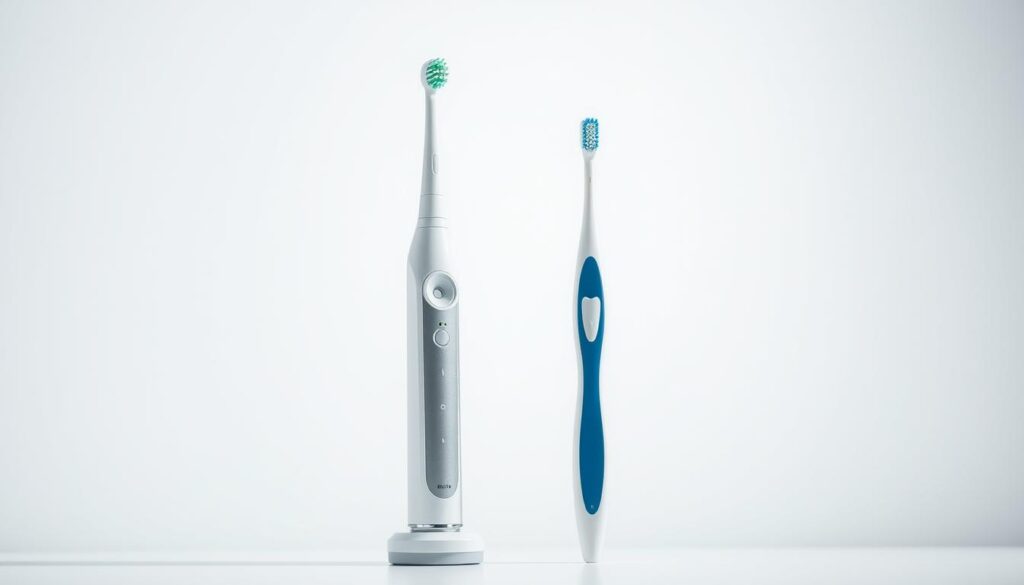
Studies show electric toothbrushes can remove up to 70% more plaque than manual brushes. This deep cleaning helps prevent tartar and keeps teeth and gums healthy. Dentists often recommend electric toothbrushes to avoid long-term oral issues.
Built-in Timers for Optimal Brushing
Timers in electric toothbrushes help people brush for at least two minutes, as dental experts suggest. This ensures all surfaces are cleaned well. Many families find this feature great for teaching everyone to brush correctly.
Manual Toothbrushes: A Timeless Classic
Manual toothbrushes are a beloved part of our dental care routine. They are simple yet effective. Many dentists recommend them for daily plaque control. They offer a straightforward way to clean teeth without needing fancy gadgets.
Affordability and Accessibility
Manual toothbrushes are affordable and widely available. You can find them in pharmacies or grocery stores. They are also easy to carry around because of their compact size.
- Budget-friendly for varied household needs
- Lightweight and easy to pack
- Dependable in places lacking electricity
User Control and Technique
Using a manual toothbrush requires skill and attention. You control the pressure and angle. This makes you more aware of your teeth’s surfaces.

Comparative Studies on Cleaning Effectiveness
Studies have shown that electric toothbrushes are better at removing plaque than manual ones. A study found that electric toothbrushes reduce plaque and gingivitis more. This is because they have rotating heads and high-frequency vibrations.
Recent Research Findings
Top dental research shows that electric toothbrushes lead to better oral health over time. People using electric toothbrushes had less gum irritation. This shows that new technology helps prevent dental problems.
Key Metrics for Measurement
Experts use certain ways to measure how well a toothbrush cleans. These include:
- Plaque index scoring to evaluate residue levels
- Gum bleeding indices for early detection of inflammation
- Brushing adherence to recommended two-minute intervals
| Parameter | Electric Brush | Manual Brush |
|---|---|---|
| Plaque Reduction | High | Moderate |
| Gum Health | Improved | Varies |
User Experience: Comfort and Ease
Designs focus on comfort, aiming to lessen hand strain during brushing. Soft rubber grips and smooth shapes help keep routines consistent. Many electric toothbrushes adjust to different grip strengths, helping seniors or those with limited dexterity.
Ergonomic Designs
People with arthritis find power brushes easier to use. This is thanks to the advanced tech in many designs. Handles are made to fit the natural motion of the wrist, making brushing less tiring and more enjoyable.
Weight and Handling
Good weight balance means better control. A lock keeps the brush head steady, cutting down on shaky movements. This makes brushing gentle on the gums.
| Feature | Benefit |
|---|---|
| Rubberized Grips | Secure hold, less slipping |
| Streamlined Shape | Comfortable reach for all angles |
| Balanced Weight Ratio | Reduced wrist fatigue |
Advanced Features of Electric Toothbrushes
New models use sensors and digital tracking to improve daily cleaning. They guide each brushing session and focus on tooth and gum care.
These features highlight the advantages of electric dental care. Sensors, apps, and personalized tips help prevent tooth damage.
Pressure Sensors and Smart Technology
Some toothbrushes alert you if you’re brushing too hard. This protects your gums and teeth. The smart tech also helps improve your brushing habits.
- Adaptive cleaning modes for sensitive areas
- Real-time feedback on technique
- Progress tracking over time
Bluetooth Connectivity for Monitoring
Wireless toothbrushes connect to apps that track your brushing. These apps show your progress and help you maintain good oral health.
Environmental Considerations
How we view oral care tools is changing. We now think about their impact on the environment. Things like how long they last, how much they use, and how they’re thrown away matter a lot. Making smart choices can help the planet and keep our teeth clean.
Sustainability of Electric vs. Manual
Electric and manual toothbrushes each have their own pros and cons. Electric ones might use less plastic because you can just swap out the head. Brands like Oral-B make devices that last longer. On the other hand, manual toothbrushes don’t use electricity but often get tossed when they’re no good.
Choosing the right toothbrush means looking at how well it cleans and what it’s made of. This helps us make better choices for our teeth and the planet.
Waste Management of Toothbrushes
There are ways to dispose of toothbrushes that are better for the environment. Here are a few:
- Recycle the packaging through the right places.
- Save used brush heads for special recycling programs.
- Look for toothbrush handles made from bamboo or other compostable materials.
When it’s time for a new toothbrush, just replace the head. This way, you can help the planet while keeping your teeth clean. It’s all about taking care of our health and the planet together.
Cost Analysis
Looking at the cost of oral care devices, many focus on value. Electric toothbrushes cost more upfront. But, some say they can save money on dental care in the long run.
Comparing the cost to fewer dental visits can show the value of electric toothbrushes. This helps families and dentists see the electric toothbrush advantages.
Some key costs to consider are:
- Replacement head availability
- Brand warranties
- Battery lifespan
Upfront Costs of Electric Toothbrushes
Electric toothbrushes often come with rechargeable batteries and extra heads. These can increase the price. But, many brands offer deals for buying multiple heads at once. This means the initial cost can last for years with little need for repairs.
Long-Term Financial Factors
Buying new heads instead of a whole new toothbrush can save money over time. This can lead to fewer dental visits, which can lower dental bills. Upgrading to more advanced models can also help prevent dental problems.
| Cost Element | Electric Model | Manual Model |
|---|---|---|
| Initial Purchase | Higher Price Range | Minimal Outlay |
| Ongoing Expenses | Replacement Heads | Entire Brush |
| Potential Savings | Reduced Dental Bills | Lower Startup Cost |
Recommendations for Different Age Groups
Choosing the right toothbrush at each stage of life can greatly improve oral health. Kids love gadgets that make brushing teeth fun. On the other hand, older adults prefer comfort and reliable cleaning, often due to changes in dexterity or gum sensitivity.
Kids and Electric Toothbrushes
Children often enjoy brushing their teeth more when it’s fun. Electric toothbrushes, like Philips Sonicare or Oral-B, can make brushing exciting with their vibrations and designs. For kids with braces, electric toothbrushes can be just as good as manual ones if their overall health is good.
Seniors and Manual vs. Electric
Seniors might find electric toothbrushes easier to use because they’re less tiring on the wrist. But, a manual toothbrush is also a good choice if they brush correctly. What matters most is finding a toothbrush that feels comfortable and easy to use.
| Age Group | Brush Type | Main Advantage |
|---|---|---|
| Children | Electric | Engaging brushing experiences |
| Seniors | Manual or Electric | Improved control and comfort |
Best Practices for Toothbrush Care
Keeping your toothbrush fresh and clean is key to good oral hygiene. Store your toothbrush upright and away from germs. This method cuts down on bacteria and keeps bristles in top shape.
Electric toothbrushes need more than just a rinse. Take apart the handle and brush head to get rid of dirt. Regular cleaning and drying keep the motor running well, making your toothbrush last longer. Change the brush head every three to four months for the best results.
Maintenance of Electric Toothbrushes
Make sure the base of your electric toothbrush is dry to avoid mold. Clean it well but gently to protect the inside parts. This keeps your toothbrush working well and makes you happy with it.
Proper Storage Techniques
Too much moisture can damage your toothbrush. Keep it in a dry place, away from sinks or toilets. This helps keep your toothbrush clean and protects your mouth.
| Maintenance Task | Frequency |
|---|---|
| Brush Head Replacement | Every 3–4 months |
| Deep Rinse and Dry | Weekly |
Conclusion: Making an Informed Choice
Choosing between an electric or manual toothbrush depends on your daily habits, what you have available, and dental advice. Both types help remove plaque and protect your gums if used correctly.
Some people use an electric toothbrush at home and a manual one when they travel. This way, they keep their teeth clean everywhere they go. It’s a smart mix of new technology and easy use.
Summary of Key Benefits
- Potential for improved cleaning through oscillating or sonic technology
- Accessible affordability with manual brushes
- Diverse methods that encourage regular brushing habits
Encouraging Good Dental Hygiene
Regular brushing, dental visits, and careful eating are key to fighting gum disease. Experts say it’s the way you brush and how often that counts. With the right approach, any toothbrush can help keep your teeth strong.
FAQs About Toothbrushes
Many people wonder if new features really matter or if how you brush is more important. Some are concerned about pressing too hard and hurting their gums. Others are unsure if electric toothbrushes are better for removing plaque.
Common Concerns and Misconceptions
Using too much pressure is a big worry. Too much force can damage your enamel and irritate your gums, no matter the brush type. It’s important to replace your brush head every three months to keep bristles effective.
Even though some toothbrushes have fancy features, any good brush can clean well if used right. Just brush gently and steadily.
Expert Opinions on Optimal Choices
The American Dental Association says brushing daily with fluoride toothpaste is key to fighting plaque. Studies show electric toothbrushes help keep up a regular brushing schedule. But manual brushes give you a feel for how hard you’re brushing.
Real-life tests show that paying attention to how you brush is what really matters. It’s not just about the brush you use. It’s about how well you use it.
People with mobility issues might find electric toothbrushes helpful. Others like the control of manual brushes. Both can keep your gums healthy if you brush right and regularly.