What Are the Options to Fix a Broken Tooth?

Did you know that about five million teeth are chipped or cracked each year in the United States? This is according to the American Dental Association. Tooth enamel is very strong but can weaken from decay, grinding, or sudden impact. If not fixed quickly, a broken tooth can lead to infection or ongoing pain.
So, what can you do if your tooth breaks? Dentists say the first step is to get a thorough check-up. This helps figure out the best way to fix it, whether it’s a simple fix or something more complex. This article looks into the main ways to fix a broken tooth to keep your mouth healthy and pain-free.
Key Takeaways
- Millions of cracked teeth occur each year in the United States.
- Enamel is strong but can fracture from daily wear or sudden force.
- Timely care helps prevent infections and reduces ongoing discomfort.
- Treatment can range from bonding to advanced surgical techniques.
- Consulting a dental professional ensures the most suitable repair plan.
Understanding Broken Teeth and Their Causes
Teeth can crack or chip from sudden impact or daily stress on enamel. Tiny fissures often grow unnoticed until discomfort becomes severe. This prompts many to ask why breaks occur. A closer look at contributing factors reveals insights that protect oral health.
Common Causes of Tooth Damage
Possible reasons for broken teeth vary. Let’s highlight a few culprits:
- Clenching or grinding at night
- Biting down on hard objects
- Deep cavities weakening tooth structure
- Older restorations compromising enamel
Symptoms of a Broken Tooth
Some individuals notice sensitivity when sipping cold drinks. Others feel a rough edge along the tongue or experience sudden pangs of pain. Undetected fractures may allow bacteria to invade, raising the risk of infection.
When to See a Dentist
Early evaluation by a professional helps lessen complications. Small fractures might need a dental filling if identified around the time they form. Larger breaks require more involved procedures. Visit broken tooth repair options to explore advanced treatments before problems worsen.
Dental Bonding: A Quick Fix for Minor Damage
Small fractures and chips can make a tooth look bad and unstable. Dental bonding is a fast fix for these small problems. It doesn’t harm the deeper parts of the tooth.
This method uses a resin that looks like natural enamel. It’s often picked for fixing small cracks on front teeth. These teeth are where looks are most important.
What Is Dental Bonding?
Bonding uses a tooth-colored resin on damaged areas. The resin is shaped like the tooth and then hardened with a special light. This keeps most of the tooth healthy and looks good.
Benefits of Dental Bonding
- Conserves healthy enamel
- Minimal discomfort
- Cost-effective for small repairs
The Procedure: What to Expect
First, the tooth is cleaned. Then, a mild etching agent is used to prepare it. The dentist applies resin in layers, shapes it, and uses ultraviolet light to cure it. A final polish makes it smooth.
| Feature | Details |
|---|---|
| Time Involved | 30–60 minutes per tooth |
| Durability | 5–10 years with proper care |
| Ideal Cases | Minor chips or cracks |
Dental Crowns: A Durable Solution for Broken Teeth
Clinicians often suggest a crown for a tooth that’s lost a lot of structure. This design protects the weak area, making sure it works well and looks natural. Studies show it helps the tooth last longer by keeping the enamel safe from more damage.
When Is a Crown Necessary?
A crown is needed when a big part of the tooth is missing or weak. It stops the tooth from breaking under pressure. Dentists check if the tooth can handle daily use with just a filling.
Types of Dental Crowns
There are different materials for crowns, depending on how strong and how they look. Options include:
- Porcelain-fused-to-metal for a mix of strength and beauty
- All-ceramic for a natural look and feel
- Zirconia for extra strength in tough spots
- Metal-only for those who don’t mind a less natural look
The Crown Placement Procedure
The process takes a few visits. Dentists:
- Remove damaged tissue and shape the tooth
- Take impressions for a perfect fit
- Put on a temporary crown until the final one is ready
- Cement the custom crown for lasting protection
Veneers: A Cosmetic Option for Appearance Improvement
Smiles play a big role in how we first meet people. Small issues like cracks or stains can make us feel self-conscious. Veneers are a great way to improve the look of your front teeth without harming them.
How Veneers Work
Veneers are thin, custom-made shells, often made of porcelain or composite. They are bonded to your teeth using a special adhesive. A mild solution is applied to your enamel to help the veneer stick well.
Benefits of Using Porcelain Veneers
Some people want a natural smile. Porcelain veneers look like real teeth because they are translucent. They are often chosen for:
- Fixing small cracks
- Removing stains
- Correcting minor misalignments
The Procedure for Applying Veneers
The process starts with a consultation, then tooth preparation, and ends with bonding. A bit of enamel is removed to fit the veneers. The adhesive is then hardened with a light to ensure they last.
| Key Step | Description | Approximate Time |
|---|---|---|
| Consultation | Initial examination and veneer selection | 30 minutes |
| Preparation | Minimal enamel shaping and impressions | 1 hour |
| Bonding | Placement and light-curing of shells | Up to 1 hour |
Root Canals: Essential for Severely Damaged Teeth
When decay or trauma goes deep, a root canal is often needed. This treatment is for when the pulp inside a tooth gets irritated or infected. It removes the bad tissue and seals the tooth to prevent more problems.
In hospitals and clinics, detailed imaging and tests help doctors. People might worry about pain during the procedure. But, thanks to sedation and local anesthetics, it’s usually not uncomfortable.
What to Expect During the Procedure
The dentist will get to the tooth’s center, remove the inflamed tissue, and then fill the space. They use clean materials to keep bacteria out and make the tooth stable. After that, a crown is usually put on.
Signs You Might Need One
Long-lasting pain or sensitivity could mean an infection. If your tooth looks different or has deep cracks, see a dentist right away. Catching it early can help keep your natural tooth.
Recovery After Treatment
After the procedure, rest, take pain meds, and go back for check-ups. Most people can get back to their daily life quickly. Just remember to brush well and see your dentist regularly to keep your tooth healthy.
| Stage | Action | Tip |
|---|---|---|
| Diagnosis | Imaging & Evaluation | Ask about alternative approaches |
| Treatment | Cleaning & Sealing | Use prescribed medication |
| Restoration | Placing a Crown | Follow dentist’s schedule |
Extraction: When the Tooth Cannot Be Saved
Keeping your natural teeth is always the first choice. But, sometimes, a tooth must be removed. This can happen if a tooth breaks badly or gets a deep infection.
Removing the tooth helps protect your mouth’s health. It stops more damage from happening. This way, your teeth and gums stay safe.
This method also gets rid of bad bacteria. It lowers the chance of serious health problems. If you have a tooth emergency, check out this guide for help.
Reasons for Removal
Before deciding to pull a tooth, dentists look at a few things. These include:
- Severely weakened structure
- Intense decay or advanced gum disease
- Recurrent infections posing health risks
The Extraction Process
Dentists numb the area to make sure you’re comfortable. They use special tools to gently loosen the tooth. Then, they carefully remove it without hurting the bone around it.
This careful process helps you feel less pain. It also makes your recovery faster.
Post-Extraction Care
After the tooth is out, taking care of yourself is key. Use gauze to help the area heal. Rinsing with mild water helps prevent infection.
If there’s a gap, a dental bridge can help. It fills the space and makes your mouth look and work better.
| Care Tips | Why It Matters |
|---|---|
| Stick to Soft Foods | Reduces strain on extraction sites |
| Clean Gently | Prevents complications without aggravating tissues |
| Consider a Dental Bridge | Maintains proper alignment and supports efficient chewing |
Dental Implants: A Permanent Replacement Option
People look for reliable ways to replace missing teeth. Dental implants are a strong choice. They use a titanium post to anchor into the jawbone, keeping your mouth stable and your chewing normal.
What sets this method apart? It not only looks good but also works well. If you’re interested, you can look into other tooth replacement options too.
What Is a Dental Implant?
A dental implant is a post that gets implanted into the bone. It acts like a tooth root, keeping your new tooth in place. Many people find it boosts their confidence and helps them chew better.
The Implant Procedure Explained
The process starts with planning and X-rays. Then, the titanium post is placed under the gum. After healing, a custom crown is attached. Most patients say it’s not too painful if they follow the aftercare well.
Advantages of Dental Implants
One big plus is how long they last. They help keep the bone strong and prevent other teeth from moving. They also look and feel like real teeth, making it easier to speak and eat.
| Stage | Key Focus |
|---|---|
| Planning | Examination, imaging, and treatment design |
| Surgical Placement | Insertion of titanium post into jawbone |
| Healing Phase | Osseointegration and gum stabilization |
| Crown Attachment | Final placement of a custom prosthesis |
Temporary Solutions for Emergencies
Immediate steps can help when a tooth breaks and can’t be fixed right away. These steps are not permanent. Getting help from a dentist is essential to fix your tooth.

Using Dental Wax for Comfort
Dental wax or sugar-free gum can protect your tongue and cheeks from sharp edges. A warm salt-water rinse can also help clean out any debris.
Over-the-Counter Pain Relief Options
Medicines like ibuprofen or acetaminophen can reduce swelling and pain. It’s important to follow the dosage instructions to avoid problems. For more tips on dealing with a broken tooth, check out this guide. These quick fixes can provide some relief until you see a dentist.
Preventive Measures to Avoid Broken Teeth
Strong enamel is key to healthy teeth. Our daily choices, like how we brush and what we eat, matter a lot. A good prevention plan helps keep our teeth strong and stable for a long time.
Maintaining Good Oral Hygiene
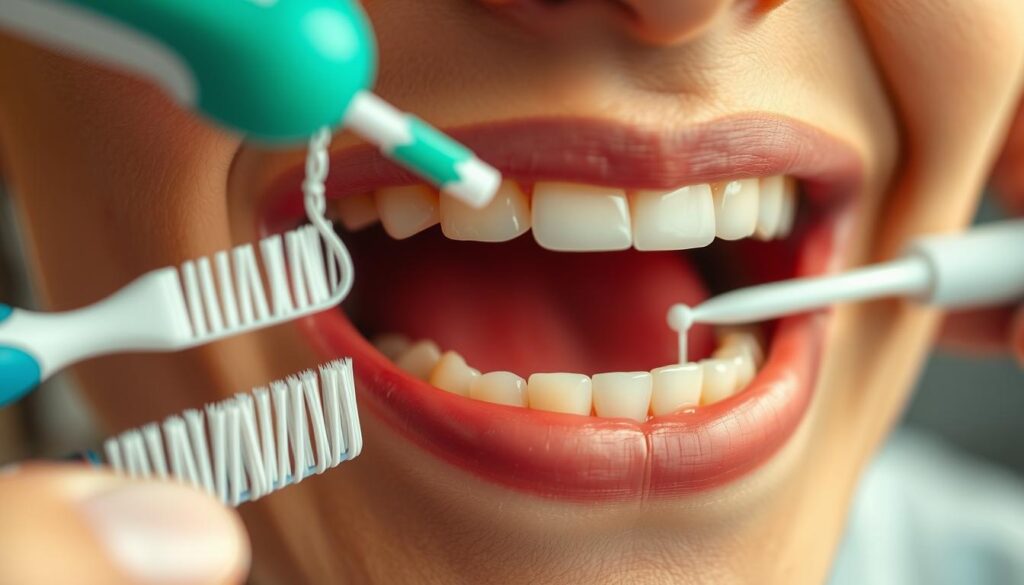
Cleaning our teeth well keeps plaque away. Plaque can harm our enamel. Brushing with fluoride and flossing helps. These simple steps can prevent big problems later.
Avoiding Hard Foods
Eating hard things like ice or chewing on kernels can hurt our teeth. Choosing softer snacks is better. Eating foods full of vitamins helps our teeth heal and stay strong.
Regular Dental Check-Ups
Going to the dentist often helps catch problems early. They clean our teeth and give us tips to avoid damage. Catching issues early means we can fix them before they get worse.
| Strategy | Key Benefit |
|---|---|
| Mouthguards During Sports | Safeguards enamel under high-impact conditions |
| Moderate Hard Foods | Reduces chance of structural fractures |
| Timely Interventions | Identifies issues before they worsen |
Choosing the Right Dental Professional
Finding a skilled dentist can make you feel better about fixing your teeth. Look for credentials, proven methods, and clear communication. A good dentist will explain your options well.
Factors to Consider When Selecting a Dentist
Check the dentist’s experience and if they follow the latest research. Here are key things to look at:
- Educational background and ongoing learning
- Experience with complex cases
- Quality of tools and techniques
The Role of a Specialist in Tooth Repair
For tough cases, you might need a specialist. Endodontists are great for root canals, and prosthodontists for things like crowns and implants. A dentist who uses the latest science can make your treatment safer and more comfortable.
Cost Considerations for Tooth Repair
Many people think about their budget before choosing a treatment. Simple fixes like fillings are often cheaper. But more complex solutions cost more. It’s important to weigh immediate needs against long-term benefits.
At the first visit, clinics usually give clear price estimates. Additional costs might come from extra tests or follow-ups. Planning your budget and comparing options can make the decision easier.
Average Costs of Treatment Options
Some treatments are affordable, while others are more expensive. Here’s a table with approximate costs to help you decide:
| Treatment | Estimated Range (USD) |
|---|---|
| Dental Bonding | $100 – $400 per tooth |
| Crowns | $800 – $1,500 per tooth |
| Veneers | $900 – $2,500 per tooth |
| Implants | $1,500 – $3,000+ |
Insurance Coverage: What to Know
Insurance plans differ in what they cover. Check if the treatment is deemed medically necessary. This can affect how much you pay out of pocket. Some policies help with diagnostic costs or follow-ups. Understanding your policy can help find affordable options.
Personal Experiences: Real Stories of Tooth Repairs
Many people feel more confident after getting help for their teeth. Local clinics tell stories of patients who can chew and feel comfortable again. Getting help early can save teeth and prevent bigger problems later.
Case Studies: Successful Fixes
There are many ways to fix damaged teeth. One patient got a special crown after a root canal, which made them smile again. Another needed implants to fix their teeth for good. Each story shows how important the right treatment and follow-up are.
Lessons Learned from Dental Emergencies
Quick action is key. Patients who got help fast healed better and had fewer infections. Starting with a chipped tooth check is a good first step. Talking to your dentist regularly helps catch problems early.
Final Thoughts: Making the Best Choice for Your Tooth
Every broken tooth has its own story. The way to fix it depends on your teeth, what you want, and how much you can spend. For small chips, dental bonding might be the answer. But for bigger problems, a dental bridge or implants could be better.
Assessing Your Options
Talking to a dentist you trust is a good first step. They use proven methods to keep your teeth healthy. For serious damage, a root canal might be needed. Dental implants are great for lasting support.
The American Dental Association has clear guidelines. They help you understand what each option means.
The Importance of Timely Dental Care
Delaying treatment can make things worse and limit your options. Quick action helps avoid pain and brings back your smile. It also keeps your teeth working right and prevents infections.
Getting help early is key. It leads to better results and keeps you feeling good about yourself every day.