What is a Root Canal Treatment, Exactly? What Does It Involve?

Did you know that about 15 million root canal treatments happen in the U.S. each year? This shows how often dentists save teeth by removing inflamed pulp. In Grande Prairie, many people get this treatment to keep their teeth and feel better.
New ways to numb teeth and special tools make the process easier. Sometimes, a tooth needs special repair to work right again. The aim is to keep your mouth healthy and your smile bright.
Key Takeaways
- Root canal treatment removes infected pulp and saves natural teeth.
- Millions of these procedures happen each year in the United States.
- Advanced anesthetic methods reduce discomfort during treatment.
- Preserving a damaged tooth helps maintain oral function and appearance.
- Consulting a qualified dental professional is key to successful outcomes.
Understanding Root Canal Treatment
This advanced method removes inflamed tissue and keeps the tooth intact. Many ask if it’s a hassle or worth it. The main aim is to keep the tooth healthy and avoid future problems.
Definition of Root Canal Treatment
Endodontic therapy is what we call a root canal. It focuses on the tooth’s core, where infection can harm the tooth. Dentists remove the infected pulp, clean the area, and seal it to stop bacteria from coming back.
Common Misconceptions
Some believe it causes a lot of pain. But today’s techniques use advanced tools and painkillers to make it bearable. Others worry about being out of commission for a long time. But, with proper care, recovery can be quick.
Importance of the Procedure
Keeping a natural tooth is usually better than pulling it out. A root canal stops infection from spreading, prevents abscesses, and saves healthy teeth. This helps keep your mouth healthy and your smile bright for years.
Why Is a Root Canal Necessary?
Many people look for relief when tooth pain won’t go away. An infection inside the tooth can cause ongoing pain. Getting it treated early helps keep your natural teeth and avoids bigger problems later.
“A timely root canal can often save your tooth and eliminate recurring pain.” — Dr. Chad Gehani, Former ADA President
Signs You Might Need One
- Unrelenting toothache that disrupts sleep
- Long-lasting sensitivity to cold or hot beverages
- Visible gum swelling or pus discharge
Causes of Tooth Decay
Eating too much sugar and not brushing enough can weaken tooth enamel. Bacteria can get into small cavities and reach the pulp. Even tiny cracks can let harmful germs in.
Impact on Oral Health
Long-term infection can harm the bone and teeth around it. It can also lead to abscesses, making daily life uncomfortable. Choosing root canal therapy helps keep your teeth working and improves your oral health for the long term.
The Anatomy of a Tooth
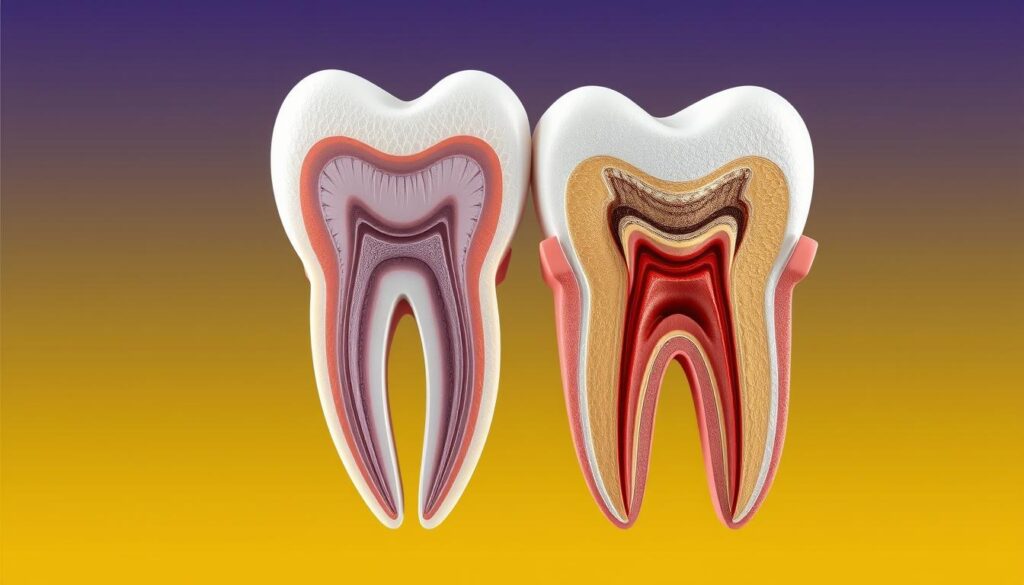
Teeth have many layers to stay strong and fight off decay. Each layer protects the inner core, helping us keep our mouth healthy. This structure is key when we look at dental procedures for infections or damage.
Structure of a Tooth
Each tooth has three main layers:
- Enamel: Protects against bacteria and daily wear
- Dentin: Makes the tooth strong and has tiny canals
- Pulp: Keeps the tooth alive with nutrients and nerves
Role of the Dental Pulp
The pulp is the tooth’s heart. It supplies nutrients and sends signals. It helps us feel pressure and warns us of tooth problems.
How Infection Develops
Infection starts with small decay or cracks. Bacteria move in, causing pain when they reach the pulp. Catching it early can save the tooth, leading many to look for the best dental care. For more on tooth damage click here.
Preparing for a Root Canal
Being well-prepared can make the procedure more comfortable. Many worry about sedation and how to avoid pain. Taking the right steps before treatment can help it succeed.
Initial Consultation
An early visit helps evaluate pain and share medical history. Dentists explain how tooth pulp damage happens and discuss restorative work after treatment. This open talk helps patients feel more at ease before treatment.
Diagnostic Imaging
Tools like digital x-rays show hidden decay and confirm infection depth. Modern imaging helps choose the best treatment plan. Early detection can prevent bigger oral health problems.
Discussing Your Options
Many wonder if local anesthesia is enough. Some prefer light sedation to calm their nerves. Dentists explain how a crown might protect the tooth after therapy. This ensures everyone knows what to expect.
The Root Canal Procedure Explained
Many people are curious about the root canal process. They compare it to tooth extraction. Keeping the natural tooth is better because it helps the jaw stay stable and keeps oral function intact.
Step-by-Step Overview
The dentist starts by making a hole in the tooth’s crown. This lets them reach the inner pulp. They then remove the infected pulp and clean each canal.
After, they fill the space with gutta-percha. This helps keep the tooth strong and prevents infection.
Anesthesia: What to Expect
Local anesthetics are used to reduce pain. This makes the patient feel comfortable. The numbness can last a few hours.
Even though there’s some pressure, severe pain is rare.
Duration of the Treatment
Most root canals are done in one visit. But, some cases might need two appointments. Molars often take longer than front teeth.
Despite this, the process usually avoids the need for tooth extraction.
Symptoms That Indicate a Root Canal
It’s important to know when you need dental care fast. If your tooth hurts a lot or suddenly, it might be worse when you bite or drink hot things. If your tooth turns dark, it could mean there’s serious damage inside.
Ignoring these signs can lead to even more pain and could even cause infections that spread.
Signs of Tooth Pain
Pain that doesn’t go away can really mess up your day. It might even hurt your jaw or ear. This could mean there’s an infection deep inside.
Swelling and Sensitivity
When your gums hurt a lot, it might mean an infection is spreading. Some people get really sensitive to cold, which can make the pain worse.
Gum Symptoms
Red or swollen gums can be a sign of trouble. If you don’t get help, an abscess could form. This is a big problem that needs dental care right away.
Post-Treatment Care
Proper care after treatment helps keep your tooth stable and reduces pain. Discomfort usually goes away in a few days. Regular check-ups help your tooth heal properly.

Safe habits protect your mouth and prevent infections. Simple actions can greatly improve your daily life.
Immediate Aftercare Tips
• Use gentle rinses with lukewarm saltwater.
• Chew on the unaffected side until the tooth feels more secure.
• Brush softly around the treated area without harsh strokes.
• Avoid sticky or hard foods that strain the tooth.
Long-Term Maintenance
Regular dental visits ensure your crown or filling stays strong. Good brushing and flossing habits fight plaque and promote health. Eating less sugary foods also helps.
“Proper post-treatment care increases a tooth’s lifespan and sets the stage for overall wellness.” — American Dental Association
When to Contact Your Dentist
If you have severe pain or swelling, call your dentist. Quick action can prevent bigger problems.
Root Canal Complications
Some people face minor issues after a root canal. One problem is reinfection, which can cause tooth decay if not treated. It’s important to stay on top of check-ups to help healing.
Potential Risks of the Procedure
Hidden canals or weak fillings can let bacteria grow. Some patients might feel pain or swelling that doesn’t go away. Rarely, the tooth might crack because of weakened enamel. But, these problems are rare if the dentist is experienced.
How to Avoid Complications
Good oral hygiene and regular dentist visits are key. Brushing and flossing are musts. Dentists suggest cleanings to catch problems early and keep your teeth healthy for a long time.
Signs of Complications to Watch For
Look out for pain, swollen gums, or ongoing tooth sensitivity. Feeling pressure could mean an infection or a loose filling. Catching these signs early helps keep your mouth healthy.
Alternatives to Root Canal Treatment
Keeping a natural tooth can help your oral health for a long time. Sometimes, it’s not possible to keep the pulp. So, doctors look for other ways to replace infected parts and keep the tooth working.
Extraction vs. Root Canal
Removing the tooth is a straightforward solution for serious damage. It stops pain and infection but can change how your teeth fit together. A filling or a bridge might be needed after the tooth is gone.
Other Treatment Options
Some people prefer treatments that don’t hurt as much and save more of the tooth. A partial pulpotomy or a crown can help with small decay. But, bigger problems might need a replacement. For more on fixing missing teeth, check out this guide.
Pros and Cons of Alternatives
- Extraction may reduce upfront costs
- Implants restore function yet demand healing time
- Bridges can be quicker but need tooth reshaping
- Conserving the tooth avoids added procedures
Cost of Root Canal Treatment
In many places, it’s key to balance treatment costs with personal budgets. Costs can vary based on the tooth’s location and the infection’s severity. Also, where you live can affect prices. Knowing the costs helps plan and avoid surprises.

Doctors usually talk with patients about possible costs before starting. This includes fees for X-rays, the root canal, and any restorations needed.
Breakdown of Costs Involved
Basic costs include X-rays, local anesthesia, and the root canal itself. Adding a full restoration can increase the total. Crowns, for example, can raise the price. The tooth’s condition determines the procedure’s length.
Insurance Coverage
Dental insurance can help pay for root canals. It’s important to check your policy’s annual limits and copays first. Each insurance plan is different, with varying coverage and deductibles.
Financing Options
Some dental offices offer payment plans for those who need more time to pay. Third-party financing can also help when insurance doesn’t cover enough. Flexible payment options make it easier to get the care you need.
| Cost Factor | Purpose |
|---|---|
| Diagnostic Imaging | Identifies scope of decay or infection |
| Procedure Fee | Includes labor, materials, and equipment |
| Final Restoration | Crown or filling to protect treated tooth |
| Insurance/Payment Plan | Offsets or distributes the total expense |
Frequently Asked Questions
Many people want to know about pain levels, how long it takes to recover, and if they need extra work. This guide helps those thinking about a root canal.
Common Queries About the Procedure
One big worry is if the procedure hurts. Thanks to modern anesthesia, most patients feel little to no pain. They can stay calm during the treatment.
How long it takes to feel better varies. But, many say they start feeling better in just a few days. Sometimes, a crown is needed if the tooth is weak.

Myths vs. Facts
Some think pulling the tooth is easier and better. But studies show root canals work well, keeping the natural tooth. Another myth is that the pain is too much to handle. Today’s methods make pain manageable.
Expert Insights
Dentists say saving a natural tooth is best for your mouth’s health. Endodontic specialists add that it also lowers infection risk. They encourage talking about sedation or follow-up care during your visit.
Finding the Right Dentist
Choosing a skilled dentist means doing your homework and knowing what you need. Look for a place that makes you feel calm and answers your questions about treatment. A dentist who listens and explains things clearly will make you feel at ease.

What to Look for in a Dentist
Look for clinics that are recognized by the American Dental Association. They follow strict standards. A dentist with extra training in endodontics can handle complex root canals. They should also talk to you clearly and make sure you’re comfortable.
Questions to Ask Before Treatment
- Are you familiar with complex cases or specialized procedures?
- Do you offer sedation for patients with anxiety?
- Which techniques ensure minimal discomfort during and after the procedure?
The Importance of Experience
Experience is key for a quick recovery and fewer complications. Experienced dentists know a lot about teeth and can manage pain well. They also build a personal connection with you, making you feel ready for your treatment.
| Criteria | Description | Benefit |
|---|---|---|
| Accreditation | Certification from reputable dental boards | Validates high professional standards |
| Specialization | Endodontic focus or advanced training | Offers tailored root canal expertise |
| Communication | Thorough pre- and post-treatment guidance | Encourages patient confidence |
Conclusion: Is a Root Canal Right for You?
A root canal can stop severe discomfort and save your natural tooth. Studies show high success rates when done early. This helps avoid bigger dental problems and keeps your mouth healthy.
Assessing the Necessity
An endodontist suggests this treatment for deep decay or infection in the tooth’s pulp. If ignored, it can cause abscesses or bone loss. Early action can prevent more serious problems or tooth loss.
Benefits of Having the Procedure
This treatment can restore chewing function and keep your smile complete. It reduces long-term pain, saves tooth structure, and protects surrounding tissues. The aim is to avoid bigger issues and keep you comfortable.
Encouraging Regular Dental Checkups
Regular dentist visits help catch small problems early. Routine cleanings and exams protect your teeth. Finding decay early means fewer treatments and a stronger smile later.