What Kind of Anesthesia is Used for a Root Canal?

Every year, almost 15 million root canal treatments are done in the United States. This shows how common they are. Many people used to fear them because of pain. But today, dentistry has advanced to make these procedures pain-free.
Now, dentists use local anesthetics and sedation to control pain. This section will explain how dentists use anesthesia during a root canal. It helps patients stay relaxed and comfortable throughout the process.
Key Takeaways
- Root canal procedures are performed regularly across the country.
- Fear of pain keeps some individuals from seeking timely dental care.
- Local anesthesia is a cornerstone of modern root canal treatment.
- Sedation techniques can help reduce anxiety and stress.
- Communication with a qualified dentist leads to better comfort during treatment.
Understanding Root Canal Treatment
This important procedure, known as a root canal treatment, aims to save a tooth. It removes infected pulp from the tooth’s inner part. Dentists use special anesthesia to make the patient comfortable and calm.
This method gets rid of harmful bacteria. It keeps the natural tooth structure and helps maintain good oral health. It also stops problems like abscesses in the surrounding tissues.
Common Reasons for a Root Canal
Deep cavities and cracks can cause inflammation in the dental pulp. If you have persistent pain or extreme sensitivity, you might need a root canal. Common reasons include:
- Severe decay reaching the pulp
- Sudden injuries causing fractures
- Repeated procedures weakening the tooth
What Happens During the Procedure?
A small opening is made to reach the pulp chamber. The diseased tissue is taken out, and each canal is cleaned with antiseptic solutions. Then, a special filling is used to seal the space. This prevents infection and protects the tooth’s foundation.
Types of Anesthesia Used in Root Canals
Dentists use different methods to make endodontic procedures comfortable. Each method has its own benefits and things to consider. Patients need clear information to choose what’s best for them.

Local Anesthesia
Local anesthesia numbs a specific area in the mouth. It targets the tooth and nearby tissues. This way, patients can stay awake.
Recovery is usually quick. Some might feel a little tingling or numbness, but it goes away fast.
Sedation Dentistry
Sedation dentistry helps those who are nervous about dental visits. It can range from mild relaxation to deeper sedation. People often find it helps them relax while staying somewhat aware.
General Anesthesia
General anesthesia makes you completely unconscious. It’s mainly for very complex or long treatments. Dental teams follow strict rules to keep patients safe and comfortable.
Recovery might take a bit longer. But for those with special needs, it’s often worth it.
The Role of Local Anesthesia
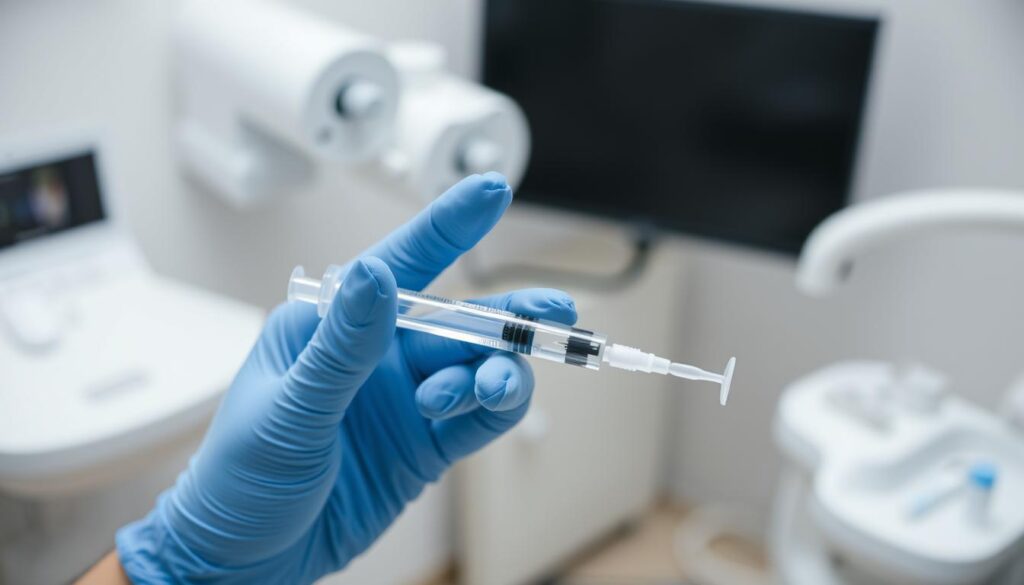
Local anesthesia is a common choice for root canals. It numbs the tooth and the area around it. This way, patients can stay awake and not feel pain. It’s a key part of today’s dental care, backed by safety rules from dental groups.
How Local Anesthesia Works
The anesthetic agent stops pain signals at the injection site. This stops pain from reaching the brain. Dentists can do root canals smoothly because of this numbing effect. It keeps patients comfortable during the treatment.
Benefits of Local Anesthesia
Both patients and dentists like it a lot. The good things are:
- Precise targeting of affected teeth
- Minimal recovery period
- Open communication throughout the procedure
Looking into this dental care guide can help keep your mouth healthy.
Risks and Side Effects
Local anesthesia is usually safe. But, some people might feel numbness in other areas or swelling at the injection site. Rarely, some might have an allergic reaction. But, it’s safe and effective for most root canals.
Sedation Options for Root Canals
Many people get nervous when they go to the dentist for root canals. Sedation helps calm the mind and stops unwanted movements during treatment. It makes the visit more comfortable and helps the procedure go smoothly.

There are many ways to make patients feel at ease, depending on how scared they are. Knowing about these options helps dentists give the best care possible.
Oral Sedatives
These are pills or liquids that start working before you even get to the dentist chair. They help reduce anxiety but keep you awake. You might not remember much of what happened during your visit.
Nitrous Oxide (Laughing Gas)
This gas is breathed in and works fast to ease tension. It wears off quickly too. You can usually go back to your day right after.
Intravenous (IV) Sedation
This method gives medication straight into your blood. It makes you very calm but you can usually stay awake. Dentists can adjust how much sedation you get while keeping you safe.
Factors Influencing Anesthesia Choice
Many factors guide a dentist’s choice of anesthesia for root canals. Studies show that matching the anesthetic to the patient’s needs improves results and comfort.
Patient Anxiety Levels
People who are anxious might need mild or moderate sedation. Some prefer diazepam tablets, while others do better with inhaled options. The goal is to calm them down and make them feel more at ease during the procedure.
Complexity of the Procedure
Deeper decay, hidden canals, or multiple roots might need stronger numbing. Dentists consider the tooth’s shape and location when deciding. For complex root canals, deeper numbing is often necessary for precise work.
Medical History of the Patient
Chronic conditions, drug sensitivities, or recent surgeries affect anesthesia choices. Dentists review medical records and consider medication interactions. This careful approach ensures patient safety and the right anesthetic is chosen.
Preparation for Anesthesia
Is there a better way to ease worries than preparing well for anesthesia? A root canal needs careful planning to reduce stress and ensure safety. Doctors use detailed tests to find out what medication is best for each patient.
Pre-Procedure Consultation
A detailed check-up is the first step. Dentists look at your mouth, explain the procedure, and talk about sedation. This helps you know what to expect.
Discussing Medical History
Talking openly about past reactions to anesthetics and current health is key. This helps doctors create a plan that balances pain relief with your overall health.
Understanding the Process
Explaining each part of the procedure helps clear up any confusion. If there’s an infection, antibiotics might be needed. Your preferences also help choose the right sedation, making sure you’re comfortable and safe.
During the Root Canal Procedure
This part is all about being precise and careful. Dental teams use special techniques to numb the area, making sure you feel little pain. They watch your vital signs closely to catch any sudden feelings or worries.
Administration of Anesthesia
They pick the best spot for the injection based on the tooth’s location and nerve paths. Applying gentle pressure helps avoid sharp pains. Sometimes, they wait a bit to let the anesthetic fully take effect.
Monitoring Patient Comfort
Dental staff pay close attention to your face and what you say. They talk openly to make sure you’re okay. They also pause to listen to any extra pressure or lingering pain you might feel.
Duration of Anesthesia Effects
Local anesthetics usually wear off in a few hours. But everyone reacts differently. Deeper sedatives might make you feel numb longer. It’s best to avoid hard foods until you can feel everything again to avoid accidents.
Post-Procedure Anesthesia Management
After endodontic care, it’s important to feel comfortable again. You might feel some pain or tenderness around the treated tooth. It’s key to take good care of yourself and watch for any signs of trouble.

Expected Recovery Time
Most people can go back to their usual activities in one or two days. Resting helps your body heal and can reduce swelling. Your dentist might suggest gentle brushing and warm saltwater rinses to help your mouth recover.
Pain Management Options
For mild to moderate pain, you can try over-the-counter pain relievers like ibuprofen or acetaminophen. Sometimes, your dentist might give you stronger medicine. Here are some ways to ease the pain:
- Use cold packs to lessen swelling
- Avoid hard or crunchy foods that can hurt the tooth
- Keep up with gentle brushing and soft rinses
When to Contact a Dentist
If the pain doesn’t go away or gets worse, it could mean a problem that needs quick attention. Don’t ignore severe swelling, ongoing sensitivity, or signs of infection. Talking to your dentist right away can help fix any issues fast.
| Time Frame | Recommended Care |
|---|---|
| First 24 Hours | Rest, gentle rinsing, cold packs for swelling |
| Next 1–2 Days | Over-the-counter pain relief, soft diet, avoid heavy chewing |
| After 3 Days | Resume normal brushing, monitor any unusual sensations |
Complications and Risks of Anesthesia
Anesthesia helps make root canals more comfortable. But, there are risks to watch out for. Choosing the right medication and technique can help keep patients safe.
Allergic Reactions
Some people might have allergic reactions to certain anesthetics. This can cause swelling, skin rashes, or trouble breathing. Quick action is important to avoid serious problems.
Doctors often check a patient’s medical history to spot possible allergies.
Over-sedation Concerns
Sedatives can make patients feel less anxious. But, too much can cause dizziness or make them feel groggy for too long. It’s important to watch vital signs closely and give the right amount of sedation.
Talking openly with your dentist can help find the right balance of sedation.
Nerve Damage Possible
Nerve damage is rare but can happen. It might cause mild tingling that goes away as the body heals. Using careful techniques and keeping everything clean can help avoid this.
Good training and modern tools also play a big role in keeping patients safe during dental procedures.
The Importance of Communication
Talking openly makes root canals less stressful. Many people worry about anesthesia. So, we help them share their concerns and understand what to expect in a comfortable setting.
Good communication between dentists and patients reduces fear. Working together, we create a plan that makes everyone feel safe and reassured.
Discussing Anesthesia Options
Doctors want to answer all your questions about sedation. They want to know about your health and past experiences. This helps pick the right medication for you.
Addressing Concerns with Your Dentist
Talking about your fears leads to better solutions. Some feel better with gentle words, while others might want deeper sedation. Good communication builds trust and prepares you for the procedure.
Points to consider:
- Share any important health details
- Talk about sedation choices early
- Ask for clear answers when unsure
Alternatives to Traditional Anesthesia
Some people prefer methods that use less chemicals, like in dental care. They look for new ways to feel comfortable without lots of injections or sedatives. This search leads to gentler treatments and care that fits each person.
These new methods aim to make people feel less pain and more relaxed. For more complex treatments, they might use a little sedation to manage pain.
Laser Dentistry
Laser tools, like those from Biolase, use beams to target specific areas. This can mean less need for drills and scalpels. They help heal faster and can clean root canals well.
Non-Invasive Techniques
New tools like ultrasonic devices and flexible files clean teeth gently. They try to keep the tooth whole, which can mean less swelling and pain.
Mindfulness Techniques
Methods like deep breathing or meditation can calm nerves in the dentist’s chair. Some people enjoy listening to soft music or imagining a peaceful place. Doctors might suggest these to help patients relax.
Innovations in Dental Anesthesia
Dental experts are working hard to make dental visits more comfortable. They are exploring new research and advanced products. These breakthroughs could change how we experience endodontic treatments.
Advances in Local Anesthetics
New compounds, like updated versions of articaine, numb quickly and don’t last too long. Companies like Septodont are focusing on solutions for sensitive areas near nerves. Studies show these new products work faster and are gentler on tissues.
Technology in Sedation Dentistry
There’s a push to improve sedation systems for better control. Dentsply Sirona is leading the way with technology that tracks vital signs in real-time. This lets dentists make quick changes if needed.
These systems work with computer-controlled devices. This makes treatments more accurate and comfortable for patients.
| Innovation | Key Benefit | Brand Example |
|---|---|---|
| Enhanced Local Formulations | Faster onset and fewer side effects | Septodont |
| Computer-Controlled Sedation | Accurate dosage and real-time monitoring | Dentsply Sirona |
Choosing the Right Dental Provider
Choosing a clinic that uses modern techniques and talks openly is key for a smooth root canal journey. Look into a dentist’s credentials, education, and what past patients say. This can tell you a lot about their skills.

Some dentists keep up with the latest in anesthesia. This means they can control pain better and you might heal faster. Also, finding a dentist who cares about you personally can lead to better care, like custom anesthesia plans.
Importance of Experienced Dentists
Dentists with lots of experience in root canals are great problem solvers. They often have fewer complications and make patients more comfortable. They pay close attention to every detail, ensuring everything is done right.
Questions to Ask Your Dentist
Ask about sedation options, risks, and what to do after treatment. It’s good to know if they handle tough cases and if they can adjust anesthesia for your anxiety. Talking openly helps build trust and makes you feel more sure about your dental care choices.
Final Thoughts on Anesthesia for Root Canals
Many sedation options are changing root canal procedures. Each one has its own benefits. They help reduce pain, lower stress, and lead to better results. Studies from dental schools show the importance of focusing on the patient.
Importance of Comfort in Dental Procedures
Being comfortable helps the dentist work better and makes you feel less stressed. A calm setting helps you heal faster and lets you communicate clearly. Dental teams give tips to help you relax during a root canal.
The Role of Patient Trust
Trust is key in dental care. Talking openly about anesthesia and what will happen builds trust. This trust helps patients feel more at ease and encourages them to ask questions. It also helps advance dental science together.
Frequently Asked Questions (FAQs)
This final part answers common questions about comfort during root canal therapy. It helps both patients and professionals understand numbness duration and alternatives for a better experience.
How Long Does Anesthesia Last After a Root Canal?
Local anesthesia usually fades in a few hours. The exact time depends on the medication and how your body reacts. Most people feel normal by the end of the day.
If you had sedation, it might take longer to feel fully awake. Make sure you have a safe ride home.
Are There Any Alternatives to Anesthesia?
Laser techniques or numbing gels might work for simpler dental tasks. But, most root canals need anesthesia for comfort. Some offices are looking into minimal sedation options.
Talk to a licensed dentist or check the American Dental Association’s guidelines. They can help find the best solution for your dental needs.