Which Option is Best for Me: Implant, Bridge, or Denture?
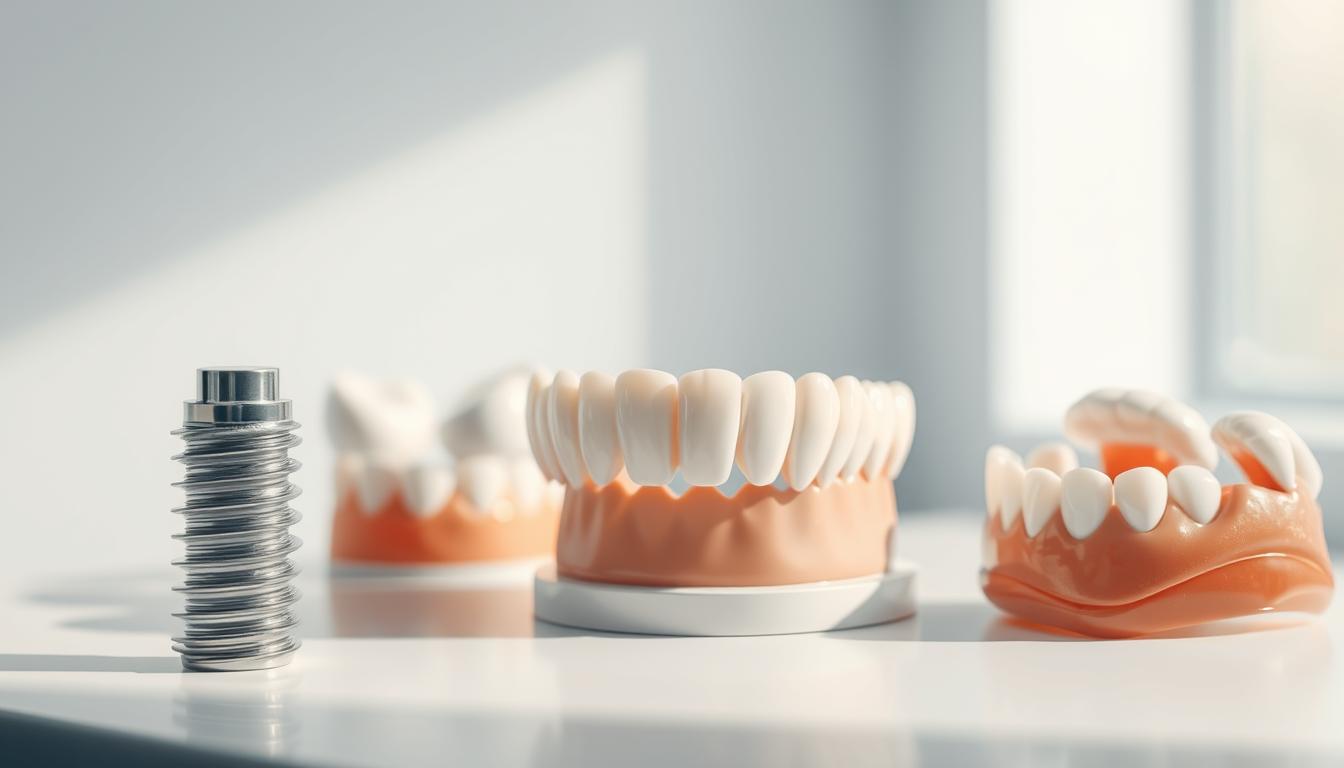
More than two-thirds of adults between 35 and 44 have lost at least one tooth. This can change how we look, affect our speech, and impact how we eat. So, the question is: should I choose an implant, bridge, or denture?
Ignoring tooth loss can lead to discomfort. Choosing between an implant, bridge, or denture is more than just about looks. Each option helps with chewing, prevents bone loss, and keeps your smile natural. Understanding the differences helps you make the best choice.
Key Takeaways
- Tooth loss is common among working-age adults.
- An implant replaces both tooth and root.
- A bridge relies on neighboring teeth for support.
- Dentures can replace multiple missing teeth at once.
- Bone health and lifestyle influence the final decision.
- Maintaining proper oral function supports overall wellness.
Understanding Dental Implants: A Comprehensive Overview
Dental implants are strong, titanium roots that replace lost teeth. They are placed in the jaw and help keep your bite stable. They often fuse with the bone, keeping your natural bite function.
What Are Dental Implants?
Dental implants are artificial roots that fit into your jaw. They are made to look and feel like real teeth. With a 97% success rate over 10 years, they are a reliable choice.
They bond with your jaw, creating a strong base. This base supports crowns or bridges, helping you chew and speak better.
Advantages of Dental Implants
They last a long time, often over 15 years. They don’t harm your other teeth because they don’t need to be reshaped. They look and feel like your own teeth, boosting your confidence.
They also help keep your jawbone strong. This is because they prevent bone loss.
Potential Drawbacks of Implants
You need healthy jawbone to get implants. They can be expensive because they need surgery and several visits. Healing time varies, depending on your bone health and overall health.
| Key Factor | Highlight |
|---|---|
| Composition | Titanium root |
| Success Rate (10-year) | Approximately 97% |
| Longevity | Often 15+ years |
Exploring Dental Bridges: An Alternative Solution
Many people look for a good way to fill gaps from missing teeth. A dental bridge can help by placing artificial teeth between real ones. It’s a popular choice for those wanting to chew and speak better without surgery.
What Is a Dental Bridge?
A bridge attaches fake teeth, or pontics, to healthy teeth on either side. These are made from porcelain or metal for strength and to look natural. The dentist might need to grind down some teeth to fit the bridge well.
Benefits of Choosing a Bridge
Choosing a bridge has some big pluses:
- It needs fewer visits than implants
- It’s often covered by insurance
- It’s good for filling one or more gaps
Limitations of Dental Bridges
A bridge doesn’t help the jawbone grow, which can lead to bone loss. It might need to be updated over time. Still, many people like it for its ease and lower cost.
Dentures Explained: Complete and Partial Options
People looking for a removable fix for missing teeth often choose dentures. These are custom-made appliances that improve how you eat and look.
What Are Dentures?
Dentures are made from materials like acrylic, resin, or metal. They help replace many teeth and can make you look and sound better. However, they might move a bit during meals or when talking if they don’t fit perfectly.
Full vs. Partial Dentures
Full dentures cover an entire row of teeth, while partial ones fill in smaller gaps. Both types can be taken out and adjusted as your gums change. Dentists, like those in the American Dental Association, often suggest them for those with many missing teeth.
Pros and Cons of Dentures
- They are cheaper than surgery
- They’re less invasive for those with thin bones
- They can cause discomfort or gum issues if not cared for
- You’ll need to get them relined often to keep them stable
| Type | Key Feature | Maintenance |
|---|---|---|
| Full Dentures | Replace entire arch | Frequent checks and relining |
| Partial Dentures | Fill smaller gaps | Regular cleaning and fitting updates |
Factors Influencing Your Choice: Cost, Time, and Comfort
Choosing a tooth replacement option often comes down to cost, time, and comfort. Each choice has different costs, treatment times, and comfort levels. Is one better for your lifestyle?
Cost Comparison: Implants, Bridges, and Dentures
Cost is a big factor for dental patients. Implants are pricey upfront but can last decades with care. Bridges fit into many insurance plans, making them more affordable. Dentures are cheaper but might need to be adjusted often.
Time Required for Each Option
Some treatments are quick, while others take longer. Bridges and dentures can be done in weeks. Implants take months because they need time to heal before being placed.
Comfort Level of Each Dental Solution
Comfort and security are key for daily life. Implants feel like natural teeth once healed. Bridges sit on nearby teeth and feel stable. Dentures can be adjusted but might move until you get used to them.

| Approach | Approximate Cost | Typical Timeframe | Comfort Rating |
|---|---|---|---|
| Implants | Higher Initial Expense | Several Months | High Stability |
| Bridges | Moderate | Few Weeks | Consistent Support |
| Dentures | Lower Initial Outlay | Few Weeks | Adjustable Fit |
Your Dental Health History: What to Consider
When choosing a solution for missing teeth, a patient’s medical history is key. Each person has unique factors that affect how long and well dental prosthetics work. Looking at gum and jawbone health helps make safe and effective choices.
Impact of Existing Oral Health
Untreated gum disease can harm implant success and other dental work. Past gum infections need special care to prepare for new treatments.
Previous Dental Procedures
Previous extensive dental work or many root canals can be a problem. These issues might affect where bridges can be placed or how well new prosthetics work. A detailed look at past dental repairs is crucial to avoid future problems.
Age and Bone Density Considerations
Bone density often goes down with age, making implants less stable. Checking jaw structure and if bone grafting is needed can help older adults. Experts carefully examine each patient’s bone health to ensure the best results.
Longevity and Durability: Comparing Options
Choosing the right tooth restoration is key to lasting satisfaction. Each option has its own strengths. Knowing how well they hold up can help make the best choice for the future.
Lifespan of Implants vs. Bridges vs. Dentures
Implants can last 15 years or more. Bridges may last 5 to 15 years, depending on oral health. Dentures usually last 7 to 15 years, needing adjustments as the jaw changes.
Maintenance and Care Requirements
Every tooth restoration needs daily care. Implants do well with regular brushing and flossing. Bridges need careful cleaning under the crowns.
Dentures require rinsing and soaking to stay comfortable. Regular dental visits are crucial for all restorations to stay in good shape.
| Option | Expected Lifespan | Key Consideration |
|---|---|---|
| Implants | 15+ years | Strong foundation with proper oral hygiene |
| Bridges | 5–15 years | Susceptible to wear on adjacent teeth |
| Dentures | 7–15 years | Periodic refitting protects fit and function |
Aesthetic Considerations: Look and Feel
People often look for a mix of function and style in dental treatments. A confident smile boosts daily interactions and emotional health.
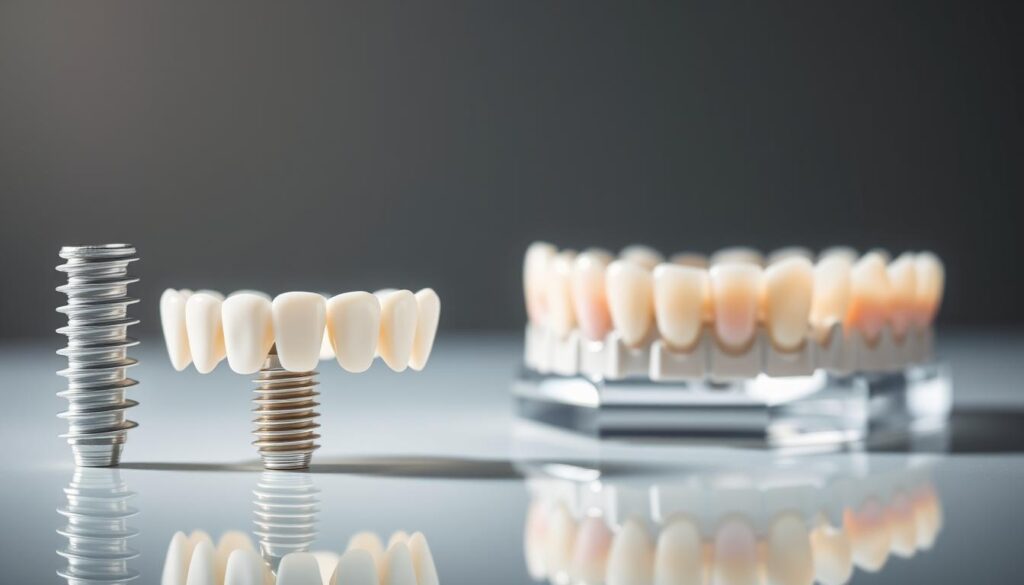
Restorative methods aim to look like natural teeth. They consider color, shape, and comfort. This helps in making the right choice.
Appearance of Implants
Implants are made to look like your own teeth. They have titanium roots for stability. Many like how they look and feel.
Aesthetic Appeal of Bridges
Bridges use porcelain or composite. They match your teeth in color. Good craftsmanship makes them look real.
How Dentures Fit into Your Smile
Dentures now look like real teeth. They can be made to fit your face. They help you feel confident every day.
- Color matching is vital for each option
- Shape and alignment guide overall harmony
- Modern materials enhance natural-looking results
| Option | Material | Potential for Long-Term Aesthetics |
|---|---|---|
| Implants | Titanium & Porcelain | High |
| Bridges | Porcelain or Composite | Moderate to High |
| Dentures | Acrylic or Resin | Moderate |
Lifestyle Factors: How They Affect Your Decision
Every dental prosthesis changes how we eat, clean our teeth, and interact with others. Each option has its own benefits for comfort and support. Some people prefer easy maintenance, while others seek confidence from stable restorations.
Dietary Restrictions with Each Option
Implants let you eat a wide variety of foods since they don’t move. Bridges need a bit of care with sticky foods. Dentures might move with hard or chewy foods. Still, you can eat a balanced diet by choosing foods wisely.
Impact on Oral Hygiene Routine
Implants are cleaned like natural teeth with brushing and flossing. Bridges need thorough cleaning under the artificial tooth. Dentures require soaking and rinsing after meals. Keeping up with these routines helps prevent plaque and gum disease.
Social and Psychological Factors
Stable options like implants and bridges can boost your confidence in public. They help you speak and smile more freely. Dentures may need more adjustments, but many users feel secure once they’re fitted right.
| Option | Dietary Limits | Maintenance | Confidence |
|---|---|---|---|
| Implants | Minimal restrictions | Usual brushing and flossing | High stability |
| Bridges | Some caution with hard foods | Careful flossing under bridge | Moderate steadiness |
| Dentures | Soften certain items | Daily soaking and rinse | Varies by fit |
Consultations and Assessments: Necessary Steps
Finding the right solution for missing teeth starts with a detailed check-up. Dentists look at your dental history, bone health, and what you hope to achieve. This helps them decide between implants, bridges, or dentures.
Importance of Professional Consultation
Dentists study your dental records and previous treatments. They offer advice to ensure your comfort and gum health. You’ll understand your options and what to expect from your care.
Questions to Ask Your Dentist
It’s smart to ask questions before making a decision. Here are some things to consider:
- How long will each option take?
- Will my insurance cover it? Are there payment plans available?
- How can we avoid gum or tooth sensitivity?
Asking these questions helps you make a choice that fits your needs.
Assessments and X-Rays Needed
Imaging and dental exams show what’s needed for implants or other treatments. Your dentist will also check your bite and jaw health. A free consultation can help you understand each step. It makes you feel more confident in your decision.
Success Rates: Comparing the Three Options
Looking at how each method works can show which one lasts longer. Knowing success rates helps both patients and doctors understand what to expect.

Statistics on Dental Implant Success
Implants are very stable, with a success rate of up to 97% over 10 years. Good bone health and regular brushing are key. Regular dental visits help keep the implant working well for longer.
Success Rates of Dental Bridges
Bridges work well if the teeth next to them stay healthy. But, they can weaken if the teeth get cavities. Regular dental checks can stop problems and keep the bridge working.
Effectiveness of Dentures Over Time
Dentures can meet both functional and beauty needs for years. They might need to be adjusted as the jaw changes. Keeping them clean and getting them checked regularly helps them stay comfortable and useful.
Personal Experiences: Case Studies and Testimonials
Many people find inspiration by seeing how others handle new dental solutions. Things like confidence, how well they work, and cost are key. These factors give valuable insights for those thinking about getting a procedure.
Real-Life Stories of Implant Patients
Those who got Straumann and Nobel Biocare implants often talk about their stability. Patients from Cleveland Clinic say these implants help them chew comfortably. They also mention better speech and feeling more at ease in social situations.
Feedback from Those with Bridges
People with bridges often talk about how easy the process is. They say it takes just a few visits and is more affordable than other options. Some mention that the process might change their teeth a bit, but they love the end result.
Denture Wearers’ Perspectives
Denture users often talk about comfort and how they’ve adjusted their lifestyle. Many say they got used to them quickly, but they do need to make some food choices and practice speaking. These stories show that dentures are still a good choice for many.
- Stability is a top reason to prefer dental implants.
- Bridges suit those seeking a swift solution.
- Dentures cater to various health profiles.
| Option | Main Advantage | Common Patient View |
|---|---|---|
| Dental Implants | Long-Term Stability | Increased Confidence |
| Bridges | Simpler Procedure | Less Time-Consuming |
| Dentures | Accessibility | Widely Accepted |
Preparing for the Decision: Steps to Take
Every person’s path to tooth replacement starts with a desire to learn. Taking time to think helps build a strong base. This is before choosing implants, bridges, or dentures.
Gathering Information and Research
Looking into reliable sources like the American Dental Association’s journals is key. These offer insights into success rates and what to expect after treatment. Some people also talk to different dental experts, like maxillofacial surgeons or periodontists, to make sure they’re on the right track. Looking at many sources helps build confidence in your choice.
Talk to Family and Friends
Talking to loved ones who’ve had similar dental work can be very helpful. Their experiences can give you practical advice. They can share about comfort, upkeep, and any challenges they faced. Often, their stories add to what you learn from research.
Evaluating Financial Options
Insurance is a big factor since it can lower costs. Thinking about upfront and long-term expenses is also crucial. Some look into payment plans or ways to save money for the initial cost. Looking into these options can ease financial worries and help make a better decision.
Making Your Choice: Final Thoughts
Every patient has unique concerns when choosing dental implants, bridges, or dentures. A personalized approach helps meet oral health needs and lifestyle preferences. It’s important to consider budget, treatment time, and bone density.
Weighing the Pros and Cons
Each option has its benefits. Implants last longer but are more expensive and require surgery. Bridges fill gaps without major procedures. Dentures are affordable and fit various budgets.
Thinking carefully about these points helps make a confident choice.
Aligning Options with Personal Needs
Some patients want a natural feel and look. Others seek affordable care or easy maintenance. Lifestyle factors, like diet or daily routines, also play a role.
Choosing a restoration that fits your needs ensures long-term satisfaction.
Seeking a Second Opinion if Needed
Getting advice from a dental professional can help clear doubts. An extra consultation might reveal important details or offer new insights. Trusting expert advice leads to a choice that improves your health and satisfaction.