Why are regular dental check-ups important if I’m not having any pain?

It’s a mistake to think no pain means perfect dental health. Around 20% of Americans have cavities they don’t feel yet. This shows how key importance of dental check-ups are. They are more than just about pain. They’re a key part of keeping your mouth healthy, which helps your whole body stay well.
When people feel fine, they often skip their dental visits. But ignoring importance of dental check-ups lets hidden mouth problems get worse. Conditions like gum disease, cavities, and oral cancer could get very serious if not caught early. Getting checked often follows the saying: better safe than sorry. It’s a key part of proactive dental care.
Check-ups look at more than just your teeth and gums. They can spot early signs of big health issues like diabetes and heart disease. This makes regular dental visits a big part of taking care of your overall health. So, making time for the dentist helps keep not just your mouth, but your whole body healthy.
Key Takeaways
- Regular dental check-ups are essential even in the absence of pain, to maintain dental wellness and prevent the progression of silent conditions.
- Understanding the importance of dental check-ups can save individuals from complicated and expensive treatments down the line.
- Proactive dental care through routine examinations ensures early detection of oral conditions, which is key to effective management.
- Oral health is intricately connected to systemic health, with regular dental check-ups playing a crucial role in detecting signs of other health issues.
- Safeguarding against severe dental issues through regular check-ups can pave the way for enduring health benefits and a reduction in long-term healthcare costs.
Understanding the Value of Preventive Dentistry
Preventive dentistry is all about keeping your oral hygiene top-notch. It involves practices aimed at keeping teeth strong, preventing diseases, and ensuring good dental health. This area of dentistry is vital for personal well-being and public health.
What is Preventive Dentistry?
Preventive dentistry includes dental care routines like brushing and flossing regularly and getting check-ups on time. These actions stop the onset of gingivitis, cavities, and more. Check out these dental procedures that help keep gums and teeth healthy.
Key Benefits of Prevention
Preventive dental habits offer many benefits, both now and later. Here’s a quick overview:
| Benefits | Description | Long-term Impact |
|---|---|---|
| Reduced Plaque Build-up | Getting your teeth cleaned regularly removes plaque, stopping cavities and gum disease. | You’ll be less likely to get chronic dental issues and avoid serious treatments. |
| Early Detection of Oral Issues | Regular dentist visits help catch problems early on. | This means saving money and avoiding pain by fixing issues with simpler treatments. |
| Preservation of Dental Health | Fluoride treatments and pro cleanings keep your teeth in great shape. | Your teeth will work better and look good for a longer time. |
The goal of preventive dentistry is to avoid dental problems before they start. This approach is key for keeping dental health at its best. It improves life quality. By caring for your oral hygiene early, you’ll have a healthy smile for years.
Common Misconceptions About Dental Pain
Many people think pain is the main sign of dental problems. But, serious issues like gum disease and tooth decay often start without hurting. This shows why regular dental check-ups are key to find and fix these hidden problems early.
Pain Isn’t the Only Indicator
It’s not true that all dental problems hurt from the start. Things like small cavities or early gum disease might not be felt at first. So, people might think their teeth are fine, and put off getting check-ups or treatments.
Seeing a dentist often is crucial for spotting and treating these issues before they get worse. Dentists use special tools to find problems you might not notice, helping to avoid big troubles later.
Silent Dental Issues
Some dangerous dental problems don’t hurt at their beginning. Oral cancer and severe gum disease are like this, only hurting when they’re far along. By then, they’re harder and more expensive to fix.
Regular dental prevention is vital to catch these silent issues. Going to dentist appointments lets them do full exams to find problems early. This lowers the chance of big dental issues and treatments later.
Knowing that pain isn’t the only sign of dental issues can help keep mouths healthy. It prevents bigger health problems. This knowledge helps us keep our teeth in good shape and stops worse problems later.
The Role of Regular Check-Ups in Oral Health
Getting regular dental check-ups is key for top-notch oral health. These visits do more than just checking your teeth; they are in-depth dental exams. They help catch and manage dental problems early. By doing both regular and thorough check-ups, dentists can stop oral diseases early. This helps keep your mouth healthy.
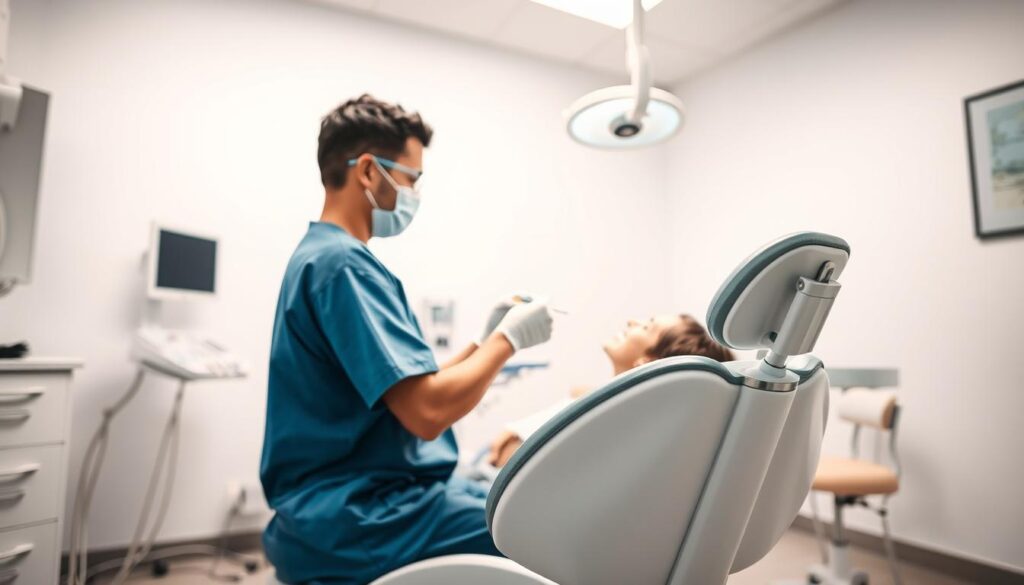
At these detailed exams, dentists look at your whole mouth’s health. This includes your gums, teeth, and other areas. They use different tests like x-rays or visual checks to find hidden issues. Catching problems early means less chance for serious treatments later. This forward-thinking approach is great for your dental health and is part of a bigger health care plan.
| Dental Exam Component | Purpose | Benefits |
|---|---|---|
| Visual Inspection | To check for visible signs of decay, gum disease, and oral lesions. | Immediate identification of issues that could escalate if untreated. |
| X-rays | To detect hidden decay between teeth, bone loss, and impacted teeth. | Prevents the progression of decay and other oral health issues not visible to the naked eye. |
| Oral Cancer Screening | To identify any early signs of oral cancer. | Early detection can significantly enhance the effectiveness of treatment, potentially saving lives. |
| Gum Disease Assessment | To evaluate the health of gums and identify any early signs of periodontal disease. | Early intervention can prevent advanced gum disease and tooth loss. |
These exams are essential for more than just cleaning your teeth. They prevent serious dental problems. They are a key piece of complete dental care, showing that stopping problems early is better and cheaper than treating them later. So, the importance of regular dental visits is huge—they’re the foundation of keeping your mouth healthy for life.
The Financial Benefits of Preventive Care
Keeping up with dental check-ups and preventive care saves money and avoids costly treatments later. By visiting the dentist often, you keep your teeth and gums healthy. This reduces the need for expensive dental work due to neglect.
Preventive care stops the need for complex, pricey treatments. Catching issues like decay early means less invasive and cheaper fixes. This is much better than needing root canals or implants due to untreated problems.
| Cost Comparison | Preventive Care | Advanced Procedures |
|---|---|---|
| Initial Treatment | Regular Cleanings | Periodontal Surgery |
| Average Cost | $100 – $200 per visit | $500 – $10,000+ |
| Frequency | Bi-annual | As needed, can be extensive |
The data shows that preventive care is more affordable than treating advanced dental problems. Regular check-ups and cleanings cost less and are simpler than treating neglected teeth.
Avoiding dental procedures that are costly and complex also saves time. This includes less recovery time and fewer long treatment hours. Preventive care means less downtime and a better life quality.
Regular preventive care is a smart choice for both health and wallet. It focuses on early detection and upkeep. This avoids the need for serious procedures, making preventive dental care both wise and economical.
How Often Should You Visit the Dentist?
Figuring out how often to go for dental checkups is key. It relies on what experts recommend and your own health needs. Most people might need to go once or twice a year. But, if you have certain oral health issues, you might need to go more often.
Guidelines from Dental Associations underline the need for regular dentist visits. This helps keep your mouth healthy and stops bigger dental problems. They say you should go for a dental checkup at least once every year, even if your teeth seem fine.

Personal Factors Affecting Visit Frequency include your unique health conditions. For instance, those who have diabetes, smoke, or have gum disease might have to visit the dentist more often. This helps keep an eye on and handle any issues before they get worse.
| Risk Category | Recommended Visit Frequency |
|---|---|
| Low Risk | Once per year |
| Moderate Risk | Every 6 months |
| High Risk | Every 3-4 months |
By tailoring dental checkup intervals to each person, we can better manage oral health. It also helps stop oral diseases from advancing. This approach combines professional guidance with personal health needs.
The Importance of Professional Cleanings
Going to the dentist regularly is not just about check-ups. It also includes professional cleanings. These cleanings are key because they target plaque and tartar removal. Regular home care like brushing and flossing can’t get rid of them all. Deep cleaning at the dentist can cut down the gum disease risk a lot, which leads to healthier gums and mouth.
At these appointments, dental hygienists use special tools. They’re for getting rid of plaque, tartar, and stains on your teeth. This step is vital to stop many dental issues before they start.
- Plaque and Tartar Removal: This involves careful scraping and brushing. It reaches spots in your mouth that are hard to clean, where plaque and tartar like to hide.
- Reducing the Risk of Gum Disease: Taking away these dangers helps keep gums healthy. It also stops gum disease from getting worse.
These cleanings do more than just clean. They let dentists see how well you’re taking care of your teeth at home. They give advice on better brushing and flossing. This way, you can keep your mouth healthy until your next professional cleaning. Teaching patients how to care for their teeth boosts daily oral hygiene. It also gives them the know-how to lower their gum disease risk.
Fluoride Treatments and Sealants
Fluoride treatments and sealants are key for good dental health. They help both kids and grown-ups fight off tooth decay. This battle is very important for keeping cavities away.
Fluoride makes tooth enamel strong. It slows down cavity formation. It helps teeth fight off acids from bacteria and sugars. The result? Healthier teeth for a longer time.
Sealants act like a shield for your teeth’s rough parts. They’re great for molars. They block bits of food and plaque, which are hard to brush away. Sealants can cut down cavity risks by a lot in back teeth.
The table below shows how well fluoride treatments and sealants work:
| Treatment | Target Area | Protection Level | Applicability |
|---|---|---|---|
| Fluoride Treatments | Enamel | High | All Ages |
| Sealants | Biting Surfaces of Molars and Premolars | Very High | Especially Effective in Children and Teenagers |
Adding fluoride treatments and sealants to dental care saves a lot of trouble. It avoids future pain and costly dental work. It’s a smart move that follows preventive dentistry’s goals. This way, teeth stay strong and healthy for people of all ages.
The Connection Between Oral Health and Overall Health
New research is making it clearer how our dental health and general health are linked. Good oral health does more than stop cavities and gum disease. It also lowers the risk of serious issues like diabetes and heart disease.
Good oral health means doing more than just seeing the dentist now and then. It’s about regular visits, cleanings, and taking care of your teeth every day. This approach helps you stay healthy, both in your mouth and your whole body.
| Aspect of Care | Impact on Oral Health | Relation to Systemic Health |
|---|---|---|
| Regular Check-Ups | Early detection of oral problems | Prevention of disease progression |
| Professional Cleanings | Removal of plaque and reduction of cavities | Lowered risk of heart disease linked to oral bacteria |
| Comprehensive Examinations | Assessment of gum health and tooth integrity | Insights into nutritional deficiencies and infections |
Seeing your dentist is key not just for cavity checks. It’s vital for assessing your overall health. Spotting and treating oral issues early can help prevent serious diseases.
The strong oral-health link to wider health issues means dental care is crucial. Including dental check-ups in your health routine is needed. These visits help detect early signs of body-wide conditions, ensuring your oral and general health are well cared for.
Understanding Your Dental Health History
Knowing your dental health history well is key to foresee oral health trends and tailor care. By looking into past dental issues, healthcare experts can prevent bigger problems. This makes care more exact and effective.
Keeping detailed records of past treatments and outcomes is vital. Along with noting changes at every visit, it guides quality dental care. This approach helps catch and manage possible issues early on.

Watching how your oral health changes is also crucial. These changes might show bigger health concerns. For example, noting gum recession over time could signal possible bone loss, needing quick action.
| Record Type | Detail Captured | Relevance to Dental Health |
|---|---|---|
| Treatment History | List of past dental procedures | Helps predict future dental issues and potential preventive measures |
| X-rays | Images showing changes in teeth and jaw structure over time | Essential for tracking structural changes and early problem detection |
| Periodontal Records | Measurements of gum pocket depths | Indicator of gum health, useful in preventing periodontal diseases |
By examining your dental health history, you see the effects of past dental issues. You learn how these issues may lead to other conditions like diabetes or heart disease. This shows the deep link between oral care and your overall health.
The Impact of Lifestyle Choices on Dental Health
Lifestyle choices are key in shaping our health, especially our oral health impact. These choices, like what we eat and tobacco use, greatly affect our risk for dental issues. By understanding and changing these habits, we can better our oral hygiene and avoid further health problems.
Lifestyle choices, particularly tobacco use, greatly harm dental health. Tobacco not only stains teeth and causes bad breath. It also raises the risk for gum disease, oral cancer, and other issues.
- A sugary and acidic diet can cause tooth decay and gum disease.
- Drinking too much alcohol often leads to dry mouth, which affects saliva production and oral health.
- Tobacco use is a big factor in developing oral cancers.
Dentists often talk about how changing our lifestyle can help our oral health impact during check-ups. They suggest quitting tobacco use, drinking less alcohol, and eating better. These changes can greatly decrease oral health risks.
To lessen the bad effects of certain lifestyle choices on our oral health, staying proactive is crucial. Regular dental visits are important. Here, dentists can watch for changes and give personalized advice to protect against lifestyle risks.
Building a Trustworthy Relationship with Your Dentist
Creating a trustworthy dental relationship is key to great dental care. Talking well with your dentist makes a space where everyone can talk openly. This improves treatment and makes patients feel at ease. Learn how to talk to your dentist well and choose someone you really trust.
Good communication means both talking and being listened to. This base is vital for patients to follow advice and care steps. Below are tips for growing this important bond:
Communicating Concerns and Questions
Before your visits, get ready. Make a list of questions or worries so you don’t forget anything. Talking openly with your dentist helps them see your view. They can then give advice and treatments that fit you best.
Finding a Dentist You Can Trust
Choosing the right dentist is more than just skill. It’s about finding someone who really values a trustworthy dental relationship and good communication. Start by asking friends or family you trust for suggestions. Also, the feel of the dental office tells you a lot about the care and talking you’ll get.
| Traits of a Trustworthy Dentist | Benefits to Patients |
|---|---|
| Open Communication | Supports clarity, helping patients make smart choices about their dental health. |
| Patient Tailored Advice | Care plans that match individual needs. |
| Professionalism and Respect | Makes a safe and comfy place for health talks. |
| Consistent Follow-up | Shows lasting care, important for long-term dental health. |
By focusing on these points, you build a dentist relationship based on trust and good talks. This makes your dental care effective and personal. A strong connection is key for the best oral health.
The Role of Technology in Dental Check-Ups
In our fast-changing health world, dental technology is key in changing dental checks and care. Big leaps in diagnostic tools have improved how we provide enhanced dental care, making patients’ experiences and results better than ever.
Advances in Diagnostic Tools
Today, high-tech tools are changing dental exams for the better. Intraoral cameras and digital X-rays show clear images of the mouth. This beats old methods by a lot. These tools help spot problems early on, before they get worse.
How Technology Enhances Care
Fancy diagnostic gear means dentists can understand and treat better. They get real-time data, making their work more precise. This lowers the need for future invasive procedures. Plus, tools like 3D printing and CAD/CAM systems make treatment quicker and better for patients.
Using these tech advancements makes dental care more accurate and fast. It also makes patients happier and more comfortable. This leads to better dental health and a more effective healthcare system.
What Happens During a Routine Dental Exam?
A routine dental exam keeps your mouth healthy. It lets dentists find problems early, before they get serious. What happens during these exams?
These exams check the health of your teeth, gums, and mouth. They include different steps to see how well you’re taking care of your mouth. Dentists look for early signs of decay or disease.
Expected Procedures During Check-Ups
- Visual Examination: The dentist looks closely at your teeth, gums, and mouth. They check for gum disease, cavities, and other issues.
- X-Rays: You might get dental x-rays. They show what’s happening under your gums and teeth, revealing hidden problems.
- Plaque and Tartar Removal: Dentists clean your teeth, removing plaque and tartar. They reach spots you might miss at home.
- Gum Health Evaluation: They also check your gums for swelling or deep pockets that suggest gum disease.
Timeframe for Each Appointment
The time a dental check-up takes varies. It depends on your oral health needs. Usually, it’s between 30 to 60 minutes.
You should see the dentist every six months. Some people might need to go more often, depending on their dental health.
Routine exams are key to keeping your teeth healthy. They catch and treat problems early. Regular visits help you avoid pain, save money, and keep your smile bright.
Maintaining Dental Health Between Visits
Keeping your teeth healthy isn’t just about going to the dentist. It’s also about caring for your mouth every day. Making oral hygiene practices a daily habit helps keep your teeth healthy. It stops problems before they start and means less work for your dentist.
Your own efforts are just as important as professional cleanings. Oral hygiene practices are key to keeping your teeth and gums healthy. You need to brush twice a day, floss every day, and use mouthwash to kill germs.
- Brush with fluoride toothpaste twice daily for at least two minutes.
- Use dental floss or interdental brushes to clean between the teeth daily.
- Limit sugary snacks and drinks which can promote tooth decay.
- Replace your toothbrush every three to four months or sooner if bristles are frayed.
Knowing when to ask for help is crucial for dental health maintenance. If your bite feels off, you have bad breath, your gums are pulling back, or you feel pain, see your dentist right away. Dealing with problems early can make treatment simpler.
By sticking to good oral hygiene practices religiously, you can boost your health and keep your mouth in great shape between dentist visits.
Encouraging Regular Check-Ups for Families
Making regular dental check-ups a family habit is crucial. When parents focus on consistent visits to the dentist, they show their kids how important it is. This isn’t just about keeping the family’s teeth healthy. It also helps kids feel less scared about dentist visits and teaches them to care for their teeth.
Starting dental visits early helps kids see them as normal. Making these visits enjoyable matters a lot. Things like a fun office and kind dentists can change how kids view dental care.
- Creating a positive dental environment enhances children’s comfort and openness to future visits.
- Educational moments about oral health during these visits reinforce the importance of maintaining good hygiene practices.
- Reward systems for a successful check-up can motivate children towards maintaining their oral health.
Parents play a big role in teaching their kids to take care of their teeth. These steps not only keep kids healthy now. They also help them stay healthy as they grow up.
Conclusion: The Importance of Regular Dental Visits
We have seen that regular dental check-ups are key for preventing problems. By going to these visits, people can catch issues early. This helps avoid bigger and more expensive problems in the future. Preventive dentistry offers advice and treatments to keep teeth healthy. This can lead to a better overall lifestyle and fewer sudden dental emergencies.
Our talks show it’s important to customize how often you visit the dentist. This depends on your own dental history and way of life. Customizing your visits means you get care that’s just right for you. Regular check-ups also help keep your mouth healthy. They provide detailed check-ups and cleanings. These services stop plaque and tartar buildup and lower the chances of gum diseases. Good oral health is linked to good overall health, highlighting why these visits are vital.
Deciding to take care of your oral health is a powerful choice. It’s a step toward a healthier future. Regular visits to the dentist help you avoid many dental issues. They also lead to a happier, more confident smile. As we learn more about dental health, we urge you to make these visits part of your routine. This way, you’re ready to tackle the complex world of oral health with confidence.