Why Would I Need a Root Canal? Understanding the Common Reasons

Did you know that over 15 million root canals are done every year in the U.S.? This is a lot, thanks to the American Association of Endodontists. It shows how common it is for people to need help with their tooth pulp.
So, why do people need a root canal? It’s because their tooth pulp is inflamed or infected. This procedure gets rid of the bad bacteria. It also keeps your tooth intact, which is good for your bite, looks, and comfort.
Key Takeaways
- Root canal therapy targets damaged or infected pulp.
- The goal is to protect and keep the natural tooth.
- Pain and swelling may lessen soon after treatment.
- Early intervention prevents serious dental complications.
- Modern techniques aim for minimal discomfort.
What is a Root Canal?
Dental specialists often suggest this treatment when a tooth’s inner tissues get inflamed or infected. Modern methods aim to keep the natural tooth working well and reduce pain. Once the tooth’s damaged parts are fixed, patients may feel pain relief.
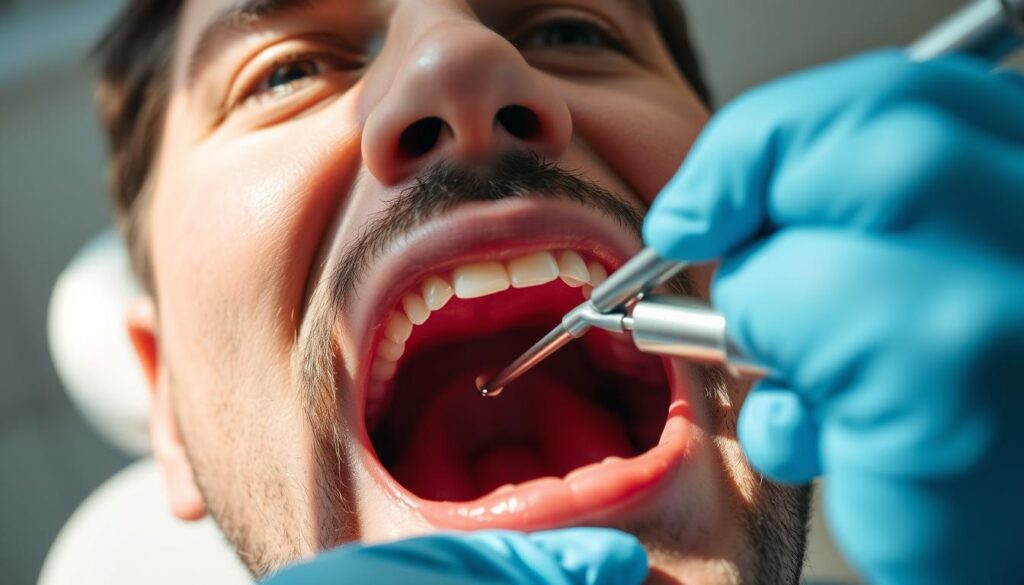
Definition of a Root Canal Procedure
A root canal procedure starts with a small opening to reach the pulp chamber. Dentists then take out the inflamed or infected pulp. They clean the canals well.
Next, they shape and seal the space with a special filling. This stops bacteria from growing back.
Purpose of Root Canal Treatment
This treatment tries to save a tooth that might need to be pulled. It eliminates discomfort by fixing the pain source. This lets patients chew normally without needing fake teeth.
Often, a crown or other restoration is needed to finish the job.
Symptoms Indicating a Root Canal
Continuous pain in your mouth might mean a serious problem under your tooth. Spotting these signs early can help fix the issue quickly. This way, you avoid bigger problems and keep your teeth healthy.
Persistent Toothache
A toothache that won’t go away could mean an infection inside your tooth. Pain that gets worse when you chew can really disrupt your day. Getting help early can stop the pain from getting worse and protect your other teeth.
Sensitivity to Hot and Cold
Drinking hot tea or eating cold ice cream can hurt your tooth. This pain means your tooth’s protective layer is broken. To fix this, you might need to look into broken tooth repair to prevent more damage.
Swelling and Tenderness in Gums
When your gums around a tooth hurt or swell, it’s a sign of trouble. Sometimes, small abscesses can make the pain worse. Catching these signs early can help fix the problem faster and prevent it from getting worse.
- See a dentist if you notice any early signs.
- Keep an eye on any changes in your gums or tooth pain.
- Make sure to get regular dental check-ups.
| Symptom | Possible Cause | Action |
|---|---|---|
| Unrelenting ache | Pulp infection | Seek immediate exam |
| Temperature pain | Exposed nerve | Discuss root canal options |
| Gum swelling | Abscess formation | Begin timely treatment |
Common Causes of Tooth Decay
Many things can damage teeth and lead to dental pain. Food and bacteria mix to create acids. This weakens the tooth’s outer layer and lets decay spread.
Dental Caries and Cavities
Caries happen when bacteria eat sugars and make acids. These acids damage enamel, creating cavities. Deep cavities may need dental pain relief treatments.
Poor Oral Hygiene Practices
Not brushing well and not getting regular cleanings let plaque build up. Brushing at home and dental visits keep teeth strong. For more info, check out this guide on dental exams.
Frequent Sugar Consumption
Eating sugary foods often leads to acid attacks on teeth. This causes fast decay. Eating balanced meals and checking labels can help avoid dental pain.
| Contributing Factor | Key Risk |
|---|---|
| Ignored Plaque | Enamel Breakdown |
| Excess Sugar | Acid Formation |
| Unscheduled Visits | Undetected Decay |
Trauma and Injury to the Tooth
A sudden impact or a hard bite can put a lot of stress on your teeth. Even small chips might seem harmless at first. But, any crack can let bacteria in, leading to an infected tooth treatment.
Accidental Tooth Fractures
When you bite down on something hard, your enamel can break. It’s important to get an exam right away to find hidden cracks. This can prevent more serious damage to the pulp.
Seek advice from a dentist if you notice a crack that won’t go away. For more information on handling tooth fractures, click this accidental tooth fracture guide. Early action can save you from more serious treatments.
Sports Injuries Impacting Teeth
Playing sports can lead to mouth injuries. Mouthguards help, but accidents can happen. Chips or fractures from sports can become painful if not treated quickly.
A bigger break could lead to more problems, like an infected tooth. Keeping your teeth safe during sports can help you smile confidently and keep your teeth healthy.
Advanced Gum Disease Effects
Gum tissues are key to keeping teeth stable and healthy. When infection gets worse, the structures holding the tooth can weaken. This makes it easier for bacteria to get inside and cause tooth decay. Regular dental exams and cleanings are essential for catching problems early.
Connection Between Gum Disease and Root Canals
Bacteria often grow under the gum line. They attack weak enamel and can reach the pulp. This leads to inflammation in the tooth canals, needing endodontic treatment. It’s important to be watchful and use reliable diagnostic tools to protect teeth.
How Gum Disease Leads to Tooth Damage
Bone loss exposes more of the root, making it vulnerable. If not treated, bacteria can get in through gaps. This can cause the tissues to break down, leading to tooth decay. Keeping an eye on gum changes can help avoid internal tooth damage.
Infections Within the Tooth
Bad microbes can get deep into the tooth and harm important parts. Gaps or cracks in the tooth let bacteria get to the pulp. There, they grow and cause big changes in the tissue.
Bacterial Infections and Their Impact
Bacteria in the tooth can make a lot of pain and make teeth very sensitive. This can lead to bigger health problems if not treated. Experts, like the American Dental Association, say to get treatment fast to stop the infection.
Signs of Tooth Infection Requiring Action
Look out for sharp pain and swelling in the gums. Fever and constant pain mean you need to see a dentist right away. Doctors look for signs like:
- Inflamed or red gum tissue
- Sensitivity when biting down
- Lingering foul taste in the mouth
A root canal can fix the problem by removing the infected part. Catching it early and treating it fast keeps your mouth healthy and prevents more problems.
Failed Previous Dental Treatments
Dental restorations can weaken over time and expose the tooth to fresh contamination. Restored surfaces might crack, leaving hidden entry points for bacteria. Early attention helps patients avoid new pain signals that may suggest root canal symptoms.

Issues with Fillings or Crowns
Fillings wear down with regular biting and chewing. Hidden gaps might form near the edges of older crowns. Food particles and germs then work their way in, creating conditions that trigger soreness or tooth sensitivity.
Proactive check-ups detect these warning signs before more serious damage sets in.
Complications from Past Root Canals
An old root canal may fail when canals were not fully sealed or if new fractures formed. These changes allow bacteria to thrive in areas once protected. Pain, gum swelling, and root canal symptoms can reappear, prompting the need for timely retreatment.
Regular assessment encourages healthy outcomes.
Anatomy of the Tooth and Its Vulnerability
Each tooth has layers that protect the inside. Enamel covers dentin, and pulp has nerves and blood vessels. When these layers crack or decay, bacteria can get in.
Understanding Tooth Structure
Enamel is the hard outer layer. Dentin supports the tooth’s shape. The pulp chamber has nerves that send pain signals when damaged.
Experts like the American Dental Association stress the importance of good hygiene and care. This helps keep the tooth balanced and healthy.
- Enamel: First line of defense
- Dentin: Protective layer beneath enamel
- Pulp: Vital core with nerve endings
How Damage Affects Nerve Health
When pulp is exposed, it can cause swelling and sharp pain. Small injuries might need a simple filling. But, deeper infections are more serious.
Some people look for root canal alternatives if decay isn’t too bad. A detailed check-up is key to find the best way to keep the tooth working and pain-free.
Role of Age in Dental Health
As we age, our enamel gets thinner. This makes our teeth more vulnerable to wear and tear. It can also open up paths for decay to reach the pulp. Many adults don’t realize the danger until they start feeling pain.
How Aging Impacts Tooth Strength
Years of chewing and biting put stress on our teeth. Tiny cracks form and grow with each bite. These cracks can let bacteria in, leading to infections if not caught early.
Regular dental visits are key to spotting problems before they get worse.
Risks for Older Adults Needing Treatment
Older adults face unique dental challenges. Gum recession, worn-out fillings, and less saliva can cause new problems. Experts recommend regular cleanings and personalized care plans to catch cavities early.
Ignoring these issues can lead to infections and the need for root canals.
| Age Factor | Impact on Teeth |
|---|---|
| Thinning Enamel | Increases vulnerability to hidden decay |
| Long-Term Biting Forces | Promotes fracture risks and bacterial infiltration |
| Degrading Past Restorations | Exposes deeper layers to possible infection |
Oral Health Habits Contributing to Issues
Daily routines are key to a healthy smile. Not taking care of them can lead to big problems. Good oral health habits keep teeth strong and prevent infections.

Importance of Regular Dental Check-ups
Regular dental visits can save you from bigger problems later. Dentists can spot small issues before they get worse. This helps keep your gums and teeth healthy, reducing the need for root canals.
Impact of Smoking on Dental Health
Smoking harms your gums and slows healing. It cuts off blood flow to your gums, making it hard to fight off gum disease. Smoking with bad brushing or flossing habits can lead to serious dental problems.
“According to the American Dental Association, patients benefit greatly from adjusting daily techniques and reducing tobacco intake to promote stronger oral defenses.”
Making a few changes in your daily routine and cutting down on smoking can help. This can prevent painful dental issues that might need advanced treatments.
Seeking Immediate Dental Care
Ignoring a toothache can lead to serious problems. Early dental care helps avoid pain and keeps teeth healthy. It also stops infections and makes recovery faster.
Why Timely Action Matters
Seeing a dentist quickly can catch problems early. Waiting too long can damage the pulp, needing a root canal. Quick action helps keep teeth healthy and heals faster.
What to Expect During the Consultation
A dentist will use X-rays and an exam to find the cause of pain. They might suggest antibiotics or other treatments. You’ll get a clear plan to help you make the best choice.
- Detailed X-rays to locate underlying damage
- Careful inspection of tooth and gum health
- Customized plan for antibiotics, palliative care, or full treatment
The Root Canal Procedure Explained
Patients often feel relief once the dentist fixes the tooth’s inner part. Local anesthesia numbs the area, making the start of the procedure almost painless. This numbing helps keep the patient comfortable and confident during the visit.

Removing infected pulp and cleaning the pathways is a detailed process. It protects the tooth and the surrounding tissues from more bacteria. This ensures the tooth stays healthy.
Steps Involved in the Treatment
The treatment follows a specific order that many dentists suggest:
- Access the pulp chamber through a small opening
- Cleanse canals to eliminate bacteria and debris
- Shape and dry each channel to prevent infection
- Seal the canals with a biocompatible filler
- Place a final restoration, such as a crown or filling
“Experts from the American Dental Association emphasize that root canal therapy can extend a tooth’s lifespan and safeguard the overall oral environment.”
Aftercare and Recovery Recommendations
Mild soreness might occur during healing. Using over-the-counter pain relievers, brushing gently, and avoiding hard foods can help. For those considering tooth replacement, reading this blog post can provide insight. Keeping up with oral hygiene and regular dental visits is key to maintaining the treated tooth’s health.
Myths and Misconceptions About Root Canals
Root canal therapy often raises questions. Dental experts say many fears come from old beliefs. Advances in endodontics have made the procedure more comfortable and effective against infection.
Studies by the American Association of Endodontists (AAE) show that new techniques reduce pain. They also lead to successful outcomes.
Common Misunderstandings
Some think root canals always hurt. But, local anesthesia helps make the process painless. Another myth is that pulling a tooth is cheaper.
But, losing a tooth can lead to misalignment or bone loss. This might need more complex treatments later.
Facts vs. Fiction in Root Canal Treatment
Today’s endodontic therapy aims to keep your tooth healthy for good oral health. Natural teeth help keep your bite right. This protects the surrounding tissues from more problems.
Research shows that when done right, this treatment saves teeth. It also cuts down the need for big restorations.
| Myth | Reality |
|---|---|
| Root canals are excruciating | They relieve pain by treating inflamed pulp |
| Extraction is easier | Preserving natural teeth often prevents bigger problems |
Conclusion: Making Informed Decisions
Healthy teeth need careful care and quick fixes. Root canal therapy is a key solution when teeth are at risk. It helps keep the tooth natural, relieves pain, and stops problems from getting worse.
The Importance of Professional Dental Advice
Dentists use special tools and methods to check each patient. Catching tooth decay or infection early means less pain. They help decide between fillings, crowns, or more complex treatments.
They talk clearly with patients. This helps patients feel sure about their choices for a healthy smile.
Emphasizing Preventive Care for Better Health
Brushing and flossing every day keeps teeth and gums safe. Regular dental visits catch issues early. Many clinics, like those backed by the American Dental Association, keep improving root canal therapy.
By going to the dentist often and following advice, you can keep your smile healthy. This lowers the chance of serious problems.